
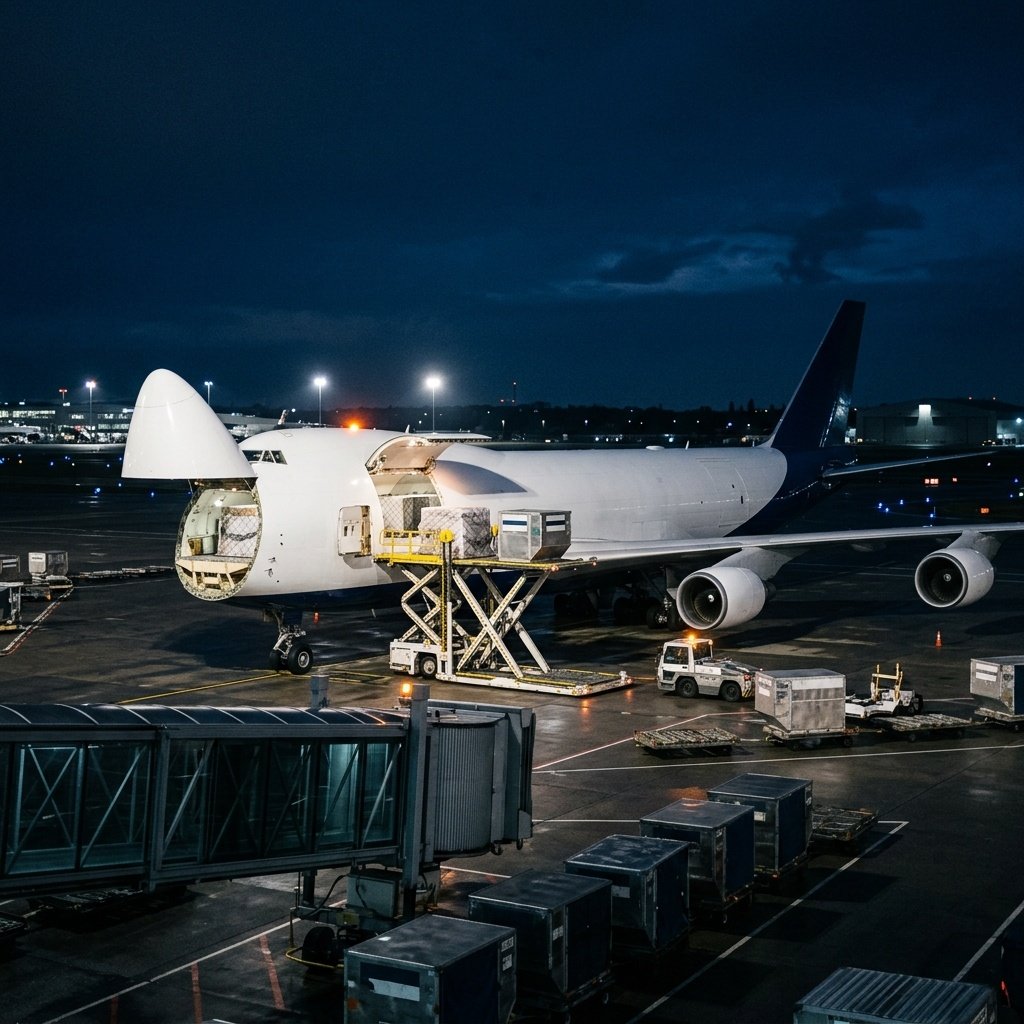
Air Freight Shipping from China: The 2026 Importer’s Guide to Costs, Transit Times, and Routes
9 يونيو 2026
For B2B importers managing high-value, fragile, or time-critical stock, shipping by air is the fastest and most secure method of supply chain replenishment. When your Amazon FBA inventory is running low or a high-value electronics order needs immediate delivery, air freight from China offers the quick transit times required to keep operations running smoothly. However, navigating air logistics requires a clear understanding of the options, routes, and billing structures.
TL;DR — Key Takeaways
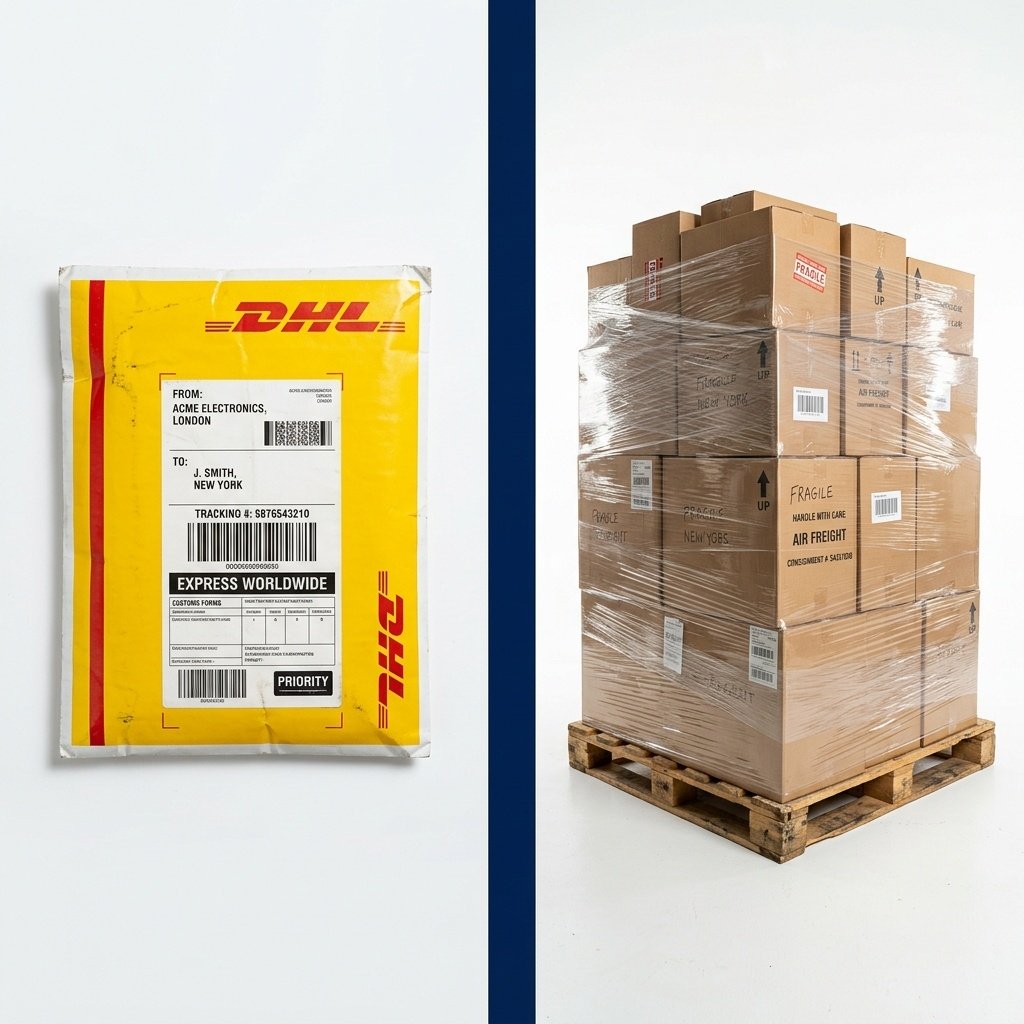
- Express Air vs. Standard Air: Express courier (DHL, FedEx, UPS) is door-to-door in 3–5 days with all-inclusive pricing; Standard Air is port-to-port in 5–10 days, requiring separate customs clearance.
- Volumetric Weight: Air cargo is billed on the greater of actual weight or dimensional weight (using the L×W×H / 5000 formula).
- Major Chinese Hubs: Shenzhen (SZX) and Hong Kong (HKG) are the leading hubs for electronics and southern cargo; Shanghai (PVG) serves central and northern industrial centers.
Average transit time for express air freight shipments from China to the USA and Europe.
Understanding Air Freight Options: Express vs. Standard Air Cargo
Importers must choose between two main air shipping methods, depending on the volume of cargo, urgency, and available resources. Choosing the wrong method can result in unexpected port fees or shipping delays.
1. Express Air Courier (Door-to-Door)
Express courier services (operated by major integrators like DHL, FedEx, and UPS) manage the entire logistics process. They pick up the goods from your supplier in China, handle customs clearance on both sides, and deliver the cargo directly to your warehouse or Amazon FBA center. Express shipping is highly recommended for shipments under 150 kg and is generally billed on an all-in per-kilogram rate.
2. Standard Air Freight (Port-to-Port)
Standard air freight uses commercial airlines or dedicated cargo carriers. Goods are transported from a Chinese airport to the destination airport. As the importer, you (or your freight forwarder) must arrange local pick-up, export clearance in China, import customs clearance at the destination, and final-mile delivery. Standard air cargo is much more cost-effective for shipments exceeding 150 kg but requires professional logistics coordination.
Major Chinese Airport Hubs and Their Strategic Strengths
China’s air cargo network is anchored by several massive international airports, each serving distinct industrial regions and cargo types:
- Shenzhen Bao’an International (SZX): Located in the heart of the Greater Bay Area, SZX is the primary hub for electronics, consumer goods, and rapid FBA prep shipments.
- Hong Kong International (HKG): As a free port with extensive global connections, HKG is ideal for sensitive goods, lithium batteries, and shipments requiring simplified export procedures.
- Guangzhou Baiyun International (CAN): The premier hub for fashion, textiles, hardware, and automotive parts manufactured in the northern Guangdong province.
- Shanghai Pudong International (PVG): The largest air cargo hub in mainland China, serving the Yangtse River Delta’s heavy industrial, machinery, and pharmaceutical sectors.
- Beijing Capital International (PEK): The primary aviation gateway for northern China, specializing in high-tech machinery and industrial components.
Key Destination Countries and Transit Times
Air cargo transit times vary depending on the destination country, route type (direct vs. transit), and customs processing speeds. The table below lists typical transit times for shipments handled by Googol Traders:
| Destination Country | Primary Cargo Airports | Express Air (Door-to-Door) | Standard Air (Port-to-Port) |
|---|---|---|---|
| United States | LAX, JFK, ORD, DFW | 3–5 Business Days | 5–8 Business Days |
| United Kingdom | LHR, MAN, EMA | 3–5 Business Days | 5–7 Business Days |
| Germany / Western Europe | FRA, CDG, AMS, BRU | 4–6 Business Days | 6–9 Business Days |
| United Arab Emirates / Middle East | DXB, DWC, AUH | 3–5 Business Days | 5–7 Business Days |
| Australia / Oceania | SYD, MEL, BNE | 3–5 Business Days | 5–7 Business Days |
How Air Freight Costs Are Calculated: Actual Weight vs. Volumetric Weight
One of the most common surprises for first-time importers is the difference between actual weight and dimensional (chargeable) weight. Air carriers bill based on the space your cargo occupies inside the aircraft hold, not just its mass.
Understanding Chargeable Weight
Air cargo utilizes a standard volumetric ratio of 1:6000 (or 1:5000 for express couriers) to determine chargeable weight. The formula is:
Volumetric Weight (kg) = [Length (cm) × Width (cm) × Height (cm)] / 5000
If you ship 10 cartons of plush toys weighing 50 kg in total, but they occupy a volume of 1.2 cubic meters, their volumetric weight will be calculated as 240 kg. You will be billed for 240 kg, not 50 kg.
Customs Clearance and Documentation Checklist for Air Cargo
Because air shipments move rapidly, any missing or incorrect paperwork will lead to immediate delays and warehouse storage fees. Ensure that your supplier provides accurate documentation before the plane departs.
Pro Tip: Prevent Clearance Delays
Always double-check that the Harmonized System (HS) code listed on the commercial invoice is accurate. A mismatch between the declared HS code and the physical product is the single biggest cause of customs holds and inspections.
Make sure you have the following documents ready for every shipment:
- Air Waybill (AWB): Issued by the carrier, detailing the cargo and destination.
- Commercial Invoice: Detailing the seller, buyer, product descriptions, unit values, and transaction terms (Incoterms).
- Packing List: Detailing dimensions, gross weight, net weight, and packaging details of each carton.
- Certificate of Origin: Required for duty-free access or regional trade agreements.
When to Choose Air Freight Over Sea or Rail Freight
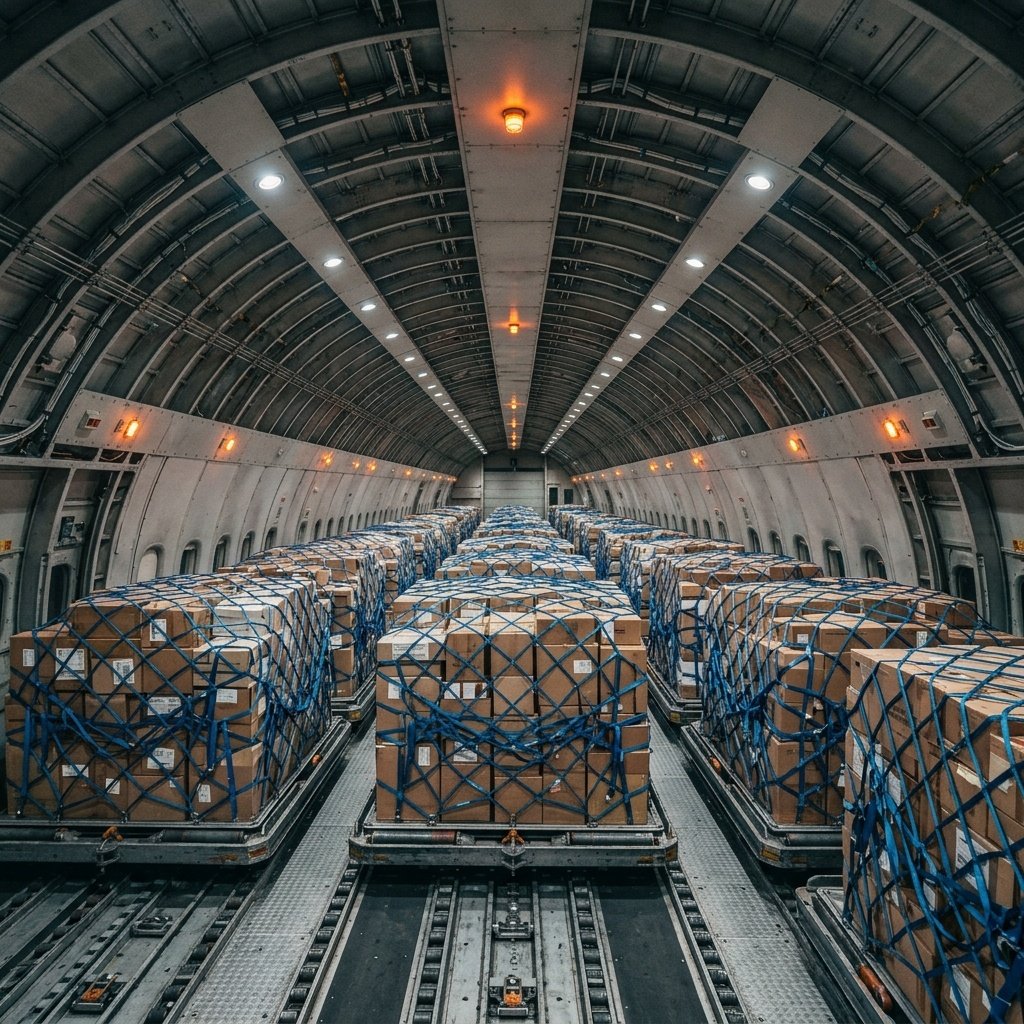
Air freight is highly recommended when your shipment fits the following profiles:
- Time-Sensitive Inventory: Fast replenishment of out-of-stock items on Amazon FBA or physical retail stores.
- High-Value Cargo: Electronics, luxury goods, and precision parts benefit from air shipping’s high security and low risk of transit damage.
- Perishable Goods: Medical supplies, cosmetics, or specialized items that degrade over long ocean voyages.
FAQs
What is the minimum weight for air freight from China?
For standard air cargo, the cost-effective minimum weight is generally 45 kg. For shipments under 45 kg, express couriers (DHL, FedEx, UPS) are more economical and much faster.
Can I ship products with lithium batteries via air freight?
Yes, but they are classified as Dangerous Goods (DG). They require special packaging, MSDS (Material Safety Data Sheets), UN38.3 test reports, and must be shipped via certified cargo aircraft (often out of Hong Kong Airport, which has flexible DG handling regulations).
Are duties and taxes included in air freight quotes?
It depends on the selected Incoterm. Under DDP (Delivered Duty Paid) terms, Googol Traders handles and pays all export duties, international freight, import clearance, and local taxes. Under FOB or FCA terms, you are responsible for customs clearance and duties at your destination.

Written by Muhammad Fahad, Logistics Operations Specialist at Googol Traders. Last updated: 2026-06-09.