
How the 2026 Iran War Is Reshaping Global Shipping: What Every Importer Must Know
12 يونيو 2026
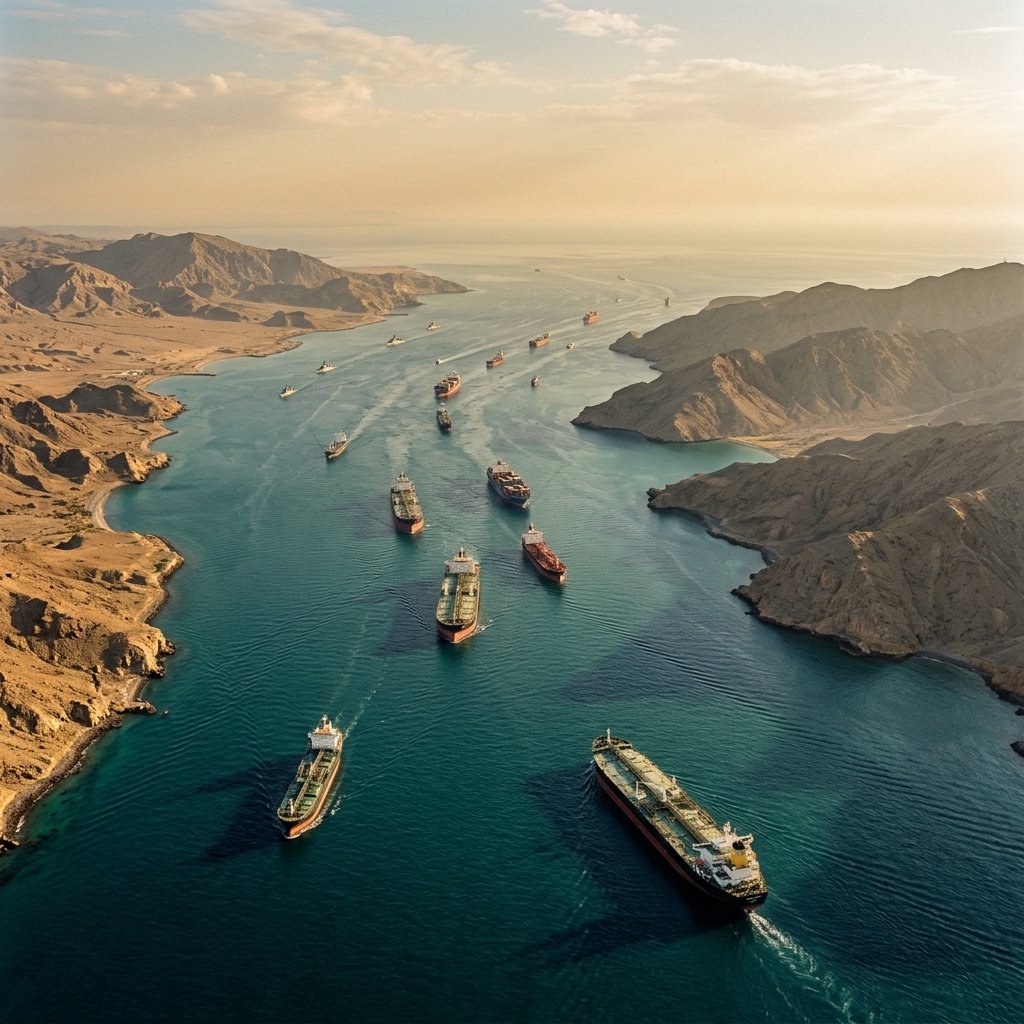
On February 28, 2026, coordinated US and Israeli strikes on Iran — Operation Lion’s Roar — triggered the biggest disruption to global shipping since COVID. Within 72 hours, the Strait of Hormuz effectively shut down. Carriers suspended Suez Canal transits. Airlines halted Gulf overflights. And emergency surcharges started landing in every importer’s inbox.
Four months later, the conflict is still reshaping how goods move around the planet. Here’s what’s actually happened — and what it means for anyone importing from China.
TL;DR — Iran War Shipping Impact (June 2026)
- Strait of Hormuz — handling 20% of global oil — effectively shut to commercial traffic since March 4; 800-1,000 vessels trapped or diverted
- Container shipping added $5.5 billion in extra bunker fuel costs since late February (Sea-Intelligence)
- Hapag-Lloyd spending $50 million extra per week just to keep ships moving around the Cape
- Asia-Europe air cargo capacity dropped 26% overnight as Gulf airspace closed
- War-risk insurance premiums up 3-4x; some underwriters refusing Hormuz coverage entirely
- Maersk issuing weekly operational advisories — the “temporary” disruption is becoming structural
Extra bunker fuel costs added to global shipping since the Iran war began (Sea-Intelligence, June 2026)
What Actually Happened: The Timeline
The conflict escalated faster than any supply chain could adapt:
- February 28, 2026: Operation Lion’s Roar — joint US-Israeli strikes on Iranian military and nuclear facilities
- March 1-2: Iran retaliates with hundreds of drones and missiles targeting US/allied facilities across the Gulf, including UAE. Hezbollah enters with attacks on Israel
- March 2: Major carriers suspend Suez Canal transits. Airlines halt Gulf overflights. Asia-Europe air cargo capacity drops 26% overnight (The Loadstar)
- March 4: Iran’s Revolutionary Guard issues vessel restriction notices in the Strait of Hormuz. Nearly 140 container vessels reported trapped or sheltered inside the Middle East Gulf (Alphaliner)
- March 9: Container rates spike. Reuters: “Iran war anxiety sends global container shipping rates soaring”
- June 8: Houthis declare “complete and total ban” on Israeli ships in the Red Sea — threatening the one remaining workaround route
- June 10: Reuters reports Sea-Intelligence estimate: $5.5B in extra bunker fuel costs industry-wide. Hapag-Lloyd burning $50M/week extra
“The idea that this was going to be a calmer year, that freight rates were going to settle down, that ships might return through the Suez — all that is totally off the table now.” — Peter Tirschwell, S&P Global, TPM26 Conference
The Strait of Hormuz: A Chokepoint the World Can’t Bypass
Here’s why Hormuz matters more than any other shipping chokepoint: there is no alternative route. The Red Sea/Suez can be bypassed via the Cape of Good Hope (expensive, but possible). The Panama Canal has the Suez as an alternative for some routes. But for Gulf oil producers — Saudi Arabia, Iraq, Kuwait, UAE, Qatar — there is no Plan B. Everything flows through Hormuz or doesn’t flow at all.
| Chokepoint | % of Global Trade | Alternative Route? | Current Status (Jun 2026) |
|---|---|---|---|
| Strait of Hormuz | 20% of oil, significant LNG | None for Gulf producers | Effectively closed to commercial traffic |
| Bab el-Mandeb / Red Sea | ~3% (down from 10%) | Cape of Good Hope (+10-14 days) | Houthi ban on Israeli ships; BP paused transits |
| Suez Canal | ~12% normally | Cape of Good Hope | Open but carriers avoiding; traffic severely reduced |
| Panama Canal | ~5% | Suez (limited for some lanes) | Operating normally |
Before the conflict, more than 30,000 vessels transited the Strait annually. Since March 4, daily crossings have collapsed. The UN Secretary General told the Security Council that 20,000 seafarers aboard 800-1,000 ships are impacted, and called for “coordinated international measures to ensure the safe movement of vessels.”
The Cost Explosion: Fuel, Insurance, and Surcharges
The numbers are staggering — and they’re landing directly on shippers’ invoices:
- Bunker fuel: Can account for up to 60% of a container ship’s voyage cost. Iran-driven crude spikes have sent fuel costs soaring. Sea-Intelligence estimates $5.5 billion in extra industry-wide bunker expenses since late February.
- War-risk insurance: Premiums up 3-4x for vessels transiting anywhere near the Gulf. Some underwriters have issued conditional cover notices — effectively refusing to insure Hormuz transits at any price.
- Emergency Bunker Surcharges (EBS): Maersk, Hapag-Lloyd, CMA CGM, and MSC are all applying EBS on Gulf-adjacent routes. These are passed directly to shippers.
- Peak Season Surcharges (PSS): Hapag-Lloyd’s June 8 PSS on Asia-Europe ($2,000/FEU) is partly fuel-driven. More carriers following.
If You’re Quoting Freight Right Now
Any rate quote more than 7 days old is stale. The fuel surcharge component alone can swing $300-800 per container week-to-week. Ask your forwarder to quote with an indexed fuel clause — not a fixed surcharge — or you’ll eat the difference.
Air Freight: The Gulf Airspace Blackout
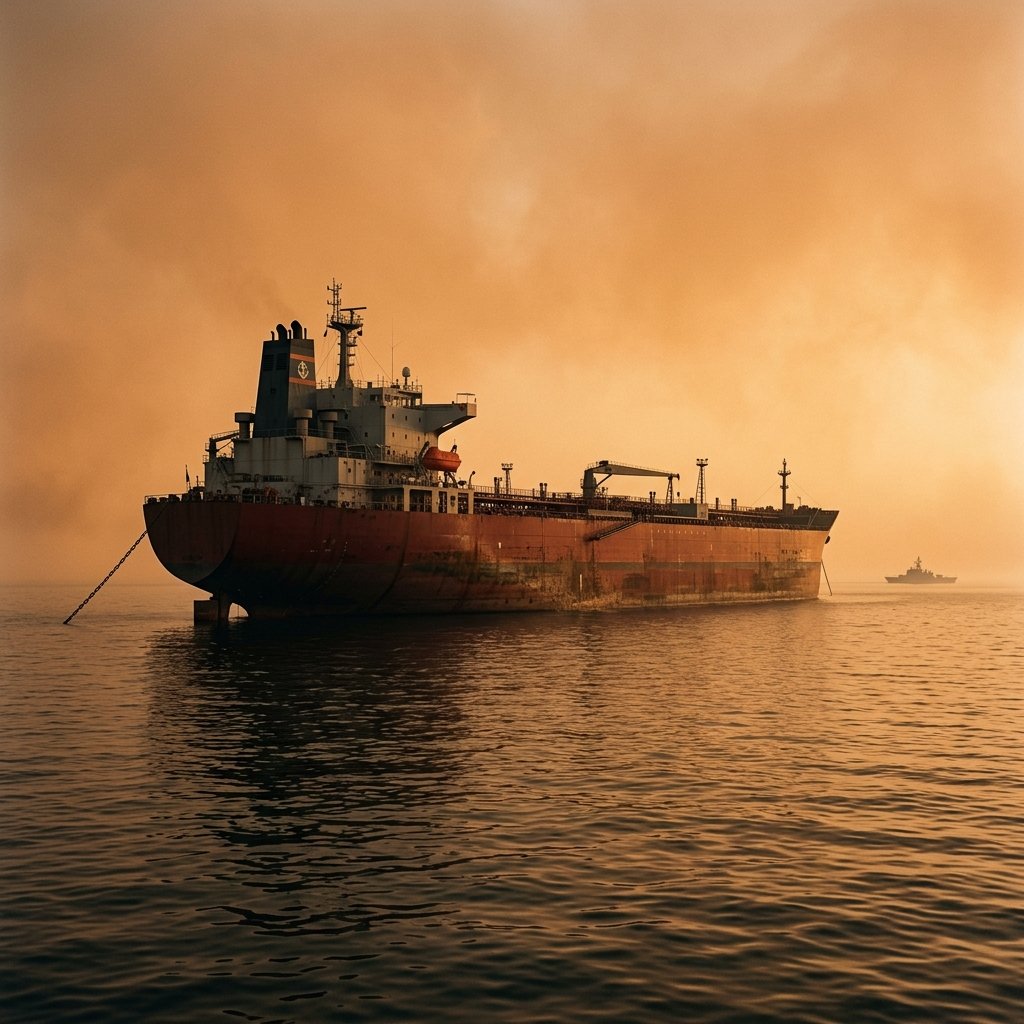
When the Iran strikes hit, airlines didn’t wait for official notices. They looked at missile trajectories crossing major air corridors and made an instant decision: go around.
The result: Asia-Europe air cargo capacity dropped 26% in 48 hours (The Loadstar, March 2). Routes that normally fly over the Gulf — which is most of them — were forced to reroute via longer corridors, adding hours of flight time and burning significantly more fuel.
For freight forwarders and shippers:
- Air freight spot rates on Asia-Europe jumped immediately
- Belly capacity (passenger aircraft cargo space) declined on affected routes
- Scheduling unpredictability increased — flights rerouted mid-journey when airspace closures shifted
Oxford Economics’ supply chain stress index hit its highest level since 2022, driven primarily by air freight cost increases driven by these disruptions.
What Maersk and the Carriers Are Saying
Maersk — the world’s second-largest container line — has issued more than 34 operational updates since the conflict began. Their June 2026 advisories tell the story:
- June 3: “Maersk Operations through Strait of Hormuz” — detailing temporary line detention solutions
- June 4: “Update 6: Strait of Hormuz Disruption” — temporary detention solutions in impacted countries
- June 5: PSS announcements for Indian Subcontinent & Middle East to US East Coast & Gulf
Maersk Chief Commercial Officer Karsten Kildahl stated publicly: “What began as a local conflict has now evolved and is disrupting major land, sea and air corridors — with effects that are starting to reach far beyond the region.”
The “Permanent Rewiring” Thesis
The most important question for importers isn’t “when will this end?” — it’s “what won’t go back to normal even after it ends?”
Analysts and logistics strategists are coalescing around a view: the era of cheap, reliable ocean freight through the Middle East is suspended indefinitely. Even if a ceasefire materializes, the sunk costs of establishing alternative supply routes and the memory of the disruption will prevent a full return to pre-war logistics.
Key structural shifts already underway:
- Hormuz risk premium is permanent. Insurers will never again price the Strait as “safe.” Every container that transits the Gulf will carry a permanent war-risk cost layer.
- Cape routing is the new baseline. The 10-14 extra days on Asia-Europe are being built into inventory models, not treated as temporary.
- Supplier diversification accelerating. “China+1” and friend-shoring strategies are getting real budget, not just boardroom talk.
- Resilience over efficiency. The WEF’s 2026 supply chain report calls it “structural volatility” — the lowest-cost model is being replaced by the lowest-risk model.
What Smart Importers Are Doing Right Now
Three immediate moves: (1) Add 3-4 weeks to all Asia-Europe and Middle East transit time assumptions — permanently, not as a temporary buffer. (2) Ask your forwarder for an indexed fuel surcharge tied to actual bunker benchmarks, not a fixed rate. (3) Diversify at least 30% of your volume to non-Gulf-dependent routes — even if it costs more today, it’s insurance against the next shock.
The Bottom Line
The 2026 Iran war didn’t create new vulnerabilities in global shipping — it exposed and weaponized existing ones. The Strait of Hormuz was always a single point of failure. The Red Sea was always vulnerable to asymmetric attacks. The air corridors over the Gulf were always one missile away from closure.
What’s changed is the price of ignoring those vulnerabilities. For importers, the cost of not diversifying routes, not building inventory buffers, and not factoring geopolitical risk into freight contracts is now measured in millions — not thousands.
Frequently Asked Questions
Is the Strait of Hormuz completely closed?
Not officially — but commercial traffic has effectively collapsed. Iran’s Revolutionary Guard issued vessel restriction notices, war-risk insurers are refusing coverage, and most major carriers have rerouted. Daily crossings are a fraction of the pre-war 30,000+ annual rate. The UN Secretary General called for “coordinated international measures” to restore navigation.
How much has the Iran war added to my freight costs?
The conflict has added multiple cost layers: emergency bunker surcharges (fuel is up to 60% of a ship’s voyage cost), war-risk insurance premiums (3-4x higher), and carrier peak season surcharges tied to the disruption. Sea-Intelligence estimates $5.5 billion in extra industry-wide fuel costs since late February. On individual shipments, expect $500-$1,500 per container in additional surcharges on Gulf-adjacent or Cape-rerouted lanes.
Will shipping go back to normal if there’s a ceasefire?
Partially — but not fully. Even if a ceasefire is reached, the war-risk insurance premium on Hormuz transits will remain permanently elevated. The Cape of Good Hope routing has become the de facto baseline for Asia-Europe, and inventory models have been rebuilt around the longer transit times. “Temporary” surcharges have a way of becoming permanent when carriers see shippers will pay them.
How does this affect shipments from China to the USA?
Less directly than Asia-Europe, but still significantly. Transpacific routes don’t transit Hormuz, but: (1) higher global bunker fuel prices affect all lanes, (2) some US East Coast services that normally use Suez are now routing via Cape or Panama, adding transit time, (3) the global container fleet is less efficient with vessels stuck in the Gulf or taking longer Cape routes — that inefficiency ripples to all lanes.
Should I switch from sea to air freight because of the disruption?
Only for the most time-critical cargo. Air freight is itself disrupted: Asia-Europe air cargo capacity dropped 26% in 48 hours when the conflict began, and Gulf airspace closures add hours to flight times. For most importers, the better strategy is accepting longer ocean transit times, building inventory buffers, and using selective air freight only for stockout-critical SKUs.
What routes are most affected by the Iran conflict?
In order of severity: (1) Asia to Middle East — direct impact, carriers avoiding Gulf ports, equipment shortages; (2) Asia to Europe — forced Cape routing adding 10-14 days, PSS surcharges active; (3) Middle East to US East Coast — Suez avoidance, PSS announced; (4) Asia to US East Coast — partial impact via Suez-dependent services; (5) Intra-Asia — relatively stable but bunker costs affect all.
{“@context”:”https://schema.org”,”@type”:”Question”,”name”:”Is the Strait of Hormuz completely closed?”,”acceptedAnswer”:{“@type”:”Answer”,”text”:”Not officially — but commercial traffic has effectively collapsed. Iran’s Revolutionary Guard issued vessel restriction notices, war-risk insurers are refusing coverage, and most major carriers have rerouted. The UN Secretary General called for coordinated international measures to restore navigation.”}}
{“@context”:”https://schema.org”,”@type”:”Question”,”name”:”How much has the Iran war added to freight costs in 2026?”,”acceptedAnswer”:{“@type”:”Answer”,”text”:”The conflict has added emergency bunker surcharges (fuel up to 60% of voyage cost), war-risk insurance premiums (3-4x higher), and carrier PSS surcharges. Sea-Intelligence estimates $5.5 billion in extra industry-wide fuel costs since late February 2026. Expect $500-$1,500 per container in additional surcharges on affected lanes.”}}
{“@context”:”https://schema.org”,”@type”:”Question”,”name”:”Will shipping go back to normal if there is a ceasefire with Iran?”,”acceptedAnswer”:{“@type”:”Answer”,”text”:”Partially but not fully. War-risk insurance premiums on Hormuz transits will remain permanently elevated. Cape of Good Hope routing has become the baseline for Asia-Europe. Inventory models have been rebuilt around longer transit times. Some surcharges will persist even after a ceasefire.”}}
{“@context”:”https://schema.org”,”@type”:”Question”,”name”:”How does the Iran war affect shipments from China to the USA?”,”acceptedAnswer”:{“@type”:”Answer”,”text”:”Less directly than Asia-Europe but still significantly: higher global bunker fuel prices affect all lanes, US East Coast services routing via Cape or Panama add transit time, and the global container fleet is less efficient with vessels stuck in the Gulf. The inefficiency ripples to all trade lanes.”}}
{“@context”:”https://schema.org”,”@type”:”Question”,”name”:”Should I switch from sea to air freight because of the Iran disruption?”,”acceptedAnswer”:{“@type”:”Answer”,”text”:”Only for most time-critical cargo. Air freight is itself disrupted — Asia-Europe air cargo capacity dropped 26% when Gulf airspace closed. For most importers, the better strategy is accepting longer ocean transit times, building inventory buffers, and using selective air freight only for stockout-critical SKUs.”}}
{“@context”:”https://schema.org”,”@type”:”Question”,”name”:”What shipping routes are most affected by the Iran conflict?”,”acceptedAnswer”:{“@type”:”Answer”,”text”:”In order: (1) Asia to Middle East — direct impact, carriers avoiding Gulf ports; (2) Asia to Europe — forced Cape routing adding 10-14 days; (3) Middle East to US East Coast — Suez avoidance, PSS active; (4) Asia to US East Coast — partial impact via Suez-dependent services; (5) Intra-Asia — relatively stable but global bunker costs affect all lanes.”}}

Muhammad Fahad, Co-founder & Operations Lead, Googol Traders · Last updated: 2026-06-12