
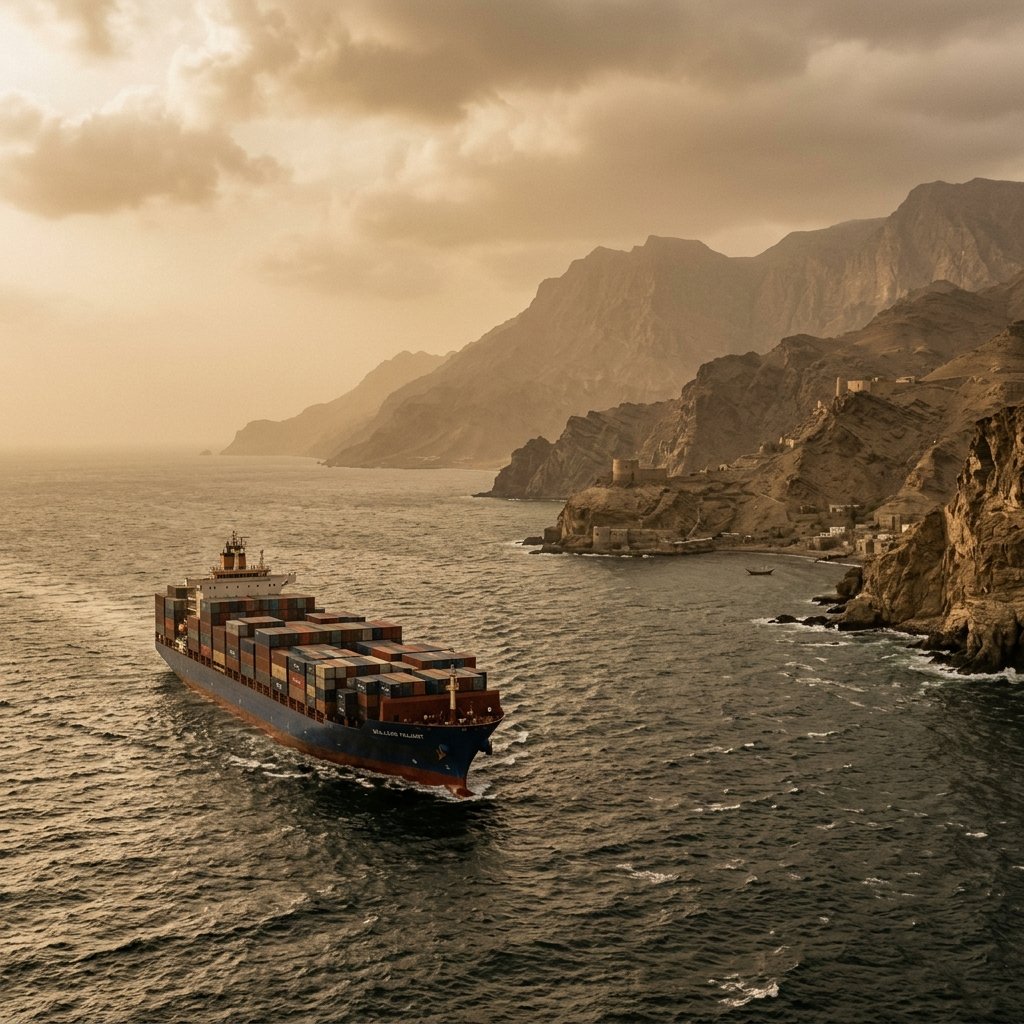
Red Sea & Suez Canal Crisis 2026: Houthi Threats, Cape Rerouting, and What Importers Need to Know
12 de junho de 2026
Just when global shipping thought it couldn’t get worse, the Houthis returned. On June 8, 2026, Yemen’s Iran-backed Houthi movement declared a “complete and total ban” on Israeli maritime navigation in the Red Sea — threatening the one workaround route that had kept some Middle East cargo flowing while the Strait of Hormuz remained paralyzed.
BP immediately paused Red Sea transits. Insurance underwriters began reassessing. And the shipping industry asked a question it’s been asking since 2023: is the Suez Canal route dead?
TL;DR — Red Sea / Suez Crisis Update
- Houthis declared “complete ban” on Israeli ships in Red Sea, June 8, 2026 — definition of “Israeli” is broad enough to catch most carriers
- BP paused all Red Sea transits; other tanker operators following
- Bab el-Mandeb traffic collapsed from 10% of global trade pre-2023 to ~3% in 2025 — and now likely dropping further
- Suez Canal technically open but carriers avoiding it — the “temporary” detour via Cape of Good Hope is now 2+ years old
- Houthis previously attacked ships from 2023-2025; their definition of “Israeli-linked” proved broad enough to hit ships with zero connection to Israel
Share of global seaborne trade passing through Bab el-Mandeb — down from 10% before the Houthi attacks began in 2023
What the Houthis Actually Announced
On June 8, 2026, the Houthi movement issued a statement declaring Israeli ships “legitimate military targets” and announcing a “complete and total ban” on Israeli maritime navigation in the Red Sea.
The catch — and it’s the same catch that paralyzed Red Sea shipping from 2023 to 2025 — is that the Houthi definition of “Israeli-linked” proved extraordinarily broad last time. Vessels with zero Israeli ownership, management, or cargo were attacked if they had called at Israeli ports months earlier, were operated by companies that also served Israel, or were simply flagged to countries perceived as Israeli allies.
The practical result: carriers don’t wait to find out whether they’re “Israeli” under the Houthi definition. They avoid the Red Sea entirely.
The Numbers: How Much Traffic Has Been Lost
| Period | Bab el-Mandeb Traffic | Suez Canal Traffic | Key Event |
|---|---|---|---|
| Pre-Oct 2023 | ~10% of global trade | ~12% of global trade | Normal operations |
| Nov 2023 – Jan 2025 | Severely reduced | Carriers diverting to Cape | First Houthi attack campaign; traffic collapses |
| 2025 (ceasefire) | ~3% | Partial recovery but far below normal | Tentative return; many carriers still avoid |
| March 2026 | Further reduced | Most carriers fully avoiding | Iran war begins; regional risk spikes |
| June 2026 | ~3% and dropping | Effectively abandoned by container lines | Houthi ban on Israeli ships announced |
The Suez Canal hasn’t been a reliable route for container shipping since late 2023. The Houthi announcement just made official what carriers have been practicing for two years.
Why This Matters More Now (Iran War Context)
The Houthi threat would be serious on its own. What makes it critical right now is the Iran war context:
- Hormuz is already closed. With the Strait of Hormuz effectively shut to commercial traffic since March, the Red Sea was the fallback route for Gulf-origin cargo that could reach it via overland pipelines or Red Sea ports.
- No more fallbacks. If both Hormuz AND the Red Sea/Suez corridor are blocked, Middle East cargo has no direct sea route to Europe. Everything goes around Africa — at 10-14 extra days and massive additional fuel cost.
- Oil supply chains squeezed from both ends. Saudi Arabia’s alternative export route (East-West Pipeline to the Red Sea) is now threatened by the Houthi ban. “The fragility of this workaround was laid bare,” reported The Straits Times on June 11.
- Insurance markets are panicking. War-risk coverage for the entire Red Sea/Gulf of Aden region is being reassessed. Some underwriters who were barely comfortable covering Cape-routed vessels are now looking at total regional exclusions.
What This Means for Your Shipments
| Route | Pre-Crisis Transit | Current Transit (Cape) | Cost Impact |
|---|---|---|---|
| Shanghai → Rotterdam | 28–32 days | 38–46 days | +$800–$1,500/FEU |
| Ningbo → Hamburg | 30–35 days | 40–50 days | +$800–$1,500/FEU |
| Shenzhen → Felixstowe | 28–34 days | 38–48 days | +$800–$1,500/FEU |
| Jebel Ali → Rotterdam | 18–22 days | 28–35 days | +$1,000–$2,000/FEU |
These are not temporary surcharges. The Cape routing has been in place for two years and counting. The Houthi announcement makes a return to Suez routing even more distant.
Frequently Asked Questions
Is the Suez Canal closed?
No — the canal is technically open and operating. But most container lines are voluntarily avoiding it due to the Houthi threat in the southern Red Sea and Bab el-Mandeb. The practical effect is the same as a closure for most importers: your cargo goes around the Cape of Good Hope.
When will shipping return to the Red Sea and Suez Canal?
Not in 2026, and possibly not in 2027. Three conditions would need to be met: (1) credible de-escalation of the Iran war and Houthi threat, (2) insurance underwriters removing war-risk exclusions for the region, (3) carriers gaining confidence that crew safety can be guaranteed. None of these are in sight. The Cape routing is the baseline for planning purposes.
How much extra does Cape routing add to my freight costs?
An additional $800–$1,500 per FEU on Asia-Europe lanes — driven by extra fuel (10-14 more sailing days), higher insurance, and the opportunity cost of longer vessel cycles (fewer trips per year per ship, tightening effective global capacity by ~15%).
Does the Red Sea crisis affect shipments from China to the USA?
Directly, only for US East Coast services that normally transit Suez. Those are now routing via the Cape of Good Hope or Panama Canal, adding 7-14 days. US West Coast services are unaffected. However, the global container fleet inefficiency caused by Cape routing affects all lanes indirectly through tighter capacity.
Should I use rail freight from China to Europe instead of ocean?
China-Europe rail freight (14-18 days) is now significantly faster than Cape-routed ocean (38-50 days) and only moderately more expensive than current ocean rates with surcharges. For time-sensitive Europe-bound cargo, rail is increasingly the sweet spot — faster than ocean, cheaper than air, and avoids both Hormuz and Red Sea chokepoints entirely.
{“@context”:”https://schema.org”,”@type”:”Question”,”name”:”Is the Suez Canal closed in 2026?”,”acceptedAnswer”:{“@type”:”Answer”,”text”:”No — the canal is technically open. But most container lines are voluntarily avoiding it due to the Houthi threat in the southern Red Sea and Bab el-Mandeb. The practical effect is the same as a closure: cargo goes around the Cape of Good Hope, adding 10-14 days and $800-$1,500 per container.”}}
{“@context”:”https://schema.org”,”@type”:”Question”,”name”:”When will shipping return to the Red Sea and Suez Canal?”,”acceptedAnswer”:{“@type”:”Answer”,”text”:”Not in 2026 and possibly not in 2027. Three conditions needed: de-escalation of the Iran war and Houthi threat, insurance underwriters removing war-risk exclusions, and carriers gaining confidence in crew safety. None are in sight. Cape routing is the baseline for planning.”}}
{“@context”:”https://schema.org”,”@type”:”Question”,”name”:”How much extra does Cape of Good Hope routing add to freight costs?”,”acceptedAnswer”:{“@type”:”Answer”,”text”:”An additional $800-$1,500 per FEU on Asia-Europe lanes from extra fuel (10-14 more sailing days), higher insurance, and tighter effective global capacity (~15% reduction from longer vessel cycles).”}}
{“@context”:”https://schema.org”,”@type”:”Question”,”name”:”Does the Red Sea crisis affect shipments from China to the USA?”,”acceptedAnswer”:{“@type”:”Answer”,”text”:”Directly only for US East Coast services normally transiting Suez, which now route via Cape or Panama adding 7-14 days. US West Coast services are unaffected. However, global fleet inefficiency from Cape routing affects all lanes indirectly through tighter capacity.”}}
{“@context”:”https://schema.org”,”@type”:”Question”,”name”:”Should I use China-Europe rail freight instead of ocean because of the Red Sea crisis?”,”acceptedAnswer”:{“@type”:”Answer”,”text”:”Yes, rail freight (14-18 days) is now significantly faster than Cape-routed ocean (38-50 days) and only moderately more expensive. For time-sensitive Europe-bound cargo, rail is increasingly the sweet spot — faster than ocean, cheaper than air, avoids both Hormuz and Red Sea chokepoints.”}}

Muhammad Fahad, Co-founder & Operations Lead, Googol Traders · Last updated: 2026-06-12