
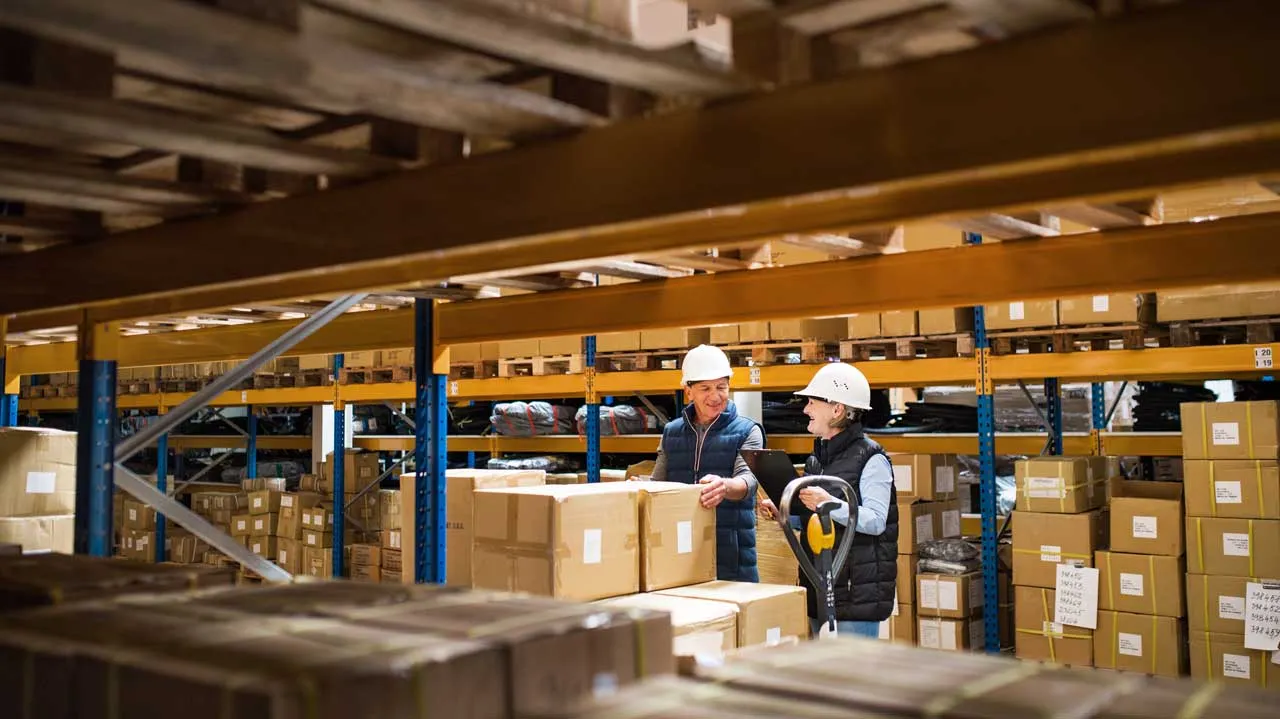
AQL 2.5 Pre-Shipment Inspection Checklist for Amazon FBA Sellers
June 8, 2026
If you are an Amazon FBA seller sourcing from China, a pre-shipment inspection (PSI) using the AQL 2.5 standard is the single highest-ROI step you can take to prevent returns, A-to-Z claims, and Amazon account suspensions. When planning your logistics route, whether you use importing from China to USA procedures or ship via DDP Shipping from Shenzhen to Amazon FBA, verifying product quality on the factory floor is essential. This guide gives you the exact AQL 2.5 checklist Googol Traders uses for our FBA seller clients, with sample sizes, defect classifications, and the three inspection checkpoints that prevent 95% of post-delivery quality issues. We also offer integrated China warehousing and consolidation storage to secure your shipments before dispatch.
TL;DR
- AQL 2.5 is the standard Acceptable Quality Level for most consumer goods. Up to 2.5% of the sample can have defects and the lot still passes.
- Sample size for a 1,000-unit lot: 125 units. Defects: ≤5 = pass, ≥6 = fail.
- 3 inspection checkpoints prevent 95% of returns: 1) During Production (DPI), 2) Pre-Shipment (PSI), 3) Container Loading (CLI).
- A typical 1,000-unit FBA shipment PSI costs $360-$600 and prevents $5,000-$50,000 in returns and account issues.
Average pre-shipment inspection cost for 1,000 units in Shenzhen, 2026 (1-2 man-days)
What is AQL 2.5?
AQL stands for Acceptable Quality Level. It is a statistical sampling system defined by ISO 2859-1 that tells you how many defects are acceptable in a random sample of your product, based on the lot size and the inspection level you choose.
AQL 2.5 means up to 2.5% of the sample can have defects and the lot still passes. AQL 2.5 is the standard for most general consumer goods (apparel, accessories, home goods, toys, consumer electronics). For higher-end or safety-critical products, AQL 1.5 or even AQL 0.65 is used.
The 10-100x ROI of inspection
A typical 1,000-unit FBA shipment PSI costs $360-$600. The downside risk of skipping inspection: $5,000-$50,000 in customer returns, A-to-Z claims, Amazon account issues, and brand reputation damage. ROI on inspection: 10x to 100x.
AQL 2.5 Sample Size Table (General Inspection Level II)
For a typical FBA shipment, General Inspection Level II is used. Here is the sample size table:
| Lot size (units) | Sample size | Accept (≤ defects) | Reject (≥ defects) |
|---|---|---|---|
| 26-50 | 8 | 0 | 1 |
| 51-90 | 13 | 0 | 1 |
| 91-150 | 20 | 1 | 2 |
| 151-280 | 32 | 1 | 2 |
| 281-500 | 50 | 2 | 3 |
| 501-1,200 | 80 | 3 | 4 |
| 1,201-3,200 | 125 | 5 | 6 |
| 3,201-10,000 | 200 | 7 | 8 |
| 10,001-35,000 | 315 | 10 | 11 |
| 35,001+ | 500 | 14<
/td> | 15 |
Example: You are shipping 2,000 units. Sample size = 125. The inspector randomly selects 125 units from the 2,000-unit lot. If 5 or fewer units have any defect, the lot passes. If 6 or more units have defects, the lot fails and the factory must rework or replace defective units before re-inspection.
Defect Classifications: Critical, Major, Minor
AQL applies to all defects combined, but most inspection companies also classify defects by severity. A single critical defect usually fails the entire lot, regardless of AQL score.
| Severity | Definition | Examples | AQL threshold |
|---|---|---|---|
| Critical | Defect that creates safety hazard, fails regulations, or makes product unsellable | Sharp edges, choking hazard, electrical shock, missing safety certifications | 0 tolerance (1 critical = fail) |
| Major | Defect that reduces usability or sellability, likely to cause returns | Wrong color, broken zipper, malfunctioning button, FNSKU label missing | AQL 2.5 |
| Minor | Defect that does not affect usability but reduces perceived quality | Small scratch, loose thread, slight color variation | AQL 4.0 (more lenient) |
Note: 0 critical defects is universal across inspection companies. The major/minor AQL thresholds (2.5 / 4.0) are the most common; some buyers tighten to 1.5 / 2.5 for higher-end products.
The Pre-Shipment Inspection Checklist (Googol Traders Standard)
1. Quantity Verification
- Total unit count matches purchase order (within 2-3% tolerance)
- Inner pack quantities correct (e.g., 12 units per inner carton)
- Outer carton quantities correct (e.g., 4 inners per master carton)
- Carton count matches packing list
2. Packaging & Labeling Inspection
- Carton condition: no crushing, water damage, or visible damage
- Carton dimensions match purchase order spec
- Shipping marks on outer carton correct (buyer name, PO number, destination)
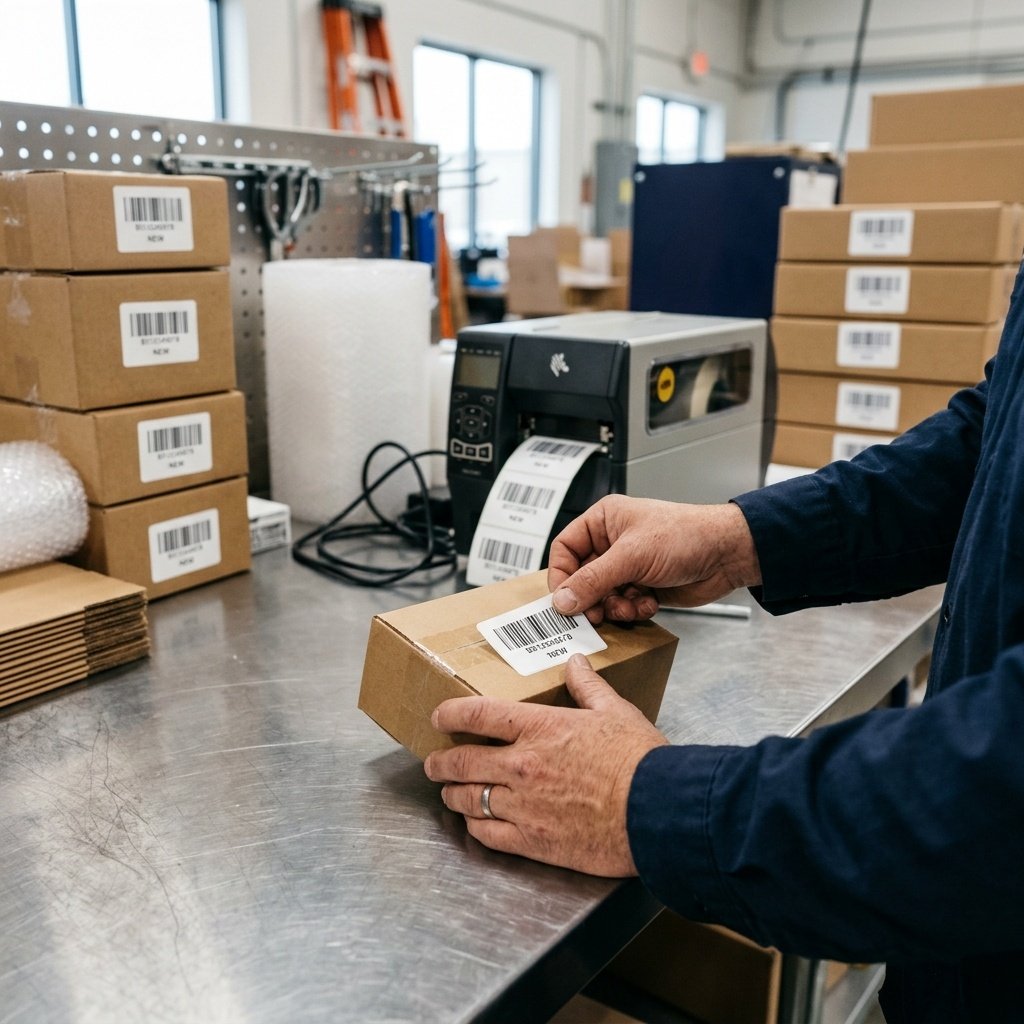
- Amazon FBA box content labels on each master carton (FNSKU + count)
- FNSKU labels applied correctly to every individual unit (not just the carton)
- Poly-bag suffocation warnings present, in English, durable print (not sticker)
- Country of origin “Made in China” on every unit or its packaging
- UPC barcodes scannable (if your product uses UPC instead of FNSKU)
3. Product Quality Inspection (AQL 2.5)
- Random sample drawn per the AQL sample size table above
- Each unit inspected against your product spec sheet (provided to the inspector before the inspection)
- Defects classified as critical, major, or minor
- Defect count compared to AQL accept/reject thresholds
- Inspector photographs all defects found (typical: 10-30 photos per inspection)
4. Functionality & Safety Tests (for applicable products)
- Electronics: power on, basic functions work, no electrical smell
- Battery products: charge cycle, no overheating, no swelling
- Apparel: stitching quality, zipper function, no loose threads, sizing matches spec
- Toys: small parts test (choking hazard for under-3), ASTM F963 compliance if shipping to US
- Food-contact products: FDA-compliant materials, no banned substances
- Children’s products: CPSIA tracking label, lead content, phthalate content
5. Measurement & Weight Verification
- Product dimensions within tolerance (usually +/- 3-5% of spec)
- Product weight within tolerance (usually +/- 5-10% of spec)
- Carton weight and dimensions for shipping cost calculation
6. Special Amazon FBA Requirements
- No retail packaging that requires extra prep (Amazon wants “ships in own container” or “frustration-free” prep)
- Bundles properly marked (multi-pack items need specific ASIN handling)
- Expiration dates on consumables in MM/YYYY format with 90+ day remaining shelf life
- No hazmat materials (batteries, aerosols, flammable liquids need special FBA approval)
- Adult products flagged with proper warnings
The 3 Inspection Checkpoints That Prevent 95% of Returns
Checkpoint 1: During Production Inspection (DPI) — at 20-30% completion
This is your first chance to catch defects. The inspector visits the factory when 20-30% of the order is finished and inspects the early-production units. Catching defects at DPI gives the factory time to fix the production process before 70% of the order is already made. DPI cost: $250-$400 per man-day, typically 1-2 man-days.

Checkpoint 2: Pre-Shipment Inspection (PSI) — at 80-100% completion, before packing
The final quality gate before the goods are sealed in cartons. The inspector selects the AQL 2.5 sample from the finished production lot (before packing) and runs through the full checklist above. PSI cost: $250-$400 per man-day, typically 1-3 man-days depending on lot size. This is the most common inspection type — the “default” most importers use.
Skipping a $400 pre-shipment inspection to save money is the most expensive mistake Amazon FBA sellers make. One bad batch of 1,000 units can cost $20,000 in returns and account suspension.
Checkpoint 3: Container Loading Inspection (CLI) — at the factory loading dock
The inspector supervises the loading of the sealed cartons into the shipping container. They verify: (1) the right products are being loaded (not last month’s overstock), (2) the carton count matches the purchase order, (3) no used or damaged cartons are loaded, (4) the container is clean, dry, and odor-free. CLI cost: $200-$300 per man-day, typically 0.5-1 man-day.
Most FBA sellers use just the PSI (Checkpoint 2) to keep costs low. Sellers shipping $50,000+ per order often add DPI (Checkpoint 1) as insurance. CLI is less common but valuable for high-value or first-time orders.
Common FBA-Blocking Defects to Watch For
These defects will cause Amazon to block, relabel, or destroy your inventory at the FBA warehouse — costing you $0.50-$2.00 per unit in fees plus lost sales:
- Missing or wrong FNSKU label — Amazon will not accept the unit into available inventory
- UPC that does not match the ASIN — Amazon will flag the shipment as wrong-ASIN
- Poly-bag without suffocation warning — Amazon requires the warning on every poly-bagged unit
- Carton weight over 50 lbs — Amazon requires “Team Lift” or “Mechanical Lift” labels on heavy cartons
- Carton over 25 inches on any side — Standard palletization fails; Amazon may charge oversize fee
- Expiration date missing on consumables — Amazon will destroy the inventory
- Hazmat without disclosure — Amazon will return or destroy without notice
How Googol Traders Does Pre-Shipment Inspections
Googol Traders has 4 full-time inspectors in Shenzhen plus a network of 12 inspectors across other major Chinese manufacturing hubs (Yiwu, Guangzhou, Dongguan, Shanghai, Qingdao, Tianjin). Our standard PSI for FBA sellers includes:
- 1-3 man-days on-site at the factory (depending on lot size)
- AQL 2.5 sample size with General Inspection Level II
- Full checklist above + your custom spec sheet
- Detailed inspection report with 30-80 photos within 24 hours of inspection completion
- Pass / fail / rework recommendation
- Optional: rework supervision (we go back after the factory fixes defects and re-inspect)
Cost: $280 per man-day + $80 fixed report fee. A typical 1,000-unit FBA shipment PSI runs $360-$600 total. That single inspection typically prevents $5,000-$50,000 in returns, A-to-Z claims, and account issues. ROI: 10-100x.
Frequently Asked Questions
What is the difference between AQL 1.5, 2.5, and 4.0?
These are different Acceptable Quality Levels. AQL 1.5 is stricter (fewer defects allowed) and is used for higher-end products. AQL 2.5 is the standard for most consumer goods. AQL 4.0 is more lenient and is used for budget products or where some defects are expected. Most importers use AQL 2.5 for major defects and AQL 4.0 for minor defects.
How long does a pre-shipment inspection take?
For a 1,000-unit lot, 1 inspector needs about 1 day (8 hours). For a 5,000-unit lot, 1-2 days. For a 20,000-unit lot, 2-3 days. The inspector’s day includes: traveling to the factory, pulling the AQL sample, running the inspection, photographing defects, writing the report. Plan for 24-48 hours from inspection start to receiving the report.
What if the inspection fails?
You have 3 options: (1) ask the factory to rework the defects and re-inspect (most common; usually 3-5 days), (2) accept the defects with a discount (negotiate a 5-15% refund based on defect rate), (3) reject the entire lot and demand a new production (rare; only for serious defects). Googol Traders handles all three scenarios on your behalf.
Can I do the inspection myself by visiting the factory?
You can, but there are trade-offs. Doing it yourself saves $300-$600 per inspection, but: (1) you need to be in China, (2) you may not have the technical expertise for the specific product category, (3) language barriers with factory QC staff, (4) you may miss defects the factory intentionally hides from the buyer. Most FBA sellers use a third-party inspector rather than doing it themselves.
An Execution-Order PSI Checklist for FBA Sellers
Run inspection in execution order: sampling gate first, functional checks second, FBA compliance third — because each stage can stop shipment before money moves further.
Quick answer: Photograph the inspection sampling itself, not just defects — it protects both sides if results are disputed.
| Stage gate | What is checked | Disposition rule |
|---|---|---|
| 1. Sampling gate | Lot size → Z1.4 sample; AQL 2.5 acceptance | Fail → no further stages |
| 2. Functional/cosmetic | Workmanship, function, aesthetics vs golden sample | Classify critical/major/minor |
| 3. FBA compliance | FNSKU, carton labels, box specs, prep | Fix at warehouse or reject |
Questions buyers actually ask
- What sample size does AQL 2.5 give me? — Lot-size dependent per ANSI/ASQ Z1.4 tables — larger lots take proportionally fewer samples.
- Which defects block shipment? — Critical defects universally; major/minor per your acceptance thresholds in the inspection brief.
- What does FBA reject? — Non-compliant labeling, packaging, and prep per Amazon requirements — check the official pages linked.
Watch out: AQL 2.5 does not mean “2.5% of everything can fail”; misreading the tables undermines the entire inspection.
Useful next steps on this site: prep requirements detail · inspection-type comparison (Arabic) — link EN equivalent if exists · getting compliant goods into FBA via DDP
Sources checked 2026-08-25 including CloudSpects — AQL Tables Guide. Rates and timelines change — always confirm with a current quotation.
Frequently asked questions
What sample size does AQL 2.5 give me?
Lot-size dependent per ANSI/ASQ Z1.4 tables — larger lots take proportionally fewer samples.
Which defects block shipment?
Critical defects universally; majors and minors per the acceptance thresholds written into your inspection brief.
Frequently asked questions
What sample size does AQL 2.5 give me?
Lot-size dependent per ANSI/ASQ Z1.4 tables — larger lots take proportionally fewer samples.
Which defects block shipment?
Critical defects universally; majors and minors per the acceptance thresholds written into your inspection brief.

Muhammad Fahad, Co-founder & Operations Lead, Googol Traders · Last updated: 2026-06-06
Request an inspection before FBA shipment
This checklist is for planning. For a China-side visit and report against your product requirements, see our pre-shipment inspection services in China.
Related Articles
The $800 De Minimis Exemption Is Gone: What E-commerce Sellers Must Do (2026)
De minimis is suspended for all countries — every ≤$800 shipment needs entry + duties now. Why consolidated DDP freight beats the parcel model, with the full 2026 timeline.
Read More
Jeddah vs Dammam vs Riyadh: Which Gateway Should Saudi Importers Use? (2026)
Jeddah, Dammam or King Abdullah Port? Compare transit, inland trucking and landed cost for China→Saudi cargo — including the Riyadh gateway decision framework.
Read More
Suez Is Reopening — So Why Aren’t Freight Rates Falling? (2026)
Suez traffic hit a 2.5-year high in August 2026, yet container rates stay elevated. What the MSC/Maersk Suez return really means for China→Saudi and global freight.
Read MoreReady to Import from China?
Get a free, all-inclusive freight quote from our team within 4 business hours.