
FBA Prep Guide 2026: Requirements & Real Costs Per Unit
August 21, 2026
Every unit you send to an Amazon fulfillment center has to arrive ready to sell — labeled, bagged, sealed, and scannable. Since January 1, 2026, Amazon no longer fixes prep mistakes for you: the company shut down its in-network FBA Prep Service, so anything that arrives non-compliant now triggers fees, delays, or stranded inventory. This guide breaks down exactly what FBA prep requires in 2026, what it costs, and how sellers shipping from China can handle it without eating their margin.
TL;DR
- Amazon ended its own FBA Prep Service on January 1, 2026 — every unit must arrive 100% prepped.
- US prep centers charge a median $1.30 per unit entry rate; volume tiers drop to $0.90 or lower at scale.
- Factory-applied FNSKU labels in China run $0.03–$0.08 per unit — roughly 5–10x cheaper than US prep centers.
- Prepping at a China forwarder warehouse (inspection + label + polybag + consolidate) cuts both prep cost and freight cost.
Median per-unit entry rate across 44 verified US prep centers, 2026
What Is FBA Prep, Exactly?
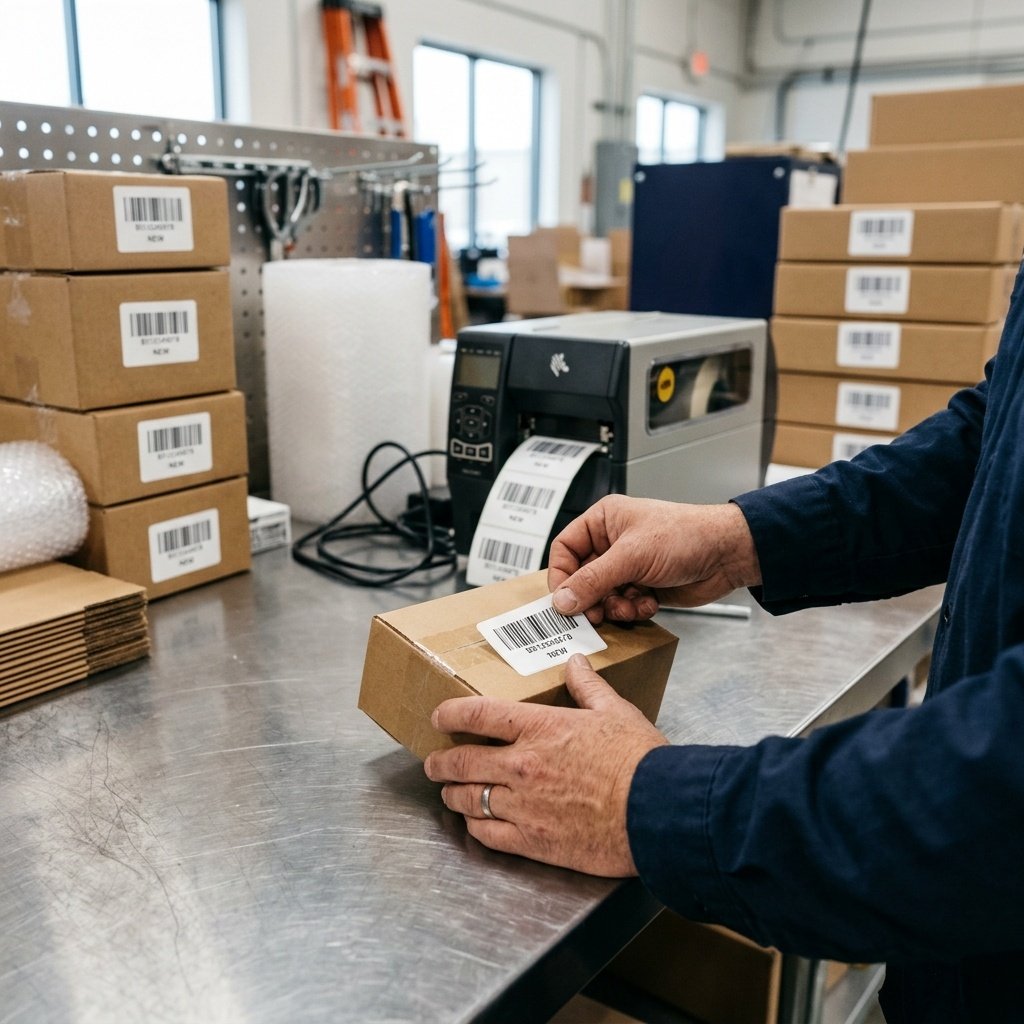
FBA prep is the work of making your inventory compliant with Amazon’s receiving standards before it reaches a fulfillment center. It covers labeling, packaging, protective materials, and documentation. Skip any piece of it and the unit either gets refused at receiving or enters Amazon’s “unplanned services” queue — where you pay for someone else to do the work you skipped.
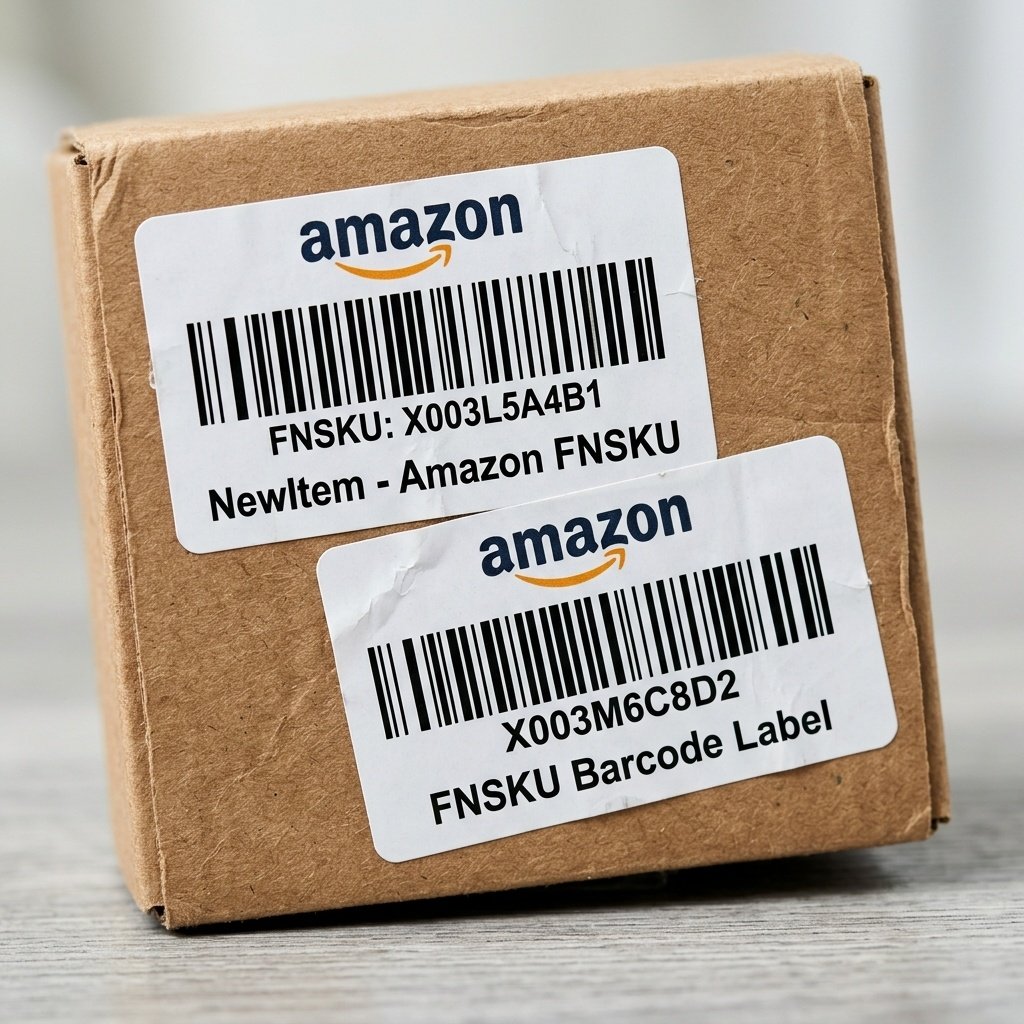
- FNSKU labeling
- Amazon’s barcode sticker that maps a physical unit to your specific listing. Required on every unit unless you are a Brand Registry seller using manufacturer barcodes.
- Poly bagging
- Clear, sealed plastic bagging for soft goods, textiles, and leak-risk items — with suffocation warnings above a set size.
- Bundling and kitting
- Assembling multi-packs or gift sets so they sell as one SKU, with “Sold as Set” labeling.
- Carton compliance
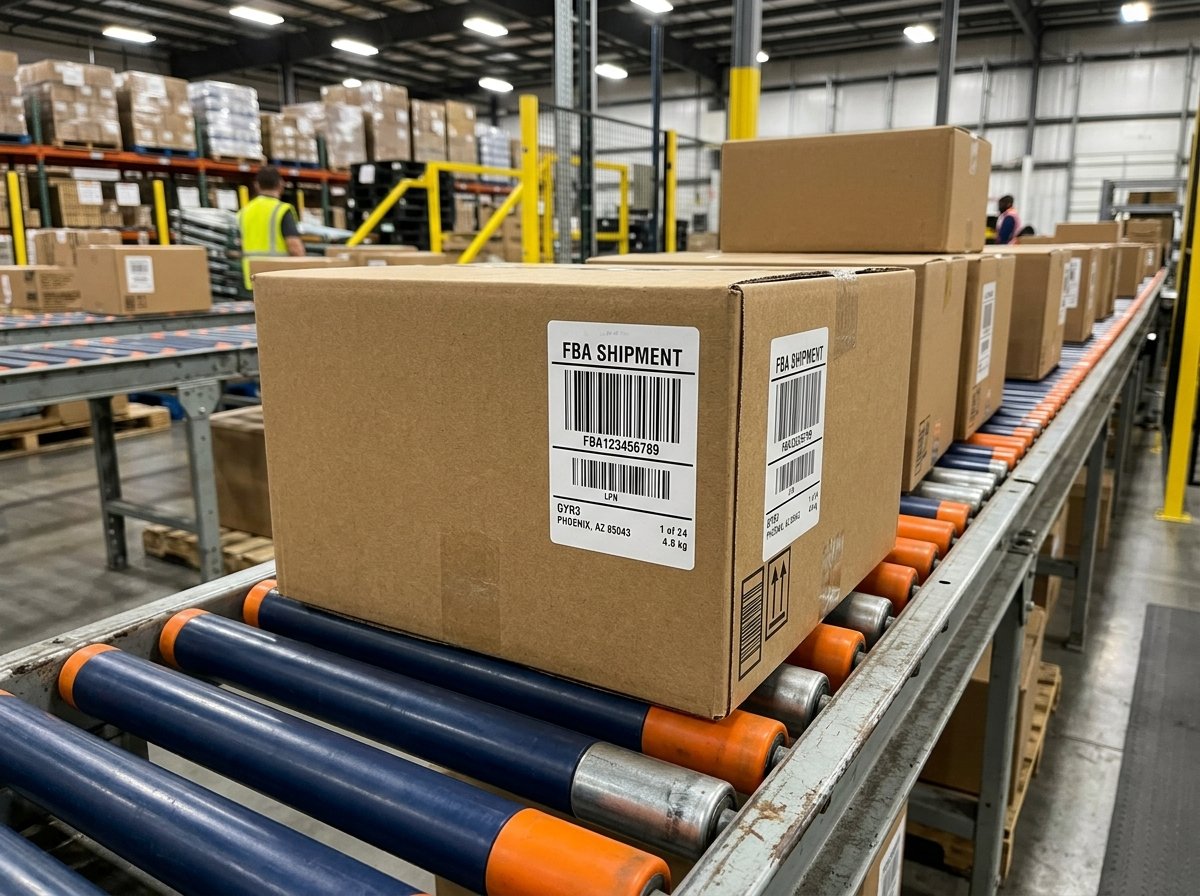
- Outer boxes within Amazon’s weight and dimension limits, with correct shipment labels on the outside.

What Changed in 2026: Amazon Quit Prepping Your Inventory
Two changes define FBA prep this year:
- January 1, 2026: Amazon shut down its in-house FBA Prep Service for most sellers. Previously you could pay Amazon (roughly $0.30–$1.20 per unit depending on prep type) to label, bag, or bubble-wrap non-compliant units. That safety net is gone — third-party prep centers and forwarder warehouses are now the only option if you don’t prep yourself.
- March 31, 2026: Amazon closed commingled inventory for sellers without Brand Registry. Every non-registered seller must now apply FNSKU labels to individual units — no exceptions.
Common Mistake
Sellers who ignored the January 1 change are discovering it at receiving: non-compliant units now incur unplanned-service fees of roughly $0.10–$1.30 per unit, per service — and some categories see defect-style fees up to $5.72 per unit. On a 2,000-unit shipment, one skipped prep step can quietly add four figures to your landed cost.
The FBA Prep Requirements Checklist (2026)
| Requirement | Specification | Applies to |
|---|---|---|
| FNSKU label | Black ink on white removable label, 1×2″ to 2×3″, 300 DPI, scannable; must cover the manufacturer barcode | Every unit (all non-Brand-Registry sellers) |
| Poly bag | Transparent, minimum 1.5 mil thickness, fully sealed; suffocation warning in 24-point font if opening is 5″+ flat | Apparel, textiles, plush, leak-risk items |
| Bubble wrap | Fragile items fully wrapped and tested drop-safe without additional packaging | Glass, ceramics, electronics, fragile goods |
| Sold-as-set label | “Sold as Set” or “Do Not Separate” marking on multi-pack units | Bundles, kits, multi-packs |
| Expiration dates | MM-DD-YYYY format on both the unit and the outer carton | Food, supplements, cosmetics, topicals |
| Carton limits | Max 50 lb (22.6 kg) per box; max dimensions 25″ per side; six-sided, sealed, shippable alone | Every inbound carton |
Pro Tip
Print FNSKUs on thermal printers at 300 DPI on matte white stock — inkjet labels smear and fail scans. Place labels on a flat surface, never over seams, corners, or curves. A failed scan at receiving means the whole carton gets pulled for manual processing.
What FBA Prep Costs in 2026
Prep pricing depends on what each unit needs. Here is the realistic 2026 range per service, compiled from published US prep-center rate cards:
| Service | Typical cost (USD) | Notes |
|---|---|---|
| Receiving and intake | $25–$50 per shipment | Unloading, count, WMS check-in |
| FNSKU labeling | $0.20–$0.50 per unit | $0.65+ if billed standalone at some centers |
| Poly bagging | $0.15–$0.55 per unit | Bag material often billed separately |
| Bubble wrap / dunnage | $0.25–$0.75 per unit | Fragile items |
| Bundling / kitting | $0.50–$2.00 per bundle | Multi-piece assembly, custom packs higher |
| Carton relabel | $2–$4 per box | Shipment plan changes, FC reroutes |
| All-in standard prep | $0.50–$1.50 per unit | Label + bag + inspect, bundled rate |
Volume moves the number fast: the middle 50% of published US prep-center entry rates runs $0.99–$1.66 per unit, and published volume floors reach $0.30–$0.45 per unit — but those tiers require 1,000–2,000+ units per shipment. Also budget for one-time onboarding fees: 41% of US prep centers charge a median $87 setup (range $25–$300).
Prep done right costs $0.30–$1.50 per unit. Prep done wrong costs $0.10–$1.30 per unit, per violation — plus the stockout while inventory sits in receiving limbo.
Pro Tip: Label at the Factory
Chinese factories commonly apply FNSKU labels for $0.03–$0.08 per unit — 5–10x cheaper than US prep centers. The catch: factories swap SKUs across purchase orders, and mislabeled inventory compounds at scale. If you go this route, put a scan-and-verify requirement in the contract, or have your forwarder’s QC team verify labels during pre-shipment inspection.
Where Should Your Prep Happen?
You have three realistic options in 2026 — each with different cost and risk profiles:
| Option | Cost per unit | Best for | Risk |
|---|---|---|---|
| At the factory (China) | $0.03–$0.08 (label only) | Simple SKUs, single-SKU POs | Mislabeling, no verification unless inspected |
| China forwarder warehouse | $0.15–$0.40 (label + bag + QC) | Multi-supplier consolidation, pre-ship QA | Lowest — problems caught before ocean freight |
| US prep center | $0.50–$1.50 all-in | Returns processing, last-minute fixes | Onboarding fees, monthly minimums, slower turnaround |
What Works
Prep at origin, before the container is sealed. A China-side forwarder warehouse combines pre-shipment inspection, FNSKU application, polybagging, and multi-supplier consolidation in one facility — so errors are fixed for cents instead of dollars, and you ship one clean consolidated shipment instead of paying repeated LCL fees.
Step-by-Step: FBA Prep From China With One Partner
- Create your shipment plan in Seller Central and download the FNSKU label PDFs for each SKU.
- Book production and share the label files plus prep instructions with your supplier or forwarder.
- Schedule pre-shipment inspection (AQL 2.5) when goods are 80%+ produced — catch defects before money moves.
- Goods move to the forwarder warehouse in Shenzhen or Yiwu for consolidation, labeling verification, polybagging, and carton compliance checks.
- Cartons get packed to Amazon spec — 50 lb limit, correct carton labels, shipment ID on every box.
- Ocean or air freight books out — DDP to the fulfillment center, customs cleared, ISF filed before vessel loading.
- FC appointment confirmed and inventory checks in sellable — no unplanned-service fees waiting at receiving.
Mistakes That Trigger Amazon Fees (and How to Avoid Them)
- Labels over seams or curves — failed scans mean manual processing queues. Flat surfaces only.
- Uncovered manufacturer barcodes — if a scanner reads the wrong code, your units get commingled into another seller’s inventory or refused.
- Poly bags under 1.5 mil or missing suffocation warnings — instant non-compliance on soft goods.
- Cartons over 50 lb without a “Team Lift” label — refused at the dock.
- Wrong expiration format — must be MM-DD-YYYY on unit and carton for consumables.
- Prepping after booking freight instead of before — fixing prep at a US prep center after ocean transit costs 3–10x more than doing it at origin.
Common Mistake
Trusting factory-applied labels without verification. The most common mislabel pattern: the factory pulls old label stock from a previous order. Every unit lands against the wrong ASIN, and unwinding it after arrival involves removal orders and storage fees. One pre-shipment inspection pass eliminates this entire failure mode.
Frequently Asked Questions
How much does FBA prep cost per unit in 2026?
Standard prep (receiving, FNSKU labeling, polybagging, basic inspection) runs $0.50–$1.50 per unit all-in at US prep centers, with a median entry rate around $1.30. Volume shipments of 1,000+ units drop to $0.75–$0.90, and prep at a China forwarder warehouse typically runs $0.15–$0.40 per unit before freight savings.
Does Amazon still offer FBA prep services?
No. Amazon discontinued its in-house FBA Prep Service on January 1, 2026. All prep must now be completed before inventory arrives at the fulfillment center — either by the seller, the factory, or a third-party prep provider. Non-compliant arrivals trigger unplanned-service fees instead of getting fixed automatically.
Do I need FNSKU labels if I have Brand Registry?
Brand Registry sellers can use manufacturer barcodes (UPC/EAN) instead of FNSKUs, which avoids labeling entirely. However, since March 31, 2026, commingled inventory is closed for non-registered sellers — if you sell without Brand Registry, FNSKU labels on every unit are mandatory with no exceptions.
Is it cheaper to label products at the factory in China?
Yes — dramatically. Factory labeling runs $0.03–$0.08 per unit versus $0.20–$0.50 at US prep centers. The risk is mislabeling: demand scan-and-verify in the contract or add a pre-shipment inspection to confirm every label matches its SKU before the container is sealed.
What happens if my inventory arrives non-compliant?
Amazon charges unplanned-service fees of roughly $0.10–$1.30 per unit, per service, and the inventory sits in receiving until resolved. In practice, sellers report stockouts lasting weeks because fixing prep after arrival requires removal orders or third-party intervention — far more expensive than prepping correctly at origin.
FBA Prep Decision Framework: Choose the Control Point Before You Ship
There is no universal cheapest prep location. Choose the control point that gives you reliable verification before inventory enters the FBA network, then compare quotes using the same scope.
| Option | Use it when | Verify before booking |
|---|---|---|
| Self-prep | You can control SKU-level labeling, packaging, and evidence in-house. | Staff time, equipment, storage, product-specific rules, and a second-person scan check. |
| Factory prep | The SKU is stable and the supplier can follow a written, versioned instruction. | Label file ownership, sample scan, carton photos, and a pre-shipment inspection clause. |
| China forwarder warehouse | You need consolidation, inspection, relabeling, or a controlled handoff before export. | Receiving scope, rework authorization, scan records, carton data, and the named FBA destination. |
| US prep center | Inventory is already in the US or a late correction is unavoidable. | Receiving fees, storage, rework rules, turnaround, return handling, and the exact rate card date. |
Use a quote worksheet instead of a blended per-unit promise
Illustrative calculation — not a live freight quotation: total prep cost = receiving + (labelled units × label rate) + (bagged units × bag rate) + (bundled units × bundle rate) + materials + quality check + storage + expected rework. Prep cost per sellable unit = total prep cost ÷ accepted sellable units. Ask every provider to fill the same fields; do not compare a label-only rate with an all-in inspection-and-packaging rate.
- Record the SKU, unit count, product dimensions, carton dimensions, and destination marketplace.
- Attach the current label file and identify who owns the final approval.
- List every required operation: label, bag, bubble-wrap, bundle, expiry check, carton label, pallet, or other category-specific work.
- Define the evidence pack: scan result, carton photos, quantity reconciliation, and exceptions requiring approval.
Origin-readiness checklist
- Confirm the applicable Amazon Seller Central guidance for the product and US store.
- Match the shipment plan, SKU, barcode choice, product condition, and label file.
- Inspect a representative sample and scan the final label through any outer packaging.
- Reconcile unit and carton counts before sealing, then retain photos and the signed checklist.
- Release freight only after the prep owner confirms the destination and documentation.
For the freight leg, compare the shipment profile with our LCL versus FCL guide. If your inventory is routed through a Gulf hub, see the China-to-Saudi shipping guide for a separate destination checklist, and use the Arabic product-inspection guide when coordinating a bilingual origin QC handoff.
Sources checked: 2026-08-24. Amazon’s FBA Prep Service policy and FBA prep, packaging, and labeling guide are the primary references. Requirements and fees can change by marketplace, product, and service scope; confirm them in Seller Central before dispatch.

Muhammad Fahad, Co-founder & Operations Lead, Googol Traders · Last updated: 2026-08-21
Related Articles
Amazon FBA Shipping Costs
When calculating shipping costs to various Amazon FBA warehouse locations, you will likely have to strike a balance between location and profitability. Shipping costs can differ based on where you are sending the shipment, the type of goods you are shipping, and the logistics services you require. To understand Amazon FBA shipping costs, you first [ ]
Read More
eCommerce Shipping: Strategies & Practices Guide
eCommerce shipping fees can significantly reduce profits, making it unsustainable with a gross margin below 15% and causing cash flow issues below 25%. Thus, finding affordable and efficient shipping solutions is essential. This is especially true for cross-border logistics, which add challenges like warehouse congestion, customs delays, and delivery issues, leading to increased customer complaints [ ]
Read More
China Warehousing for Importers: Flexible Storage in Strategically Located Facilities
Googol Traders offers flexible warehousing and distribution services from strategically located facilities in China’s Bao’an District, Shenzhen — serving importers across North America, Europe, the Middle East, and Oceania with consolidation, inspection, and fulfilment services.
Read MoreReady to Import from China?
Get a free, all-inclusive freight quote from our team within 4 business hours.