
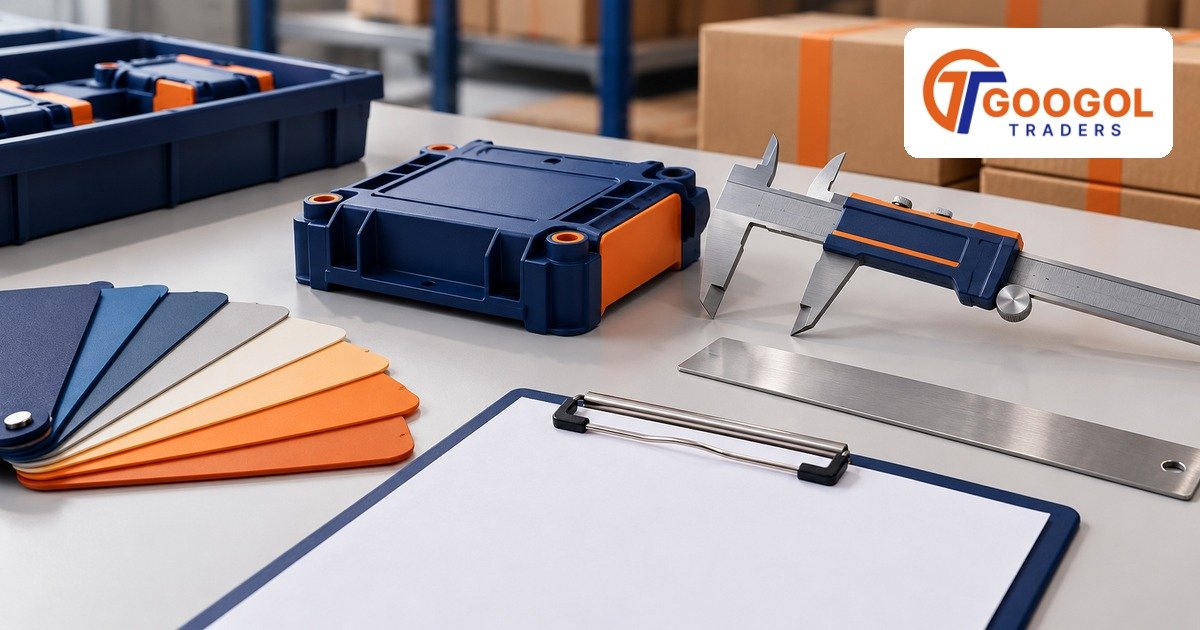
Supplier Sample Evaluation Checklist Before a Bulk Order
October 30, 2026
A sample can look excellent and still leave you exposed if nobody records what “excellent” means. Before you approve a bulk order from China, turn the sample into a measurable production standard—one your supplier, inspector and receiving team can all use.
TL;DR
- Ask what type of sample you received: stock, customized, pre-production or production sample.
- Compare it with a written specification across dimensions, materials, workmanship, function and packaging.
- Record every deviation with photos, measurements and a revision number before approving or rejecting it.
- Keep a dated reference sample or complete evidence pack, then use it for bulk inspection.
The minimum sample review: dimensions, materials, workmanship, function and packaging
Why one sample is not the same as one production run
A sample answers a narrow question: what did the supplier send for review? It does not automatically prove that the same materials, tooling, workers, line or packaging will be used for the bulk order. A hand-finished showroom piece and a production-line sample can look similar while representing very different risks.
Start by naming the sample. A stock sample can show the catalogue product; a customized sample checks selected changes; a pre-production sample should reflect the planned materials and process; a production sample shows what the live run is producing. The correct choice depends on the product and risk, but the label should never be left vague.
Prepare the comparison before the parcel arrives
Build the review sheet from the specification you sent the supplier. Include the SKU and revision, dimensions and tolerances, material or component requirements, colour reference, finish, function, accessories, packaging, labels and destination-market compliance questions.
Use the same method for every shortlisted supplier. That makes the comparison fair and reveals whether a low price comes with a material substitution or an incomplete scope.
- Give each sample a supplier, SKU and revision ID.
- Photograph the parcel, sample and accessories before testing.
- Mark critical requirements separately from preferences.
- Write the pass, revise or reject rule before you see the result.
Pro Tip
Never approve a sample with “looks good.” Approve a named revision against a written specification, with accepted deviations listed explicitly.
The five-zone sample evaluation checklist
| Zone | What to check | Evidence to keep |
|---|---|---|
| 1. Dimensions and fit | Length, width, thickness, weight, fit and critical tolerances | Measurement sheet, tool used, photos with a scale |
| 2. Materials and components | Grade, composition, finish, components and approved bill of materials | Supplier declaration, certificates where relevant, comparison notes |
| 3. Workmanship | Seams, edges, joins, printing, surface defects, assembly and consistency | Close-up photos and defect list by location |
| 4. Function and use | Every feature under the conditions your customer will use | Test method, result, duration or cycle count where appropriate |
| 5. Packaging and compliance | Carton protection, labels, barcode, instructions and destination requirements | Pack-out photos, label proof and required test documents |
Measure the product, then test the use case
Begin with dimensions and weight because they affect fit, packaging, freight and sometimes regulatory classification. Use the tool appropriate to the requirement and record the method. “About the right size” is not a production standard.
Next compare the materials and components against the bill of materials or written requirement. A visual match is not enough for a material-critical product. If a claim depends on a certificate, test report or regulated marking, obtain the document and verify whether it covers the exact model, material and destination.
For function, reproduce normal customer use and then document any reasonable stress test that matters to the product. Electronics, children’s products, food-contact items, batteries, protective equipment and other regulated categories may need destination-specific laboratory work. For U.S. consumer products, CPSC explains that applicable certification must be based on testing or a reasonable testing program; a sample review is not a substitute for the importer’s legal compliance obligations.
Common Mistake
Approving a sample while leaving packaging, labels and destination compliance for later. A product can pass a visual quality check and still be unready for the market you intend to serve.
Set the golden sample and production handoff
When a sample passes, freeze the exact revision. If practical, keep one reference with the buyer and one coded reference in China. If the physical sample cannot be retained, preserve high-resolution photographs, measurements, approved artwork, test results and written deviations in one controlled record.
Copy the approval into the purchase order and inspection brief. Include the sample ID, specification revision, accepted tolerances, packaging version, required tests, defect rules and the point at which the goods will be inspected. This stops the factory, buyer and inspector from working from different versions.
For bulk-lot inspection, define the sampling method before production. ISO 2859-1:2026 is the current ISO standard for acceptance sampling by attributes and provides AQL-indexed sampling schemes; it does not decide your product’s risk tolerance for you. Choose the plan with a qualified inspector and make critical safety or regulatory defects a separate decision.
What to do when the sample fails
Do not turn a failed sample into an argument about taste. Categorize the gap, attach the evidence and request a written correction. A supplier that responds with a revised sample and clear explanation has given you useful capability evidence; a supplier that dismisses measurable gaps is increasing your production risk.
| Sample result | Response | Bulk-order gate |
|---|---|---|
| Critical or compliance gap | Stop and verify the requirement with the destination authority or qualified lab | No bulk approval |
| Major specification or function gap | Request a corrected sample and update the revision record | No production until re-approved |
| Minor cosmetic gap | Decide whether it is acceptable and write the tolerance | Inspect against the written acceptance rule |
| Pass | Sign the revision and transfer it to the PO and QC plan | Release only after supplier confirms the standard |
Once the standard is frozen, use our pre-shipment inspection guide for the bulk check and the AQL inspection checklist for an Amazon-oriented workflow. If you have not yet checked the supplier, start with supplier verification before payment. For packaging and freight assumptions, see the CBM and container-loading guide.
Frequently Asked Questions
What should I check in a product sample from China?
Check dimensions, materials, workmanship, function, packaging, labels and any destination-specific compliance evidence. Compare every material requirement with the written specification and keep photos and measurements.
What is the difference between a pre-production sample and a production sample?
A pre-production sample is reviewed before the bulk run to confirm the planned materials and process. A production sample is taken from the live run and helps confirm that the approved standard is being maintained.
Should I order samples from more than one Chinese supplier?
When the decision is material, yes. Give each supplier the same specification and compare the samples using one scorecard. A single sample can show capability, but it cannot tell you whether another supplier offers a better fit or lower risk.
What is a golden sample?
A golden sample is the approved physical reference for bulk production. Identify it by SKU and revision, record accepted deviations and make sure the supplier and inspector know which version controls the order.
Does a good sample guarantee good bulk production?
No. It reduces uncertainty but does not prove process consistency. Use a written purchase specification, production controls and a pre-shipment inspection to check whether the bulk lot matches the approved standard.
Related Articles

How to Spot Fake Certificates When Importing from China
If you’re a small brand, or don’t manufacture your own products, the authorities expect you to be liable for all aspects of your products safety. It can be estimated that around 30% of all product safety certificates coming out of China are fake. Sure, a fake certificate could get your goods through customs, but they [ ]
Read More
QIMA vs SGS: Who's Better for Pre-Shipment Inspections?
Compare QIMA and SGS for pre-shipment inspection by scope, reporting, coverage, and importer fit before choosing a provider for a China shipment.
Read MoreBest Pre-Shipment Inspection Companies: How to Compare Providers
A comparison guide to pre-shipment inspection providers: what to check in coverage, scope, reports, and China-factory fit before you request an inspection.
Read MoreReady to Import from China?
Get a free, all-inclusive freight quote from our team within 4 business hours.