
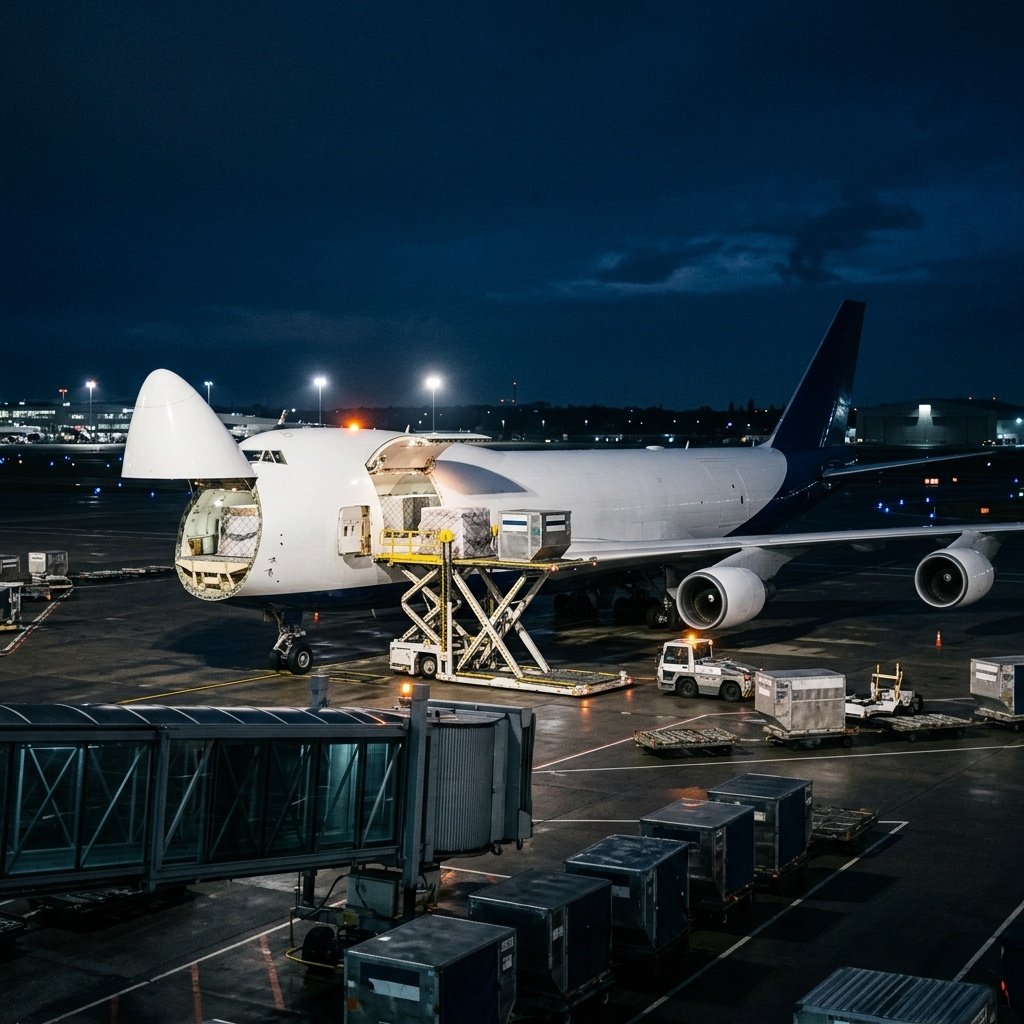
Air Freight Shipping from China: The 2026 Importer’s Guide to Costs, Transit Times, and Routes
June 9, 2026
For B2B importers managing high-value, fragile, or time-critical stock, shipping by air is the fastest and most secure method of supply chain replenishment. When your Amazon FBA inventory is running low or a high-value electronics order needs immediate delivery, air freight from China offers the quick transit times required to keep operations running smoothly. However, navigating air logistics requires a clear understanding of the options, routes, and billing structures.
TL;DR — Key Takeaways
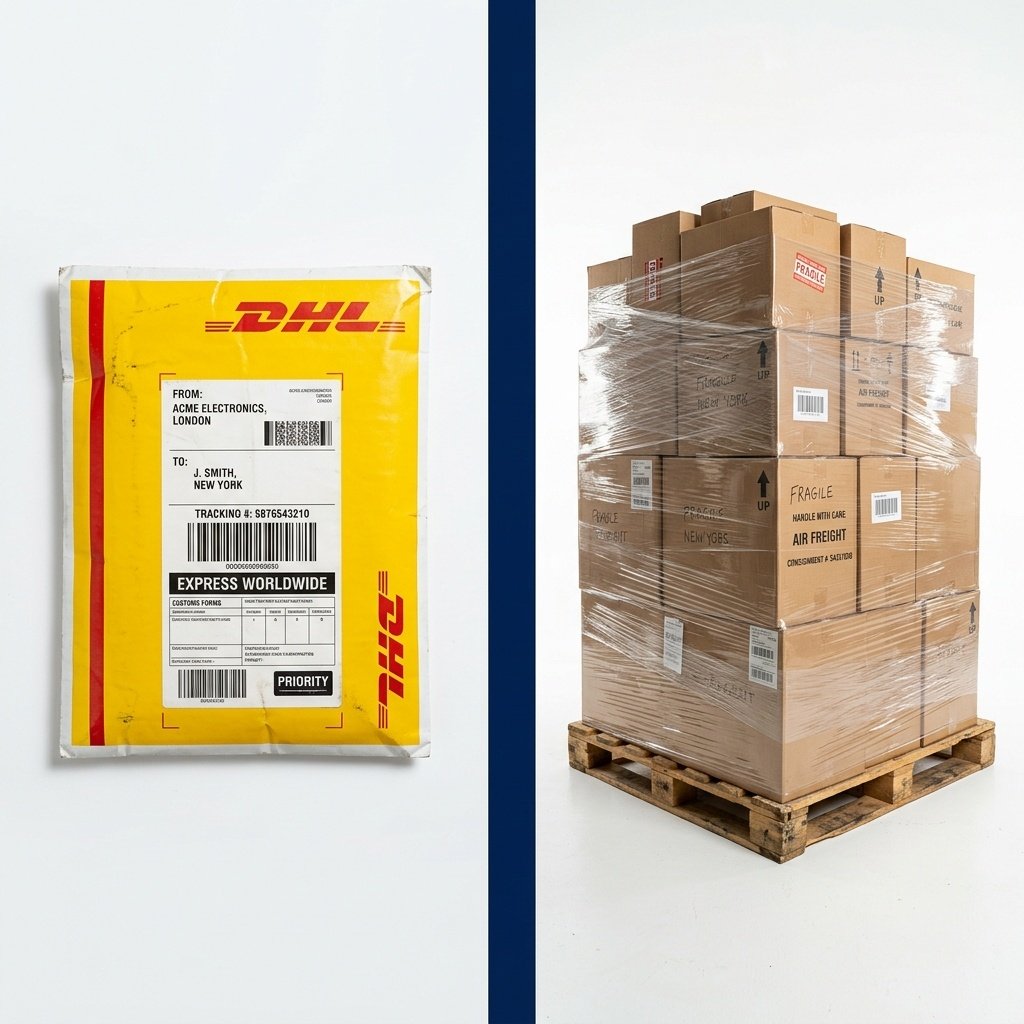
- Express Air vs. Standard Air: Express courier (DHL, FedEx, UPS) is door-to-door in 3–5 days with all-inclusive pricing; Standard Air is port-to-port in 5–10 days, requiring separate customs clearance.
- Volumetric Weight: Air cargo is generally priced on chargeable weight—the greater of actual or dimensional weight, subject to the quoted service’s rounding and minimum rules. The dimensional divisor is carrier- and service-specific, so confirm it before calculating.
- Major Chinese Hubs: Shenzhen (SZX) and Hong Kong (HKG) are the leading hubs for electronics and southern cargo; Shanghai (PVG) serves central and northern industrial centers.
Average transit time for express air freight shipments from China to the USA and Europe.
Understanding Air Freight Options: Express vs. Standard Air Cargo
Importers must choose between two main air shipping methods, depending on the volume of cargo, urgency, and available resources. Choosing the wrong method can result in unexpected port fees or shipping delays.
1. Express Air Courier (Door-to-Door)
Express courier services (operated by major integrators like DHL, FedEx, and UPS) manage the entire logistics process. They pick up the goods from your supplier in China, handle customs clearance on both sides, and deliver the cargo directly to your warehouse or Amazon FBA center. Express may suit smaller or time-critical shipments, but the practical choice depends on chargeable weight, dimensions, route, service level, DG status, and the current quote; do not use a universal weight cutoff.
2. Standard Air Freight (Port-to-Port)
Standard air freight uses commercial airlines or dedicated cargo carriers. Goods are transported from a Chinese airport to the destination airport. As the importer, you (or your freight forwarder) must arrange local pick-up, export clearance in China, import customs clearance at the destination, and final-mile delivery. Standard air cargo may suit larger shipments, but compare the current chargeable-weight calculation, route, service level, handling, customs scope, and delivery responsibility rather than applying a universal weight threshold.
Major Chinese Airport Hubs and Their Strategic Strengths
China’s air cargo network is anchored by several massive international airports, each serving distinct industrial regions and cargo types:
- Shenzhen Bao’an International (SZX): Located in the heart of the Greater Bay Area, SZX is the primary hub for electronics, consumer goods, and rapid FBA prep shipments.
- Hong Kong International (HKG): As a free port with extensive global connections, HKG is ideal for sensitive goods, lithium batteries, and shipments requiring simplified export procedures.
- Guangzhou Baiyun International (CAN): The premier hub for fashion, textiles, hardware, and automotive parts manufactured in the northern Guangdong province.
- Shanghai Pudong International (PVG): The largest air cargo hub in mainland China, serving the Yangtse River Delta’s heavy industrial, machinery, and pharmaceutical sectors.
- Beijing Capital International (PEK): The primary aviation gateway for northern China, specializing in high-tech machinery and industrial components.
Key Destination Countries and Transit Times
Air cargo transit times vary depending on the destination country, route type (direct vs. transit), and customs processing speeds. The table below lists typical transit times for shipments handled by Googol Traders:
| Destination Country | Primary Cargo Airports | Express Air (Door-to-Door) | Standard Air (Port-to-Port) |
|---|---|---|---|
| United States | LAX, JFK, ORD, DFW | 3–5 Business Days | 5–8 Business Days |
| United Kingdom | LHR, MAN, EMA | 3–5 Business Days | 5–7 Business Days |
| Germany / Western Europe | FRA, CDG, AMS, BRU | 4–6 Business Days | 6–9 Business Days |
| United Arab Emirates / Middle East | DXB, DWC, AUH | 3–5 Business Days | 5–7 Business Days |
| Australia / Oceania | SYD, MEL, BNE | 3–5 Business Days | 5–7 Business Days |
How Air Freight Costs Are Calculated: Actual Weight vs. Volumetric Weight
One of the most common surprises for first-time importers is the difference between actual weight and dimensional (chargeable) weight. Air carriers bill based on the space your cargo occupies inside the aircraft hold, not just its mass.
Understanding Chargeable Weight
Chargeable weight is normally the greater of actual weight and dimensional weight, subject to the quoted service’s rounding or minimum rules. The dimensional divisor is not universal: confirm the carrier, service, and unit convention before calculating.
Illustrative example only: if the quoted service specifies a 6,000 cm³/kg divisor, use: Volumetric Weight (kg) = [Length (cm) × Width (cm) × Height (cm)] / 6,000.
For 10 cartons with a combined volume of 1.2 cubic metres and actual weight of 50 kg, that example produces 200 kg of dimensional weight. The applicable quote then applies its own rounding or minimum rules. This is not a universal divisor or a live quotation.
What to send for an air-freight quote
Send these details before asking for a rate so the quote can use the right service and chargeable-weight rule:
- Origin and destination: supplier city or airport, destination airport or delivery address, and whether the quote is airport-to-airport or door-to-door.
- Packing data: carton count, length × width × height for each carton, gross weight, and pallet details if applicable.
- Cargo profile: product description, HS-code information if known, value, batteries or other dangerous-goods indicators, and any temperature or handling needs.
- Commercial scope: Incoterm, customs-clearance responsibility, final delivery requirement, deadline, and Amazon FBA appointment or labeling requirements where relevant.
Ask the provider to show the chargeable weight, dimensional divisor, surcharges, validity date, and exclusions as separate lines.
Customs Clearance and Documentation Checklist for Air Cargo
Because air shipments move rapidly, any missing or incorrect paperwork will lead to immediate delays and warehouse storage fees. Ensure that your supplier provides accurate documentation before the plane departs.
Pro Tip: Prevent Clearance Delays
Always double-check that the Harmonized System (HS) code listed on the commercial invoice is accurate. A mismatch between the declared HS code and the physical product is the single biggest cause of customs holds and inspections.
Make sure you have the following documents ready for every shipment:
- Air Waybill (AWB): Issued by the carrier, detailing the cargo and destination.
- Commercial Invoice: Detailing the seller, buyer, product descriptions, unit values, and transaction terms (Incoterms).
- Packing List: Detailing dimensions, gross weight, net weight, and packaging details of each carton.
- Certificate of Origin: Required for duty-free access or regional trade agreements.
When to Choose Air Freight Over Sea or Rail Freight
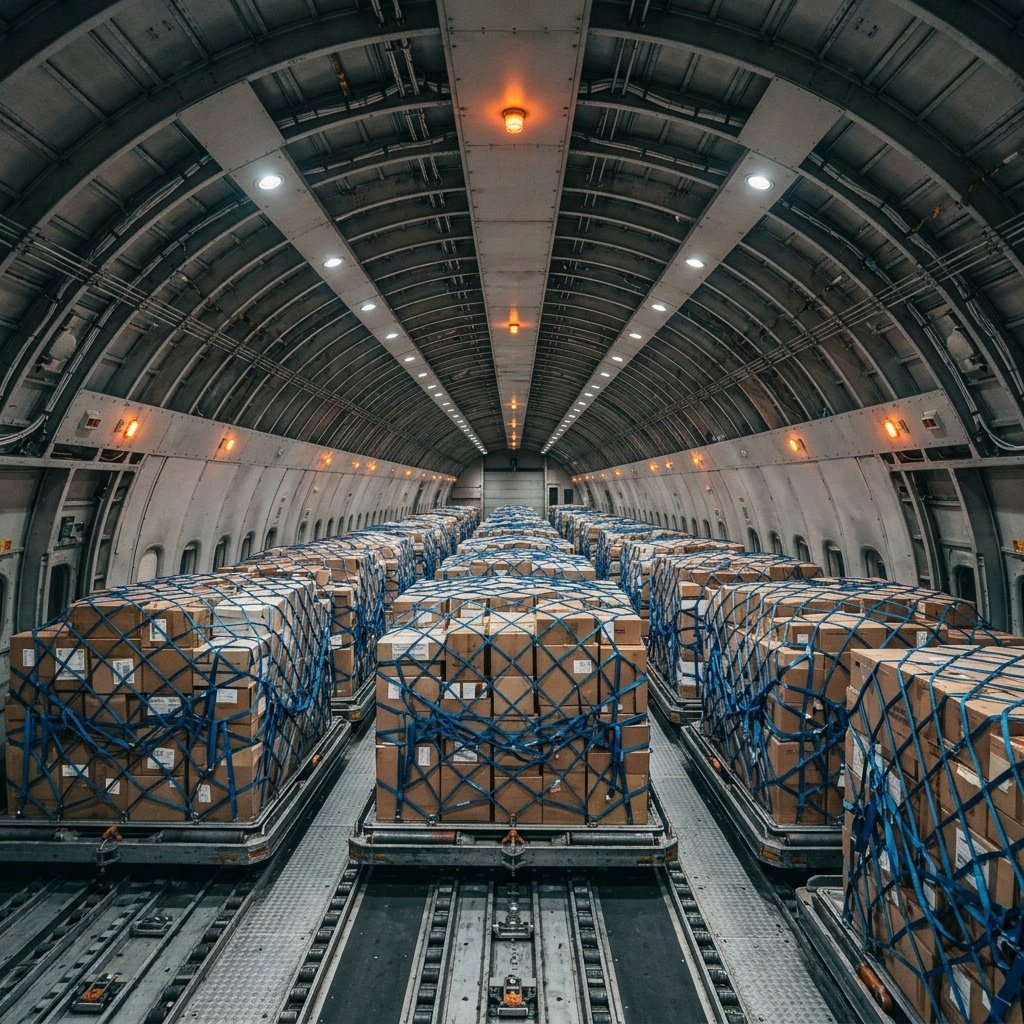
Air freight is highly recommended when your shipment fits the following profiles:
- Time-Sensitive Inventory: Fast replenishment of out-of-stock items on Amazon FBA or physical retail stores.
- High-Value Cargo: Electronics, luxury goods, and precision parts benefit from air shipping’s high security and low risk of transit damage.
- Perishable Goods: Medical supplies, cosmetics, or specialized items that degrade over long ocean voyages.
FAQs
Is there a minimum weight for air freight from China?
There is no single minimum weight that applies to every air service. Compare current express and standard quotes using chargeable weight, dimensions, route, service level, and delivery scope.
Can I ship products with lithium batteries via air freight?
Yes, lithium batteries and other restricted cargo may be classified as Dangerous Goods (DG). Packaging, documentation, testing, labelling, carrier acceptance, and route rules apply; confirm the product classification and current carrier requirements before booking.
Are duties and taxes included in air freight quotes?
It depends on the selected Incoterm. Under DDP (Delivered Duty Paid) terms, Googol Traders handles and pays all export duties, international freight, import clearance, and local taxes. Under FOB or FCA terms, you are responsible for customs clearance and duties at your destination.
Air Freight From China: The Invoice Behind the Quote
Your air invoice is chargeable weight times rate plus surcharges — and consolidation choices made before uplift change both sides of that equation.
Quick answer: Get surcharge validity periods in writing; fuel and security lines move independently of base rates.
Send the pickup city or airport, destination city or airport or postcode, product description, number of pieces, dimensions and gross weight per piece, Incoterm, delivery scope, battery/DG status, and desired service level. Ask the provider to show the divisor used, chargeable weight, base freight, surcharges, quote validity, customs/tax treatment, last-mile scope, and exclusions.
| Invoice driver | What moves it | Lever |
|---|---|---|
| Chargeable weight | Density vs actual mass | Packaging density engineering |
| Surcharges | Fuel/security markets | Validity periods in writing |
| Service tier | Consol vs direct | Match urgency honestly |
| Booking window | Capacity availability | Book before peak compression |
Quick-reference checklist
- Density per carton measured, not estimated
- Dimensional divisor and chargeable-weight basis stated in the quote
- Base freight, surcharges, validity, customs/tax scope, last-mile scope, and exclusions separated
- Battery/DG status disclosed before quoting
- Consol-vs-direct decided by urgency honestly
Questions buyers actually ask
- Which origin airports matter? — Major Chinese hubs dominate international lift; airport choice affects schedule and cost.
- What drives my final invoice? — Chargeable weight, surcharges, and handling choices made before uplift.
- Consol or direct? — Consolidation trades speed for rate; direct suits urgent or sensitive cargo.
Watch out: Batteries and restricted goods change handling requirements and pricing; disclose them upfront always.
Useful next steps on this site: rate mechanics deep dive · time-critical service page · volumetric side of chargeable weight
Sources checked 2026-09-19 including IATA air-cargo tariff guidance, UPS dimensional-weight guidance, and DHL dimensional-weight guidance. Carrier rules, surcharges, and timelines change — always confirm with a current quotation.

Written by Muhammad Fahad, Logistics Operations Specialist at Googol Traders. Last updated: 2026-09-19.
Related Articles
ChatGPT Is Quietly Making Air Freight More Expensive — Here’s Why
AI data-center hardware pushed Asia–US air load factors to ~90% and rates up 38–41% YoY in 2026. What GPU/servers demand means for your China air shipments.
Read More
China to Europe Shipping Times: What to Expect for Air, Sea and Rail Freight
Realistic China-to-UK shipping timelines for sea, rail, and air freight, including factory production and customs clearance time.
Read More
China to Europe Shipping: Air, Sea & Rail Freight Compared
Compare air, sea, and rail freight from China to the UK on cost, speed, and use case, with a practical decision framework.
Read MoreReady to Import from China?
Get a free, all-inclusive freight quote from our team within 4 business hours.