
China to Europe Shipping: Air, Sea & Rail Freight Compared
July 27, 2026
China to UK shipments move by three main methods — sea, air, and rail — each with a different balance of cost, speed, and reliability. There is no single “best” method; there is only the best method for your specific combination of budget, timeline, and cargo type. This guide breaks down all three so you can match the right one to your shipment.
TL;DR
- Sea freight is the cheapest option and the default for planned, bulk restocking — 30–45 days transit.
- Air freight is the fastest at 3–5 days, but costs 10–15x more per kilogram — reserve it for urgent or high-value shipments.
- Rail freight sits in between — roughly 16–22 days to mainland Europe, with a short additional leg to reach Europe, at a cost between sea and air.
- Most experienced importers use a mix: sea for baseline stock, rail for planned mid-speed replenishment, air only for genuine emergencies.
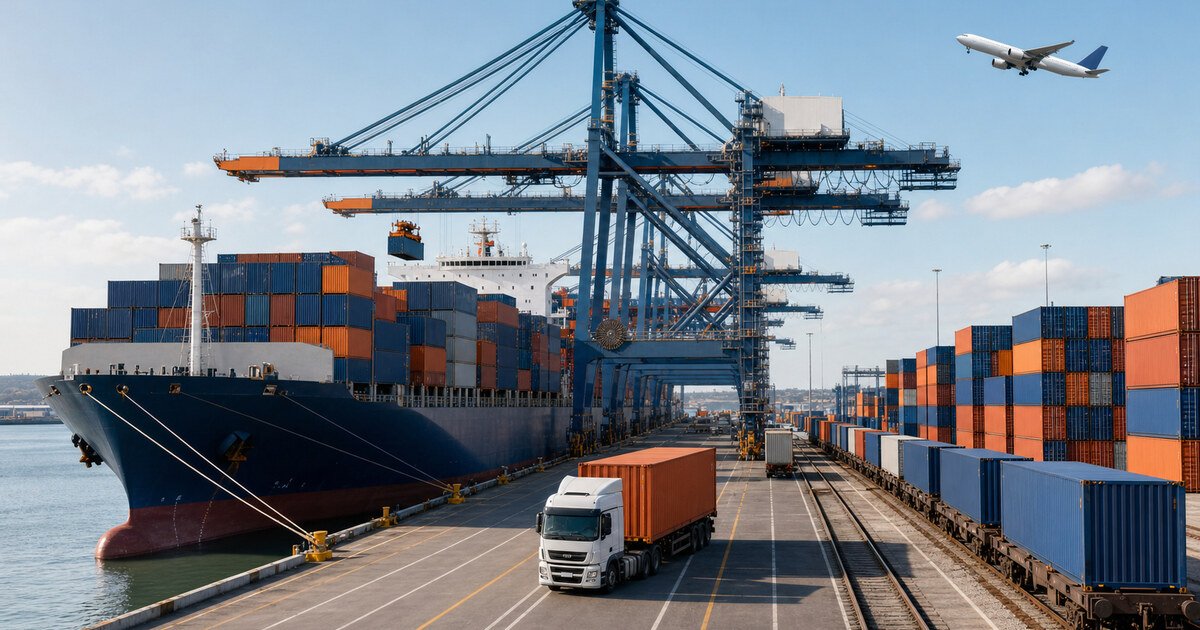
Viable shipping modes from China to Europe — sea, air, and rail (via mainland Europe)
Sea Freight: The Default for Most Importers
Sea freight moves the overwhelming majority of China-to-UK cargo by volume, and for good reason — it’s the cheapest option per unit by a wide margin. Whether via FCL (full container) or LCL (shared container, priced per cubic metre), sea freight typically takes 30–45 days door-to-door through major UK ports like Felixstowe, London Gateway, or Southampton.
Choose sea freight when:
- You can plan inventory 6–8 weeks ahead of need
- Your goods have a reasonable shelf life and aren’t tied to a narrow seasonal window
- Cost per unit matters more than speed for your margin structure
Air Freight: Speed at a Premium
Air freight covers China to Europe in 3–5 days door-to-door, at roughly 10–15 times the per-kilogram cost of sea freight. It’s priced on whichever is higher — actual or volumetric weight — so light, bulky goods can cost more to air freight than their scale weight suggests.
Choose air freight when:
- You’re covering an unexpected stockout gap before your next sea shipment arrives
- Your goods are high-value relative to their weight (electronics, samples, time-sensitive components)
- Missing a narrow selling window costs more than the freight premium
Common Mistake
Defaulting to air freight for every urgent-feeling order. Often only a portion of your order is truly time-critical — ask your forwarder about splitting the shipment, air-freighting just enough to bridge the gap while the bulk still moves by sea.
Rail Freight: The Middle Ground
China-Europe rail freight runs from major Chinese hubs to mainland European terminals like Duisburg, Germany, typically in 16–22 days — roughly half the time of sea freight, at a cost that sits meaningfully below air freight. Since rail doesn’t run directly into Europe, cargo requires a short additional sea or ferry leg from the mainland European terminal to a UK port, adding a few days and a modest handling fee to the total journey.
Choose rail freight when:
- You want faster transit than sea without air freight’s full cost premium
- Your forwarder has an established rail-to-UK feeder route (not all do — ask specifically)
- Your goods are mid-to-high value, where the faster transit reduces working-capital tied up in transit inventory
Pro Tip
Rail freight capacity and pricing can be less predictable than sea or air, since it depends on cross-border rail schedules through multiple countries. Ask your forwarder for their track record on rail transit reliability, not just the quoted transit time, before committing time-sensitive cargo to this mode.
Side-by-Side Comparison
| Mode | Transit time | Relative cost | Best for |
|---|---|---|---|
| Sea (FCL/LCL) | 30–45 days | Lowest | Planned bulk restocking |
| Rail | 16–22 days + short sea leg | Mid | Faster planned replenishment |
| Air | 3–5 days | Highest (10–15x sea) | Urgent, high-value, low-weight |
A Decision Framework
- Can you plan this shipment 6+ weeks ahead? If yes, start with sea freight pricing as your baseline.
- Is the cost premium of faster transit justified by reduced inventory carrying cost or a seasonal deadline? Consider rail.
- Is this shipment genuinely time-critical — a stockout, a launch deadline, urgent samples? Air freight, ideally for only the portion of the order that’s truly urgent.
- Review your mode choice as order volumes grow — what made sense at low volume may not be the most cost-effective option once you’re shipping regularly.
The best shipping method isn’t a fixed choice — it’s a decision you should be revisiting every time your order profile changes.
Frequently Asked Questions
What is the best way to ship goods from China to Europe?
For most planned, bulk orders, sea freight offers the best cost efficiency. Rail freight is a faster middle-ground option for mid-value goods, and air freight should be reserved for genuinely urgent or high-value, low-weight shipments.
Is rail freight from China to Europe direct?
No. Rail freight runs to mainland European terminals (commonly Duisburg, Germany), and cargo bound for Europe requires an additional short sea or ferry leg to complete the journey.
Can I use different shipping methods for different parts of the same order?
Yes — splitting an order (e.g. air-freighting a portion to cover an immediate need while the bulk moves by sea) is a common strategy to balance cost and urgency, and most established forwarders can arrange this.
Related Articles
ChatGPT Is Quietly Making Air Freight More Expensive — Here’s Why
AI data-center hardware pushed Asia–US air load factors to ~90% and rates up 38–41% YoY in 2026. What GPU/servers demand means for your China air shipments.
Read More
China to Europe Shipping Times: What to Expect for Air, Sea and Rail Freight
Realistic China-to-UK shipping timelines for sea, rail, and air freight, including factory production and customs clearance time.
Read More
Door-to-Door vs Port-to-Port: Which China to Europe Shipping Option Saves You Money?
Compare door-to-door and port-to-port shipping from China to the UK to see which actually costs less once every fee is counted.
Read MoreReady to Import from China?
Get a free, all-inclusive freight quote from our team within 4 business hours.