
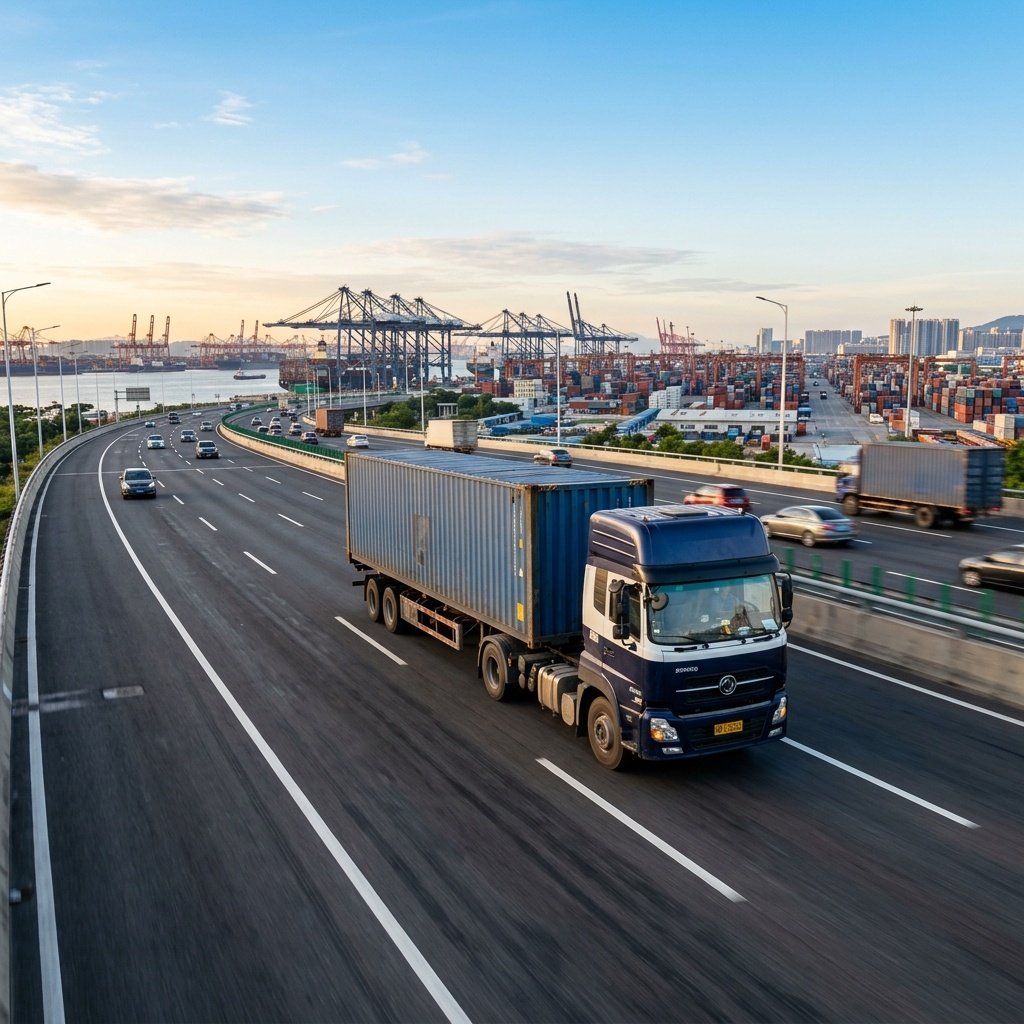
Cross-Border Road Freight from China: Transit Times, Key Routes, and Logistics Guide
June 9, 2026
Cross-border road freight from China can suit selected regional and Eurasian lanes when door-to-door control or routing flexibility matters. Transit time, price, route availability, customs steps, and dangerous-goods acceptance depend on the exact origin, destination, cargo, border, handovers, and booking date; confirm them in a current route quote.
TL;DR — Key Takeaways
- Speed and Cost: Road can be a practical option on selected lanes, but there is no universal speed or price advantage. Compare a current route-specific quote with sea, rail, and air.
- Routes: Selected corridors connect parts of China with Southeast Asia and Central Asia; route availability, borders, permits, and customs steps must be checked for the shipment.
- Dangerous goods: Some dangerous goods may move by road only when the cargo classification, packaging, labelling, vehicle, carrier, documents, and route rules permit it. Do not assume road acceptance or a lower-risk option.
Door-to-door timing depends on origin, border crossings, transshipment, customs, and delivery scope.
The Rise of Cross-Border Road Freight: Trucking as an Air Cargo Alternative
Cross-border trucking can be an alternative to air or ocean on selected lanes, but service depends on the carrier, route, border, cargo, customs process, and current operating conditions. Ask for the handoffs and assumptions behind the quoted door-to-door scope.
Key Cross-Border Trucking Routes and Destination Countries
China’s road freight network extends in several directions, linking major manufacturing provinces with neighboring countries and distant markets:
1. Southeast Asia (ASEAN Network)
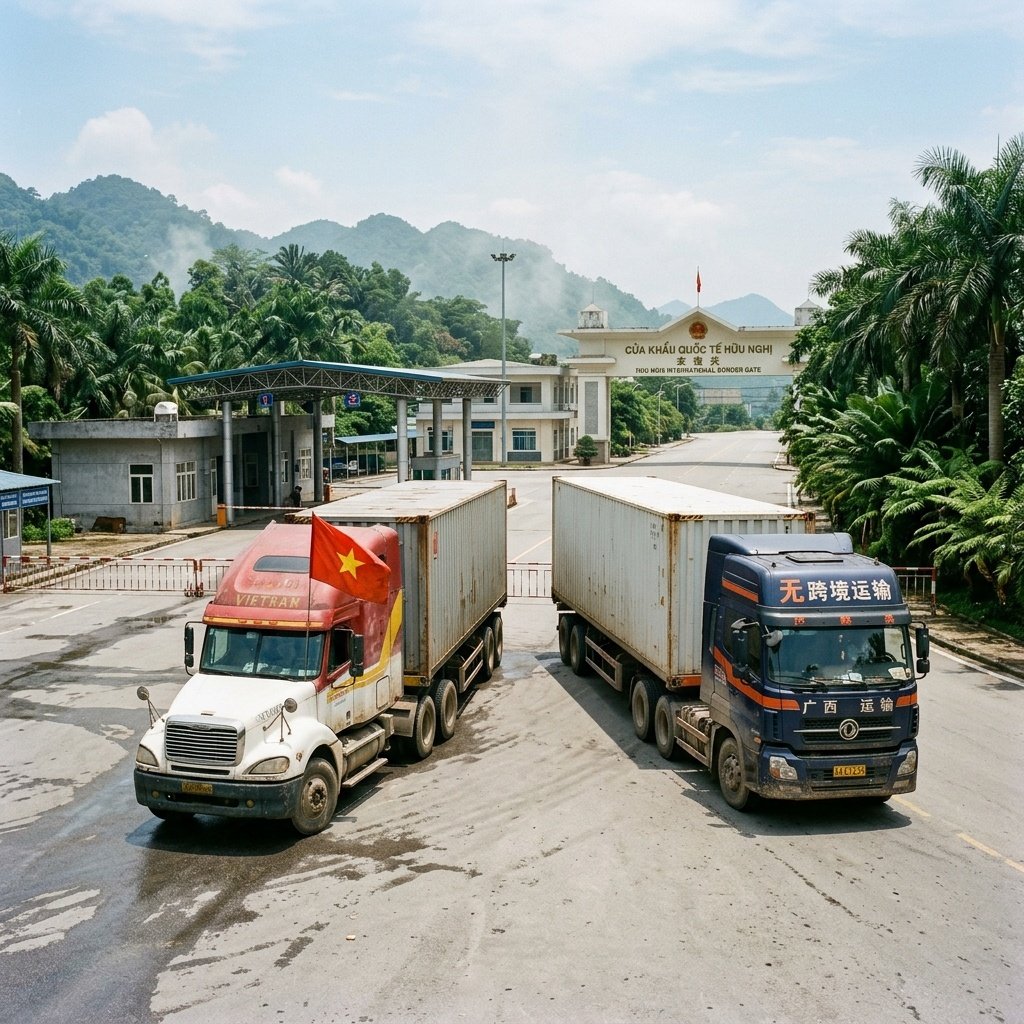
The southern route connects Guangxi and Yunnan provinces directly to Vietnam, Laos, Thailand, Cambodia, Malaysia, and Singapore. Importers of fashion, electronics, and spare parts use this network to bypass sea congestion. For example, a truck leaving Shenzhen can deliver goods to Hanoi in 1–2 days and to Bangkok in 3–4 days.
2. Central Asia & the Silk Road
The western route runs from Xinjiang province through Kazakhstan, Kyrgyzstan, Uzbekistan, Tajikistan, and Turkmenistan. This is a critical logistics lifeline for manufacturing components, solar panels, and consumer retail products entering Central Asian markets.
3. Russia & Eastern Europe
Running through Heilongjiang or Inner Mongolia, northern trucking routes enter Russia, Belarus, and continue toward European distribution networks. This route is commonly used for heavy equipment, clothing, and machinery parts.
4. China–Europe Trucking (The TIR Corridor)
On eligible movements, the TIR system can use a TIR Carnet, customs-secure vehicles or containers, and an international guarantee. TIR does not guarantee route availability, faster transit, cargo acceptance, or exemption from destination customs requirements.
FTL, Part Load, or LTL: Which to Book
LTL shares trailer space and is usually charged per pallet or CBM, making it suitable for roughly 1–4 pallets. Part load commonly covers about 4–13 pallets and can be cheaper than LTL once repeated handling is counted. FTL uses an exclusive trailer, generally from around 13–15 pallets, with direct routing, no shared handling, and typically faster border processing.
| Option | How you pay | Typical pallet range | Handling | Border speed |
|---|---|---|---|---|
| LTL | Per pallet or CBM | Roughly 1–4 | Shared consolidation and multiple handoffs | Depends on the consolidated load |
| Part load | Allocated trailer space | About 4–13 | Shared, but usually fewer units than LTL | Depends on departure and consolidation |
| FTL | Exclusive trailer | About 13–15 or more | Direct loading with no shared trailer handling | Typically the quickest of these options |
Pallet count is not the only factor. A part load waiting for consolidation can leave later than an immediate FTL, so ask the forwarder to quote both options when the shipment is close to a capacity threshold. China-side consolidation, pallet checking, and staging may also require warehousing support.
Border Crossings and Gateway Ports
Border-gateway choice is route-specific. Confirm the crossing, permits, customs scope, handovers, equipment, and operating restrictions with the current carrier and relevant authorities before booking.
What Actually Drives the Price
- Distance and corridor: Long hauls are strongly affected by fuel, tolls, road restrictions, and the operating conditions along the selected corridor.
- FTL versus LTL: Shared space may reduce the line-haul charge, but consolidation, storage, loading, and extra handoffs can change the total cost.
- Border-crossing procedure: Each border may require separate declarations, brokers, inspections, permits, or handling fees.
- Cargo class: Dangerous goods, oversized cargo, and temperature-controlled shipments can require special equipment, permits, paperwork, and qualified carriers.
- Season: During Chinese New Year, driver availability can drop sharply for two to three weeks. Rainy-season road conditions in mainland Southeast Asia can also add days or require route changes.
- Door-delivery distance: Pickup and final delivery mileage on both ends affects the quote, especially when factories or consignees are outside the main logistics hubs.
We quote two or three workable options when possible because the lowest line-haul price may not provide the best departure timing, handling control, or customs scope.
How to compare a trucking quote
Transit times and cost indicators are not universal. A dated route-specific quote should state the origin, destination, border crossing, cargo and equipment, handovers, customs scope, inclusions, exclusions, validity period, and assumptions.
Truck, Train, Ship, or a Combination
Road is often one part of a wider transport plan. Trucks provide the first and last leg for many rail and sea movements, so a road freight quote may include factory pickup and final delivery that a rail-only booking excludes.
| Mode combination | Best for | Example flow |
|---|---|---|
| Truck + rail | High-volume movements to Central Asia or Europe | Factory to rail hub to final delivery; compare the road legs with the China–Europe rail corridor. |
| Truck + sea | Island or deep-sea destinations | Factory to port to vessel to destination delivery |
| Truck + air | Urgent, high-value, small shipments | Factory to airport to final delivery |
Key Advantages of Road Freight: Dangerous Goods and Consolidation
Beyond speed and cost, road transport offers specific operational advantages for B2B importers:
Pro Tip: Shipping Sensitive Goods
Some lithium-battery, liquid, or other regulated shipments may be accepted by road only after classification and route review. Applicable rules can cover packaging, labelling, documentation, equipment, carrier qualifications, and handling; confirm the UN number, route, and acceptance with a qualified forwarder and relevant authority. Road is not automatically safer, cheaper, or available than air.
Before loading, arrange receiving and quantity checks where needed. Googol Traders can coordinate cargo inspection and receiving checks; a pre-shipment inspection may also help identify packing, quantity, or marking problems before the truck departs.
Customs Declaration Accuracy
Road shipments pass through multiple transit countries, such as Kazakhstan, Russia, or Belarus on the way to Europe. If there is a mismatch on the commercial packing list or invoice, the truck may be detained at the initial border crossing, causing delays for all shippers sharing the truck. Partner with a reliable forwarder like Googol Traders to audit paperwork before loading.
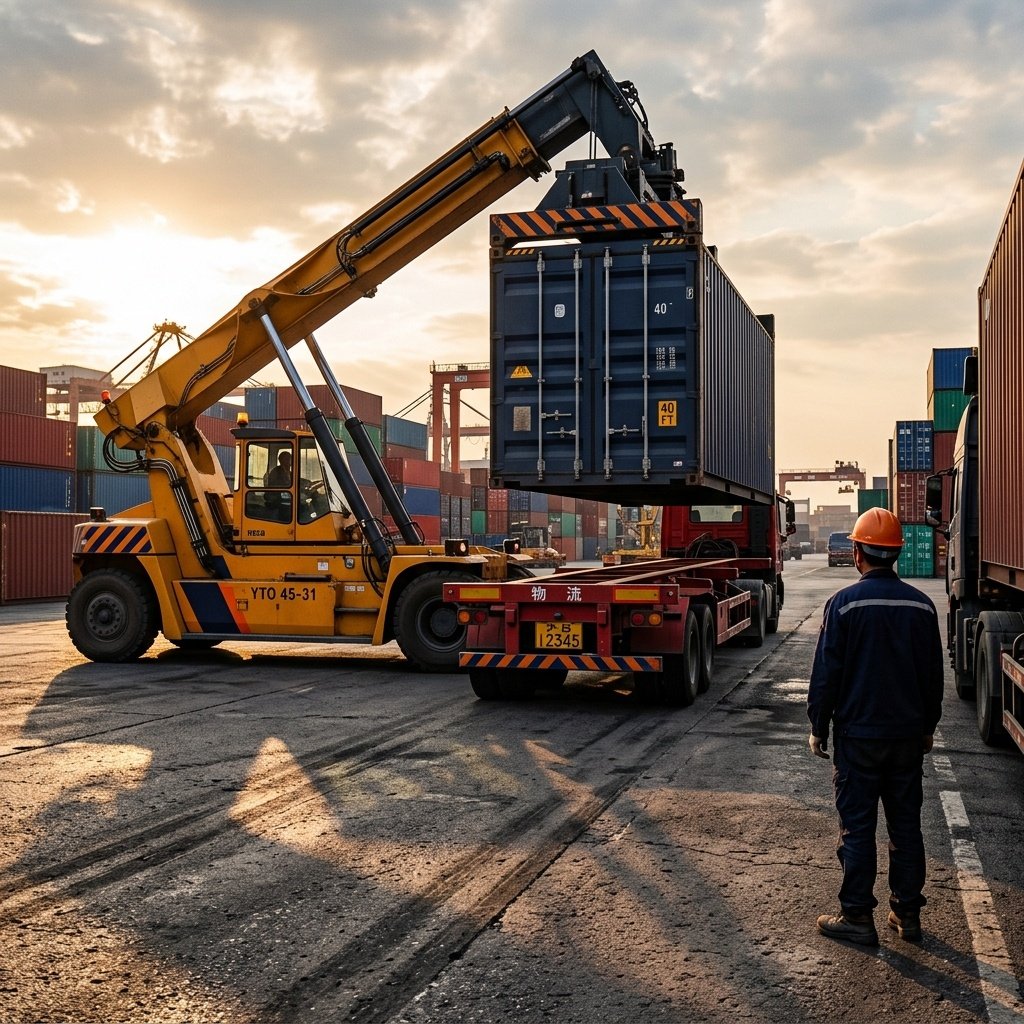
Cargo That Changes the Plan
Dangerous goods: Road acceptance is limited to approved classes and may require special vehicle permits, trained handling, route controls, and additional documents. Batteries can have extra classification, packaging, marking, and carrier requirements.
Oversized or project cargo: A route survey may be needed before quoting to check bridges, height restrictions, turning space, escorts, permits, and border equipment. Do not book an oversized movement on a standard trailer assumption.
Temperature-controlled cargo: Reefer trailers operate on major corridors, but availability, temperature records, loading procedures, and backup arrangements must be confirmed. Book ahead and state the required temperature range in the request.
Customs Clearances and TIR Carnet System
A TIR Carnet is an internationally recognised customs-transit document and guarantee for eligible movements. Goods must meet the applicable customs, vehicle, seal, cargo, and operator requirements; destination customs clearance and inspections can still apply. Do not promise a shorter transit time without current lane evidence.
The Paperwork Set
| Document | Who prepares it | What it does |
|---|---|---|
| Commercial invoice | Buyer or seller, according to the Incoterm | Provides the basis for customs value |
| Packing list | Shipper | Shows carton counts and supports inspection and tally checks |
| CMR consignment note | Carrier | Acts as the road transport contract and is signed at handover on CMR-Convention corridors |
| TIR Carnet | Carrier or broker | Supports sealed, multi-border transit under a customs guarantee where the corridor supports TIR |
| Export customs declaration | Broker | Supports China export clearance |
The exact document set varies by corridor, cargo, Incoterm, and destination. Confirm the required paperwork for each shipment before loading.
What to send for a trucking quote
Road freight needs more than a city pair. Send the details below so the forwarder can check the corridor, equipment, customs handoff, and delivery scope:
- Route: supplier pickup city, final delivery address, border or gateway preference if known, and any domestic China drayage.
- Cargo: product description, cartons or pallets, dimensions, gross weight, loading meters if relevant, declared value, and DG or temperature-control status.
- Service model: FTL or LTL, door-to-door or terminal delivery, Incoterm, export and import customs responsibility, and whether consolidation at Shenzhen or Yiwu is needed.
- Timing: ready date, delivery deadline, appointment requirements, and tolerance for border or transshipment variability.
Ask for the named route, handoff points, customs assumptions, validity date, exclusions, and proof-of-delivery process rather than a headline transit promise.
FAQs
Is road freight from China cheaper than rail freight?
Rail may be more economical for some bulk lanes, while road may offer different handoffs or delivery scope. Compare the current route, cargo, customs assumptions, service level, and quote rather than applying a universal mode rule.
How are goods protected against theft and damage on long truck routes?
Security depends on the carrier, equipment, route, cargo, and shipment instructions. Ask the forwarder to confirm tracking, loading and seal controls, insurance, handover procedures, and exception reporting for the quoted shipment.
Can you handle LTL (Less-Than-Truckload) road freight?
Road LTL or FTL may be available on selected lanes, subject to origin, destination, cargo, equipment, and partner capacity. Confirm the consolidation point, handovers, liability, cut-offs, and service scope in the current quote.
TIR Trucking From China: Documents and Decision Fit
On eligible corridors, TIR can support customs transit in customs-secure units, but it does not guarantee speed or remove customs controls. Before booking, confirm operator authorization, route eligibility, seal and document procedures, and destination clearance.
Quick answer: Ask for the TIR operator, route eligibility, seal procedure, customs scope, and destination-clearance assumptions in writing.
| Lane type | Trigger for trucking | Watch-outs |
|---|---|---|
| China → Central Asia | Regional distribution speed | Border dwell variability |
| China → Europe (TIR) | Door control, mid urgency | Seal-chain documentation |
| Domestic China legs | Factory pickup / port drayage | Detention-free time clarity |
Questions buyers actually ask
- What is TIR? — An international customs-transit system enabling sealed shipments with reduced border formalities.
- Which borders matter? — Key crossings along activated corridors; IRU announcements track new routes.
- When does trucking beat rail? — Regional lanes and time-sensitive flows where door-to-door control outweighs cost differences.
Watch out: A seal discrepancy can trigger customs action; follow the applicable reporting and inspection procedure instead of assuming protections are automatically void or preserved.
Useful next steps on this site: the rail corridor companion · China trucking and cross-border road transport overview
Sources checked 2026-09-19 including UNECE TIR guidance and UNECE dangerous-goods guidance. Corridor access, customs procedures, carrier acceptance, rates, and timelines change — confirm them for the shipment and date.

Written by Muhammad Fahad, Logistics Operations Specialist at Googol Traders. Last updated: 2026-09-19.
Related Articles
Jeddah vs Dammam vs Riyadh: Which Gateway Should Saudi Importers Use? (2026)
Jeddah, Dammam or King Abdullah Port? Compare transit, inland trucking and landed cost for China→Saudi cargo — including the Riyadh gateway decision framework.
Read More
Door-to-Door vs Port-to-Port: Which China to Europe Shipping Option Saves You Money?
Compare door-to-door and port-to-port shipping from China to the UK to see which actually costs less once every fee is counted.
Read More![Container Shipping Cost & Rates Calculator [2026]](https://cms.googoltraders.com/wp-content/uploads/2026/06/container-freight-calculator-dock.jpg)
Container Shipping Cost & Rates Calculator [2026]
Calculate Your Container Costs Freight Rates Our free container shipping calculator delivers accurate container rate estimates. Just tell us about your shipment to get an estimate from the world’s largest freight rate database. Compare and book Instantly compare air, ocean, and trucking freight quotes from 75+ providers with the perfect balance of price and transit [ ]
Read MoreReady to Import from China?
Get a free, all-inclusive freight quote from our team within 4 business hours.