
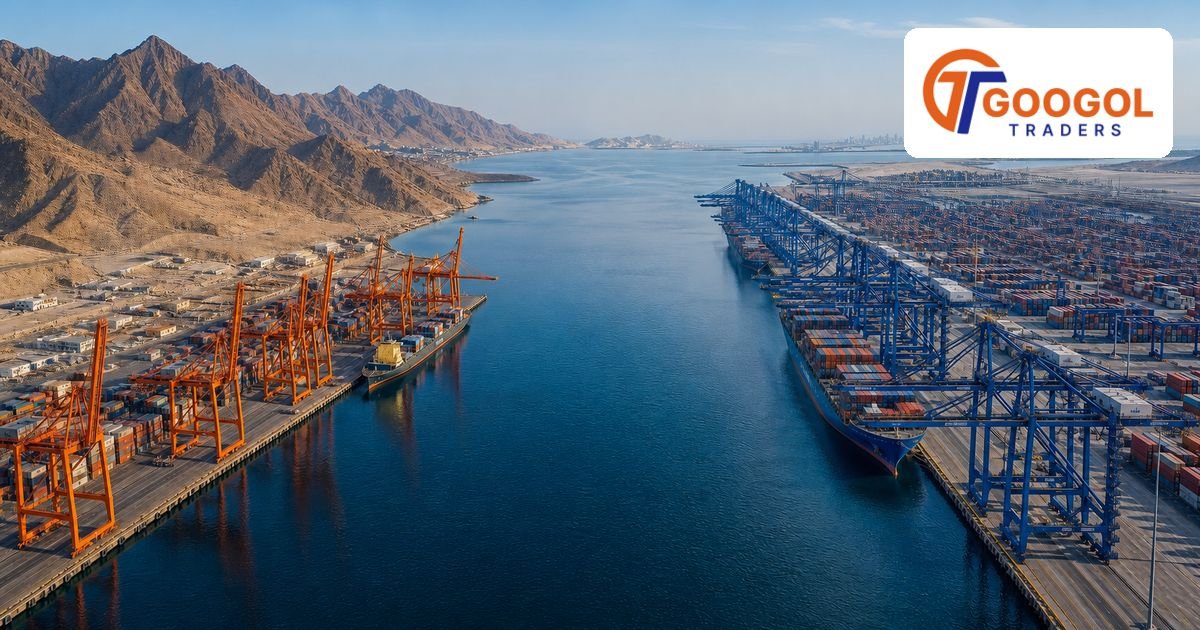
Jeddah vs Dammam vs Riyadh: Which Gateway Should Saudi Importers Use? (2026)
August 24, 2026
Saudi Arabia has two major seaports and one inland capital — and picking the wrong gateway can add days and hundreds of riyals to every container. This guide compares Jeddah Islamic Port, King Abdulaziz Port Dammam and King Abdullah Economic City (Rabigh) for China-origin cargo, and explains when Riyadh-bound freight actually moves faster through each.
TL;DR
- Jeddah (Red Sea) handles roughly 65% of Saudi container imports — best for Jeddah, Makkah, Madinah and western/central regions.
- Dammam (Arabian Gulf) is the gateway for the Eastern Province’s industrial cluster — Jubail, Dammam, Al Khobar — and competitive for Riyadh.
- Riyadh cargo can clear through either coast: Jeddah via ~950 km of trucking/rail, or Dammam via ~400 km. The right choice depends on rates, congestion and final destination.
- King Abdullah Port (KAEC, Rabigh) is the fast-growing modern alternative on the Red Sea with growing China services.
Share of Saudi Arabia’s container imports handled through Jeddah Islamic Port
The Three Gateways at a Glance
Saudi Arabia’s import map is simple once you see the geography: the Red Sea coast faces Asia via the Bab el-Mandeb/Suez corridor, the Arabian Gulf coast faces Asia via the Strait of Hormuz and the Indian Ocean, and Riyadh sits roughly in the middle of the peninsula. Your optimal gateway is decided by final destination, sailing frequency, inland transport cost and — in 2026 — chokepoint risk on each approach.
| Factor | Jeddah Islamic Port | King Abdulaziz Port (Dammam) | King Abdullah Port (KAEC) |
|---|---|---|---|
| Coast | Red Sea (west) | Arabian Gulf (east) | Red Sea, north of Jeddah (Rabigh) |
| Best for | Jeddah, Makkah, Madinah, central regions | Dammam, Jubail, Al Khobar, Eastern Province; strong for Riyadh | Time-sensitive container cargo; growing transshipment hub |
| China service frequency | Highest — most Asia services call here | Good — Gulf loop services | Growing rapidly |
| 2026 risk exposure | Red Sea security premiums on approach | Hormuz disruption dynamics | Same Red Sea approach as Jeddah |
| Trucking distance to Riyadh | ~950 km | ~400 km | ~850 km |
Jeddah Islamic Port: The Default Gateway
Jeddah is Saudi Arabia’s busiest container port and the natural first choice for China-origin cargo. It offers the most frequent direct and transshipment services from Shanghai, Ningbo, Shenzhen and Qingdao, the shortest sea route from Southeast Asia via the Red Sea corridor, and mature customs and SABER-related clearance workflows. If your consignee is in Jeddah, Makkah, Madinah, Taif or the country’s central regions, Jeddah usually wins on total landed cost.
The trade-off in 2026 is the approach: Red Sea services carry security-related insurance premiums and, on some services, Cape-routed schedules that add days. Carriers including MSC and Maersk are progressively restoring Suez-routed Asia services, which is improving Jeddah connectivity from Europe — and gradually from Asia as rotations normalize.
When Jeddah is the right choice
- Consignee is in western or central Saudi Arabia (Jeddah, Makkah, Madinah, Taif, Khamis Mushait).
- You need the most sailing options and the best weekly frequency from Chinese ports.
- Your cargo is LCL — Jeddah has the deepest consolidation market.
King Abdulaziz Port Dammam: The Eastern Province Workhorse
Dammam is the largest port on the Gulf coast and the entry point for the Kingdom’s industrial heartland. For cargo destined to Jubail’s petrochemical complex, Dammam’s manufacturing zones, Al Khobar or Dhahran, it is almost always the correct gateway. For Riyadh, it is a genuine alternative to Jeddah: the inland leg is roughly 400 km by truck (with rail connectivity via the Saudi Landbridge project in development), which can offset a longer or less frequent ocean leg.
The 2026 wrinkle is the approach through the Strait of Hormuz and Gulf capacity dynamics. When Hormuz tension rises, Gulf services face surcharges and schedule pressure — which is exactly when Jeddah routing sometimes becomes the safer bet for Riyadh-bound cargo. We track both approaches week by week for our clients.
When Dammam is the right choice
- Consignee is in the Eastern Province (Dammam, Khobar, Dhahran, Jubail, Al Ahsa).
- Riyadh-bound cargo when Dammam’s short inland leg beats Jeddah’s ocean+inland combination on cost or schedule reliability.
- Project cargo and heavy equipment heading to industrial sites.
Common Mistake
Choosing the gateway on ocean freight alone. The cheapest port pair is often not the cheapest door delivery. Always compare landed cost: ocean freight + port charges + customs + inland trucking to the final warehouse. A $200 saving on the ocean leg can evaporate against 550 extra kilometers of trucking to Riyadh.
King Abdullah Port (KAEC): The Modern Challenger
King Abdullah Economic City’s port at Rabigh, about 90 minutes north of Jeddah, is the Kingdom’s newest major gateway and consistently ranks among the world’s most efficient ports for container turnaround. It is expanding its China services and is increasingly used for time-sensitive container cargo and transshipment. If your forwarder offers KAEC as an option, compare it seriously — customs processing and terminal productivity are strong selling points.
Riyadh-Bound Cargo: The Jeddah-vs-Dammam Decision
Riyadh is the exception that proves the rule: it can be fed from either coast, and the right answer changes with market conditions. The decision framework we use:
- Compare all-in door cost — ocean freight + destination charges + trucking from each gateway to the Riyadh delivery point.
- Compare schedule reliability — a cheaper routing with a missed vessel can cost more than a premium routing that lands on time.
- Check chokepoint exposure — in tense Red Sea weeks, Gulf routing through Dammam may price better; when Hormuz flares, Jeddah often wins.
- Factor LCL vs FCL — LCL consolidation depth is much greater via Jeddah; FCL has more flexibility.
Pro Tip
Ask your forwarder to quote Riyadh delivery from BOTH gateways in the same request. The spread between Jeddah-door and Dammam-door pricing moves week to week — and locking the better one each shipment compounds into real savings across a year of imports.
How Googol Traders Routes Saudi Cargo
We ship from all major Chinese ports to Jeddah, Dammam and King Abdullah Port, quote the door-delivery comparison for Riyadh-bound cargo automatically, and handle customs clearance plus SABER-related documentation requirements. Whether you’re importing from Yiwu, Shenzhen, Ningbo or Guangzhou, we plan the gateway around your warehouse — not around our convenience.
Frequently Asked Questions
Which Saudi port should I use for imports from China?
Use Jeddah for western and central Saudi Arabia, Dammam for the Eastern Province, and compare both for Riyadh. Jeddah handles roughly 65% of Saudi container imports and offers the most China services; Dammam’s advantage is its ~400 km proximity to Riyadh and the industrial Gulf corridor.
Jeddah or Dammam for Riyadh delivery — which is cheaper?
It changes with the market. Dammam has the shorter inland leg (~400 km vs ~950 km), but Jeddah usually has cheaper and more frequent ocean freight from China, plus deeper LCL consolidation. The only reliable answer is a same-week door-delivery quote from both gateways.
Is King Abdullah Port a good alternative to Jeddah?
Yes, especially for time-sensitive container cargo. King Abdullah Port at Rabigh consistently ranks among the world’s most efficient container ports and is expanding its Asia services. It uses the same Red Sea approach as Jeddah, so chokepoint risk is similar.
How long does sea freight from China to Saudi Arabia take?
Port-to-port transit typically runs about 25–35 days to Jeddah from major Chinese ports, and roughly 20–30 days to Dammam via the Gulf, depending on origin port, service and routing. Door-to-door adds clearance and inland delivery time. Transit times vary by service — request a current quotation.
Do I need SABER certification before shipping to Saudi Arabia?
Most regulated consumer goods require SABER platform certificates of conformity before customs clearance in Saudi Arabia. Arrange certification with your supplier before the vessel sails — cargo arriving without valid certificates faces delays and re-export or storage costs. See our SABER labeling guide for details.
Use this Saudi gateway worksheet before you book
For Riyadh-bound or flexible-destination cargo, do not choose a port from the ocean line alone. First put the same shipment inputs beside each gateway, then compare the delivered result using current quotes. The worksheet below is a decision method, not a rate card.
Five checks for a like-for-like comparison
- Fix the delivery point: write the final warehouse or consignee city, not only “Saudi Arabia.”
- Describe the cargo: record LCL or FCL, package count, dimensions, gross weight, pallets, and any handling or compliance requirement.
- Request two or more gateway options: ask for Jeddah and Dammam when both can serve the destination; include KAEC when the forwarder offers it for the service.
- Separate the quote components: keep ocean freight, destination/terminal charges, customs or clearance charges, and inland delivery as separate lines.
- Check the date and assumptions: note the carrier/service, validity, routing, exclusions, and any security or schedule caveat before comparing totals.
Gateway worksheet
| Question | Jeddah | Dammam | KAEC | What to decide |
|---|---|---|---|---|
| Where is the final delivery? | West/central destination may reduce inland complexity | Eastern Province or Gulf-side destination may fit | Consider when the offered service and delivery leg are suitable | Use the actual warehouse address and current inland quote |
| What cargo constraint matters? | Confirm consolidation and service options | Confirm Gulf service, handling, and inland plan | Confirm service availability and destination charges | Choose the option that meets the cargo and delivery constraint |
| What can change the answer? | Current Red Sea routing and schedule | Current Gulf routing and schedule | Current service rotation and terminal conditions | Recheck volatile items immediately before booking |
Illustrative comparison formula
Delivered comparison = current ocean quote + destination/terminal charges + customs or clearance charges + inland delivery to the final address. Use only the figures and validity dates in the current quote. Do not insert a made-up security premium, distance, duty, or transit time.
Pre-booking checklist
- Attach the packing list with carton dimensions, quantities, gross weights, and pallet details.
- Ask whether the cargo needs product conformity or other product-specific documents.
- Ask for the same delivery address and service assumptions in every gateway option.
- Record quote validity and ask what happens if the carrier changes routing after booking.
- For Saudi documentation timing, compare the current quote with the step-by-step China-to-Saudi import guide and the official ZATCA import instructions.
For the wider route context, read the complete China-to-Saudi shipping guide, review the SABER labeling changes, and use the Suez routing and freight-rate update as context—not as a substitute for a current quote.
Sources checked: 2026-08-24. ZATCA import instructions and Maersk’s 2026-01-15 MECL trans-Suez notice were checked for the document and route-volatility notes. Carrier schedules, terminal conditions, security exposure, duties, and inland charges must be rechecked before booking.
Related Articles
Door-to-Door vs Port-to-Port: Which China to Europe Shipping Option Saves You Money?
Compare door-to-door and port-to-port shipping from China to the UK to see which actually costs less once every fee is counted.
Read More![Container Shipping Cost & Rates Calculator [2026]](https://cms.googoltraders.com/wp-content/uploads/2026/06/container-freight-calculator-dock.jpg)
Container Shipping Cost & Rates Calculator [2026]
Calculate Your Container Costs Freight Rates Our free container shipping calculator delivers accurate container rate estimates. Just tell us about your shipment to get an estimate from the world’s largest freight rate database. Compare and book Instantly compare air, ocean, and trucking freight quotes from 75+ providers with the perfect balance of price and transit [ ]
Read More
Cross-Border Road Freight from China: Transit Times, Key Routes, and Logistics Guide
A complete guide to cross-border road freight from China to Southeast Asia, Central Asia, and Europe. Compare trucking costs, transit times, and border crossings.
Read MoreReady to Import from China?
Get a free, all-inclusive freight quote from our team within 4 business hours.