
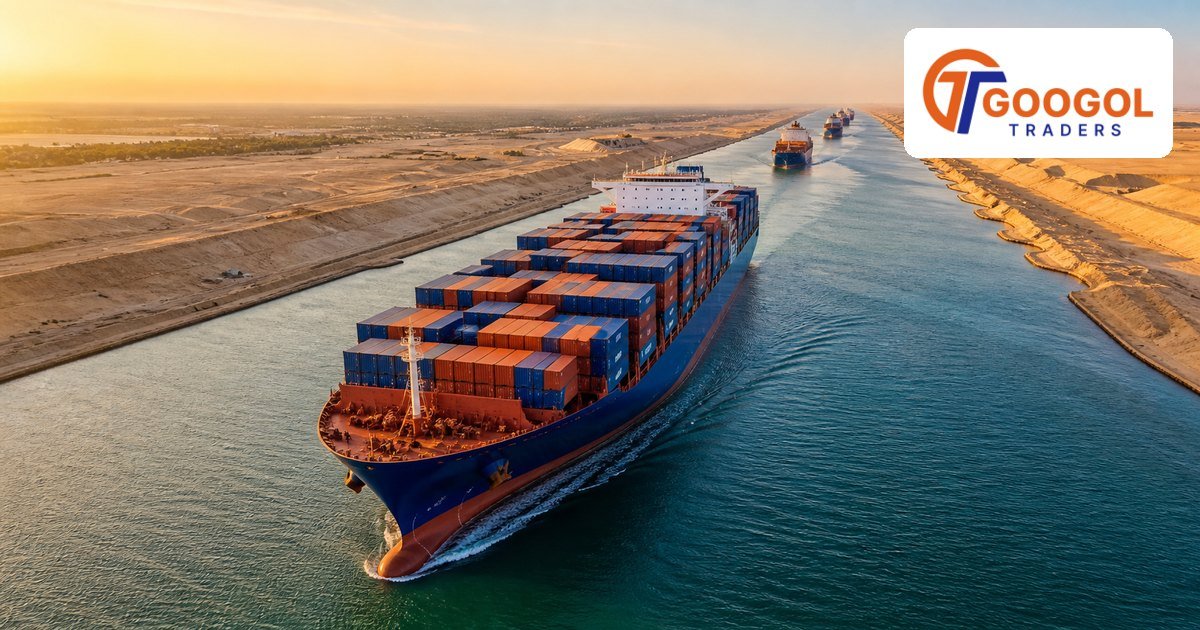
Suez Is Reopening — So Why Aren’t Freight Rates Falling? (2026)
August 24, 2026
Maersk says more than 30% of the Asia–Europe volumes it moved around the Cape of Good Hope are back through the Suez Canal, and Lloyd’s List Intelligence recorded the canal’s busiest four weeks since January 2024. Yet freight rates on the lanes that matter to importers are not collapsing. If you are shipping from China to Saudi Arabia, the Gulf, Europe or the US, here is what is actually happening — and what to do about it.
TL;DR
- Suez traffic hit its highest level in more than two years in August 2026 — but is still roughly 41% below pre-crisis volume.
- Maersk says conditions for a fuller return “have largely been met”; MSC has run seven transits through Bab el-Mandeb in a two-week window.
- Rates stay elevated because capacity, war-risk insurance and congestion — not distance alone — set the price.
- Book with forwarders who quote both routing options (Suez vs Cape) and lock contract space where possible.
Suez Canal traffic still below pre-crisis levels despite the 2026 recovery (Lloyd’s List Intelligence, 20 Aug 2026)
What Is Actually Happening in the Red Sea Right Now
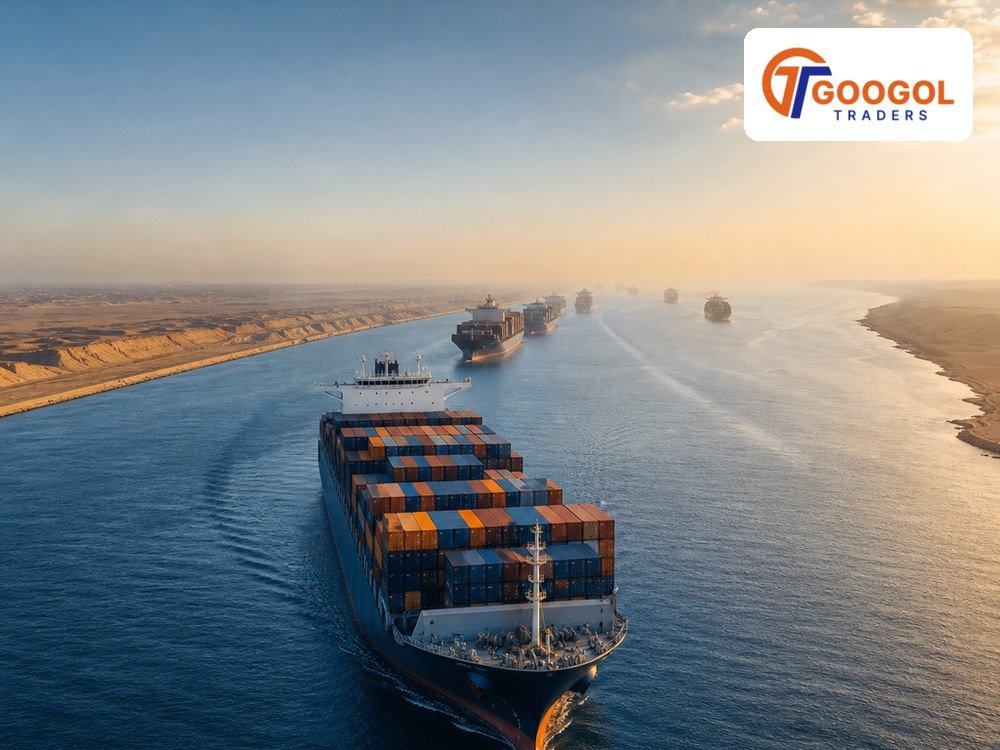
The Red Sea crisis that began in late 2023 pushed most major container lines away from the Suez Canal and around the Cape of Good Hope, adding roughly 10–14 days of transit on Asia–Europe services. In August 2026 the picture is finally changing. Lloyd’s List Intelligence counted 1,088 Suez transits between 20 July and 16 August 2026 — the highest four-week total since January 2024 — driven mainly by containerships and LNG carriers.
MSC has increased sailings through the region, with seven vessels crossing the Bab el-Mandeb strait in a two-week period. Maersk publicly stated that more than 30% of the Asia–Europe volumes it had rerouted via the Cape have returned to Suez, and that conditions for a full return have “largely been met” — while still flagging port congestion and landside constraints.
Suez Is Reopening — So Why Aren’t Freight Rates Falling?
This is the question every importer is asking. The answer is that the rate you pay reflects far more than canal choice:
1. Capacity is still tight
Even with a partial Suez return, carriers have been withdrawing capacity through blank sailings to prop up rates (more on this in our blank sailings explainer). Fewer sailings means less space, whatever the route.
2. War-risk insurance hasn’t normalized
Protection & Indemnity (P&I) clubs introduced buyback cover after reinsurers withdrew support for ancillary war-risk products in the Red Sea. Cover is available, but pricing is assessed case by case — and Saudi-linked vessels face blanket exclusions under some charterers’ arrangements. That risk premium is baked into every quote.
3. Congestion is absorbing capacity
Three typhoons hit Shanghai and Ningbo in summer 2026, and port congestion from Singapore to North Europe is tying up vessels. A ship stuck in a queue is a ship not carrying your container — whatever route it took to get there.
Common Mistake
Assuming a Suez return means instant rate relief. Rates follow effective capacity (sailings actually operating), insurance costs and port congestion. A partial reopening with elevated risk premiums can still mean elevated rates for months.
Suez vs Cape of Good Hope: What It Means for Your Shipment
For a shipper, the routing decision shows up in three numbers: transit time, cost and reliability. Here’s how the two routings compare for a China-origin container in August 2026:
| Factor | Via Suez | Via Cape of Good Hope |
|---|---|---|
| Asia–North Europe transit | ~25–30 days (baseline) | ~35–40 days (+10–14 days) |
| Security risk | Elevated — Bab el-Mandeb incidents continue; Houthi messaging targets Saudi-linked tonnage | Low — longer but safer routing |
| War-risk insurance | Case-by-case pricing; buyback cover in flux | Standard premiums |
| Fuel/emissions cost | Lower — shorter distance | Higher — extra ~3,500+ nautical miles |
| Schedule reliability | Improving but still volatile | More predictable port rotations |
Pro Tip
When you request a quote, ask explicitly: “Is this priced via Suez or the Cape?” A rate that looks cheap via Suez can become expensive if a security incident forces a mid-voyage reroute, and some carriers retain the right to deviate. Get the routing named in your booking confirmation.
What This Means for China → Saudi Arabia Cargo
Saudi-bound importers have a unique wrinkle: Jeddah sits on the Red Sea, inside the risk zone, while Dammam is approached through the Strait of Hormuz — a separate chokepoint with its own disruption dynamics. That means:
- Jeddah routing benefits directly from Suez recovery — more services, better space, but exposure to Red Sea security premiums.
- Dammam routing bypasses Bab el-Mandeb entirely but faces Hormuz-related uncertainty and Gulf capacity pressure.
- King Abdullah Port (KAEC) continues to grow as a high-efficiency alternative gateway near Jeddah.
We break down the gateway choice in detail in our Jeddah vs Dammam vs Riyadh guide.
Should You Wait for Rates to Fall?
Our honest read as a working forwarder: don’t build a sourcing plan on a rate collapse that hasn’t arrived. The fundamentals — insurance uncertainty, blank sailings, congestion, and carriers’ demonstrated willingness to cut capacity — all support rates staying firmer than shippers hope. If your goods are ready and margins work at today’s rates, ship. If you have flexibility, book space 3–4 weeks ahead and ask about contract rates rather than riding spot volatility.
How Googol Traders Handles Disrupted Lanes
We quote both routings with named transit times, flag war-risk surcharges separately so you can see what you’re paying for, and monitor carrier advisories daily across MSC, Maersk, CMA CGM, COSCO, Evergreen and ONE. For Saudi-bound cargo we plan the Jeddah/Dammam decision around your final delivery city — not just the cheapest port pair.
Frequently Asked Questions
Are shipping lines really returning to the Suez Canal?
Yes, partially. Maersk says over 30% of its rerouted Asia–Europe volumes had returned to Suez as of August 2026, and Lloyd’s List Intelligence recorded the highest four-week transit volume since January 2024. But traffic remains about 41% below pre-crisis levels, and security around Bab el-Mandeb is still uncertain.
Why are freight rates still high if Suez is reopening?
Rates reflect effective capacity, war-risk insurance premiums and port congestion — not just canal choice. Carriers are also blanking sailings to manage capacity, which keeps space scarce and rates elevated even as the Red Sea stabilizes.
Is it safe to ship through the Red Sea in 2026?
Major carriers including MSC and Maersk have resumed select Suez transits, and P&I clubs maintain war-risk cover through buyback arrangements. Risk remains elevated — incidents continue near Al Mukha, and Saudi-linked vessels face the highest threat messaging — so routing decisions should be made shipment by shipment.
How long does shipping from China to Saudi Arabia take right now?
Typical sea transit to Jeddah runs roughly 25–35 days port-to-port depending on origin port and routing; Dammam via the Gulf is broadly similar but depends on Hormuz conditions. Door-to-door adds customs clearance and inland delivery. Rates vary — request a current quotation for your lane.
Will container rates drop in late 2026?
Analysts expect volatility rather than a clean decline: Suez recovery and new vessel deliveries push rates down, while blank sailings, congestion and tariff uncertainty hold them up. Plan around ranges, not predictions, and lock contract space for critical shipments.
How to Choose Suez or Cape for This Shipment
Do not let a headline decide your routing. For each booking, compare the route that is actually being offered, the service’s current operating notice, the quote validity and the fallback if conditions change.
- Describe the shipment first: origin port, destination port, cargo characteristics, ready date and delivery deadline.
- Request both options where available: ask the forwarder to name Suez or Cape of Good Hope on the quote and booking confirmation.
- Compare the assumptions: space availability, transshipment, security/insurance wording, origin and destination charges, inland delivery and quote validity.
- Set a fallback: ask what happens if the carrier changes routing after booking and which charges or dates must be reconfirmed.
| Quote field | Suez option | Cape option | Buyer check |
|---|---|---|---|
| Named routing | Service and route stated | Service and route stated | Does the booking confirmation match the quote? |
| Validity and space | Validity, cut-off and equipment wording | Validity, cut-off and equipment wording | Is the comparison made on the same cargo assumptions? |
| Risk wording | Current carrier/security wording | Current carrier/security wording | What triggers a re-route or surcharge review? |
| Delivery plan | Port, transshipment and inland assumptions | Port, transshipment and inland assumptions | Which date is contractual, and which is only an estimate? |
Quote worksheet — not a live freight quotation
Compare the same shipment using: total logistics cost = ocean quote + stated insurance/war-risk line + origin charges + destination charges + inland delivery + any separately stated contingency. Enter the values from the current quote; do not substitute a market average or an invented risk percentage.
If blank sailings are affecting available capacity, use the blank-sailings explainer to understand why demand and rates can move in different directions. For Saudi cargo, compare the Jeddah, Dammam and Riyadh gateway options, then use the China-to-Saudi shipping guide to prepare the cargo and delivery information needed for a quote.
Sources checked: 2026-08-24. See Maersk’s service-specific trans-Suez notice and its security and contingency notice. Route status, insurance wording, space and rates are volatile; recheck them before booking. The existing FAQPage block should be repaired rather than duplicated.
Related Articles

The $800 De Minimis Exemption Is Gone: What E-commerce Sellers Must Do (2026)
De minimis is suspended for all countries — every ≤$800 shipment needs entry + duties now. Why consolidated DDP freight beats the parcel model, with the full 2026 timeline.
Read More
Jeddah vs Dammam vs Riyadh: Which Gateway Should Saudi Importers Use? (2026)
Jeddah, Dammam or King Abdullah Port? Compare transit, inland trucking and landed cost for China→Saudi cargo — including the Riyadh gateway decision framework.
Read More
Demand Is Falling. So Why Are Container Rates Rising? Blank Sailings Explained
49 blank sailings in 5 weeks (Drewry, Aug 2026). How carriers cancel voyages to keep rates high in a weak market — and how importers avoid rolls and quote shocks.
Read MoreReady to Import from China?
Get a free, all-inclusive freight quote from our team within 4 business hours.