
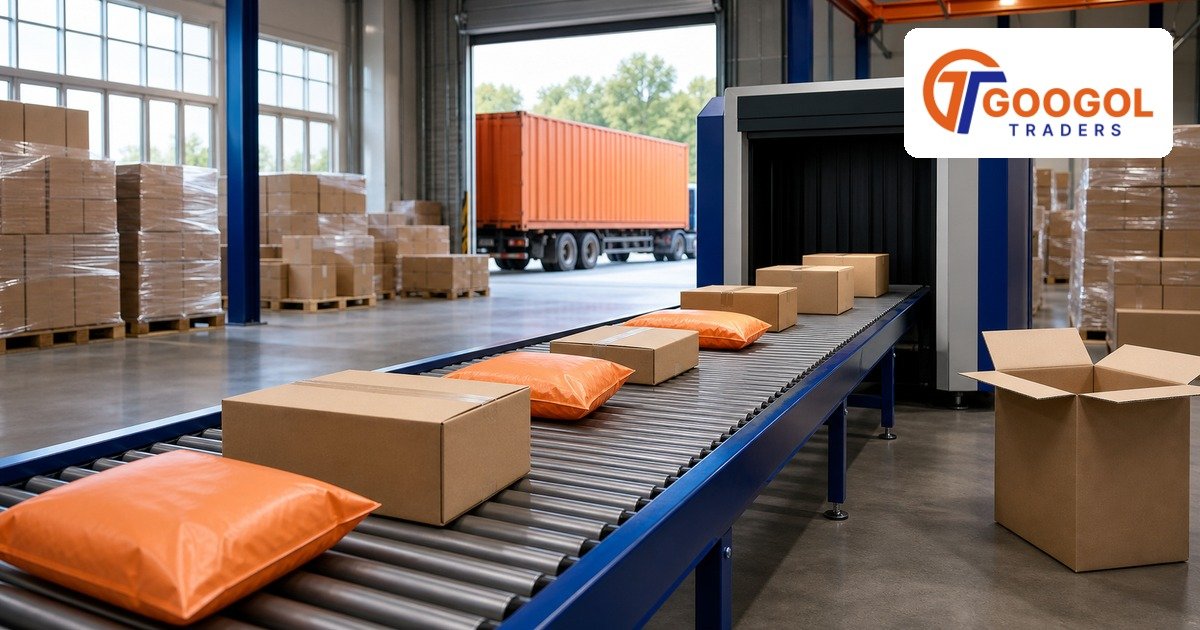
The $800 De Minimis Exemption Is Gone: What E-commerce Sellers Must Do (2026)
August 24, 2026
The $800 de minimis exemption — the loophole that let billions of low-value parcels enter the US duty-free — is gone. Executive Order 14324 suspended it for all countries, CBP has implemented the suspension across every transport mode, and e-commerce sellers shipping from China are feeling it in customs paperwork, duties and delivery times. Here’s what changed, and what to do about it.
TL;DR
- De minimis duty-free treatment for shipments ≤$800 is suspended for all countries — postal and non-postal alike (E.O. 14324, July 2025; CBP interim final rule effective 24 June 2026).
- Every commercial shipment now needs formal or informal entry — with duties, taxes and fees — regardless of value.
- CBP processed 1.36 billion de minimis shipments in FY2024, nearly 10x the 2015 volume — that scale is what triggered the crackdown.
- Consolidated freight (one shipment, one entry) now beats parcel-by-parcel models for most serious sellers — this is exactly what freight forwarders do.
De minimis shipments CBP processed in FY2024 — nearly 10x the 2015 volume
What Was the De Minimis Exemption?
Section 321 of the Tariff Act allowed goods valued at $800 or less (per person, per day) to enter the US duty-free with minimal paperwork. Created for travelers’ souvenirs, it was supercharged in 2016 when Congress raised the threshold from $200 to $800 — just as e-commerce exploded. The result: a duty-free pipeline used at industrial scale. In FY2015, CBP processed 139 million de minimis shipments. By FY2024, that number hit 1.36 billion.
The Timeline of the Suspension
| Date | What happened | What it means for sellers |
|---|---|---|
| Jul 30, 2025 | E.O. 14324 signed — suspends de minimis for all countries | The $800 duty-free channel begins closing |
| Aug 29, 2025 | Suspension takes effect for goods from all countries | Duties now apply to previously exempt low-value goods |
| Feb 2026 | Suspension continued and extended to international postal shipments | No postal loophole remains |
| Jun 24, 2026 | CBP interim final rule — indefinite suspension codified for all non-postal modes | Formal/informal entry required for ≤$800 commercial shipments |
| Jul 24, 2026 | New mail informal entry process takes effect | Postal shipments ≤$2,500 use new Entry Type 13 test process |
| Oct 22, 2026 | Exclusions tighten — Chapter 98/99, FTA-claimed, and PGA-regulated goods lose informal entry eligibility | More shipment categories need formal entries with bonds |
FYI
Personal exemptions survive in narrow form: bona fide gifts ≤$100 and personal articles accompanying travelers ≤$200 remain exempt. Everything commercial — regardless of value — now pays applicable duties, taxes and fees.
Why This Kills the “100 Small Parcels” Model
The direct-to-consumer parcel model from China worked because each sub-$800 parcel skipped duties and formal entry entirely. That math is broken:
- Every parcel is now an entry. Duties, MPF/HMF-style fees and brokerage apply per shipment — fixed costs that crush small-parcel economics.
- Clearance adds days. Formal/informal entries take processing time; the 5-day China-to-door parcel is now 8–15 days or worse.
- Data requirements went up. Origin, value and tariff classification must be declared properly — misdeclaration risks penalties, not just delays.
- EU followed suit. The EU suspended its own €150 de minimis on July 1, 2026 — so the parcel model is breaking on both sides of the Atlantic simultaneously.
The Consolidation Play: What Forwarders Do About It
Here’s the strategic shift: when every entry costs fixed money and time, shipments per dollar of goods must go down. That means consolidating many suppliers’ goods into fewer, larger, properly-entered shipments — which is precisely the freight-forwarding model.
| Approach | Parcels (old model) | Consolidated freight (new model) |
|---|---|---|
| Entries per 10,000 units | Hundreds–thousands | A handful |
| Duty treatment | Per-parcel, now fully dutiable | One entry, one classification set, one duty payment |
| Per-unit logistics cost | Rising — fixed entry costs split across few units | Falling — container economics amortize fixed costs |
| Customs risk | High — volume invites scrutiny | Manageable — professional entry, correct HS codes, bonded options |
| Amazon FBA compatibility | Poor — FBA wants planned inbound shipments | Native — FBA prep and routing built in |
Pro Tip
If you’re an Amazon seller, the post-de-minimis world is your home turf: consolidate supplier purchases at a Shenzhen or Yiwu warehouse, ship one FCL/LCL with DDP to FBA, and file one clean entry. Sellers who switched from parcel drops to consolidated DDP shipments in 2025–2026 report both lower per-unit landed cost and fewer FBA receiving problems.
What About Section 301 and Other Duties?
With de minimis gone, the full tariff stack now applies to low-value goods: regular MFN duty + Section 301 (10–12.5% on most China-origin goods after the July 2026 transition) + any IEEPA-based measures in force. For a $30 consumer product that once entered free, the duty bill can now run 20–40% of value. This is precisely why landed-cost calculation — not product cost — now determines e-commerce margins. Our 2026 tariff guide breaks down the full stack.
Common Mistake
Undervaluing parcels to shrink the new duty bill. CBP built its case for suspension partly on enforcement concerns, and valuation fraud is exactly what the AI-driven trade-data crackdown targets. Penalties run to seizure plus multiples of the duty — far exceeding any duty saved. Price real duties into your model or change the model.
Checklist: Moving From Parcels to Consolidated Freight
- Audit your SKUs — calculate true landed cost per unit with real duty rates, not the old duty-free assumption.
- Consolidate suppliers — use a China warehouse to merge purchases into weekly or biweekly shipments.
- Classify properly — get HS codes right once, reuse them; correct classification is now your best duty optimization lever.
- Choose the right Incoterm — DDP to your warehouse or FBA puts clearance on the forwarder; FOB means you manage the entry.
- Plan for October 22, 2026 — if your goods involve Chapter 98 claims, FTAs or PGA-regulated categories, expect formal entry requirements.
How Googol Traders Helps E-commerce Sellers Adapt
We run consolidation warehouses in Shenzhen and Yiwu, ship DDP to US warehouses and Amazon FBA centers with duties prepaid, handle customs entry and classification, and provide per-unit landed-cost breakdowns so you can reprice before the market reprices you. The parcel era rewarded speed; the post-de-minimis era rewards structure. We build the structure.
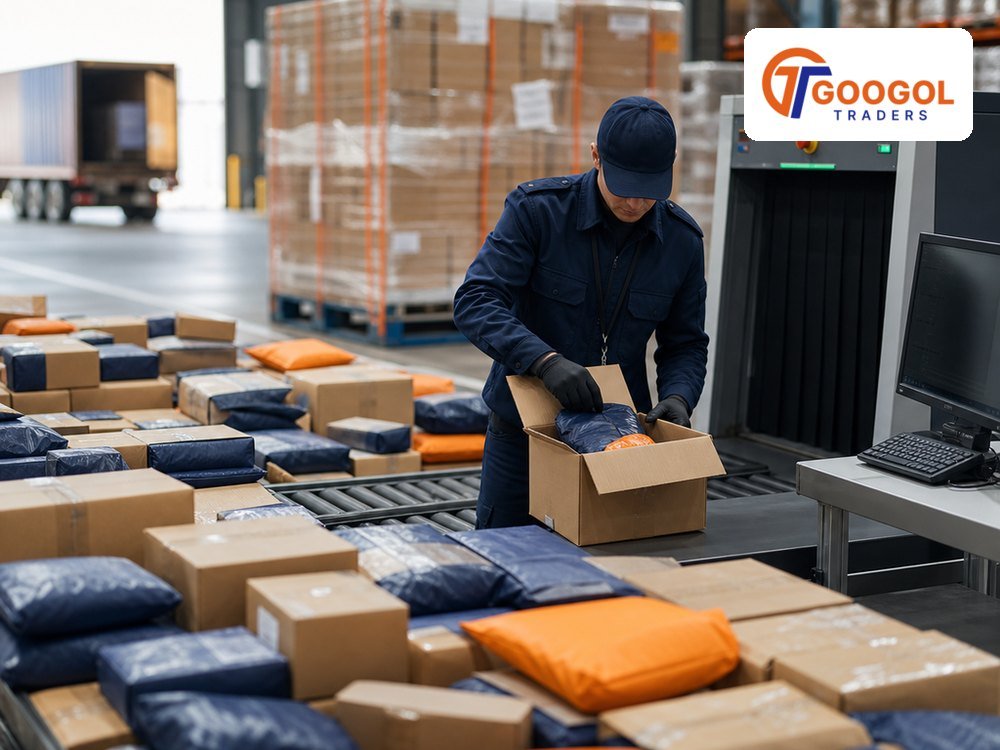
Frequently Asked Questions
Is the $800 de minimis exemption gone for good?
It is indefinitely suspended for all countries and all transport modes — non-postal since August 2025 and codified by CBP’s interim final rule effective June 24, 2026, with postal shipments covered under the same policy. Only narrow personal exemptions (gifts ≤$100, traveler articles ≤$200) remain. Any change would come from new Federal Register action.
Do I have to pay duties on shipments under $800 now?
Yes. Commercial shipments valued at $800 or less now require formal or informal entry with all applicable duties, taxes and fees — including Section 301 tariffs on China-origin goods. There is no remaining duty-free channel for commercial low-value imports.
What is the cheapest way to import from China after de minimis?
Consolidation. Merging multiple suppliers’ goods into one FCL or LCL shipment spreads fixed entry costs across maximum volume and secures freight rates unavailable to parcels. For most sellers, consolidated DDP freight now beats parcel-by-parcel on both per-unit cost and delivery reliability.
Does the EU de minimis change affect me too?
If you sell into Europe, yes — the EU suspended its €150 duty-free threshold on July 1, 2026, causing double-digit drops in China–Europe e-commerce air volumes. The same consolidation logic applies: fewer, larger, properly-cleared shipments.
Will my parcels from China be slower now?
Expect longer and less predictable timelines. Each parcel now passes customs entry, adding days versus the old duty-free flow. Consolidated freight with pre-cleared entries is frequently faster door-to-door than the new parcel experience — another reason the model is shifting.
Decision framework: parcel, consolidation, or a formal import workflow?
Use this framework before you reprice or change fulfilment. It is a routing aid, not a promise that one mode is always cheaper or faster.
| Situation | First decision | Evidence to collect | Next action |
|---|---|---|---|
| Many small consumer orders | Can inventory be grouped before import? | SKU list, origin, declared value, order frequency, destination | Compare the current parcel flow with a quoted consolidated shipment |
| Several China suppliers for one store | Can a warehouse combine the goods without changing ownership or documentation? | Supplier invoices, packing lists, carton count, dimensions, delivery deadline | Request one consolidation quote and one entry/classification review |
| Amazon FBA replenishment | Are FNSKU, carton, box-content, and destination details final? | FBA shipment plan, unit/carton data, labels, prep requirements | Reconcile the customs data with the FBA shipment data before dispatch |
| Regulated, PGA, Chapter 98/99, or FTA-claimed goods | Does the product need a specialist entry path? | HTS classification, product description, permits/certificates, broker instructions | Pause the model comparison until a qualified broker or forwarder confirms the route |
Build a landed-cost worksheet from your own quote
Illustrative calculation — not a live freight quotation: landed cost per sellable unit = (goods cost + quoted origin handling + quoted international freight + applicable duty/tax/fees + quoted destination handling) ÷ sellable units. Record the source, currency, quote date, classification basis, and whether each line is per shipment, per carton, or per unit. Do not insert a generic duty rate or parcel saving into the worksheet.
- Enter the supplier invoice value and the number of sellable units.
- Attach the current freight and handling quotes, with validity dates.
- Ask the broker or forwarder to confirm classification, entry type, and applicable charges for the actual product.
- Run a parcel comparison only when the same product, destination, entry assumptions, and fee scope are used on both sides.
Pre-dispatch evidence checklist
- SKU, material, country of origin, unit value, quantity, and supplier invoice agree.
- HS/HTS classification is documented and not inferred from a competitor’s table.
- Packing list, carton dimensions, weights, labels, and FBA box-content data agree.
- Entry path, broker/forwarder responsibility, duty/tax/fee assumptions, and quote expiry are written down.
- Any regulated-product, PGA, Chapter 98/99, or FTA question has a named specialist reviewer.
Sources and update note: checked 2026-08-24 against CBP’s e-commerce FAQ, CBP’s e-commerce statistics, and Amazon’s FBA prep, packaging, and labeling guidance. Customs treatment and marketplace requirements can change; confirm the live rule and product-specific entry path before dispatch.
Continue the workflow with FBA prep and box data, LCL versus FCL comparison, and the US–China tariff guide.
Related Articles
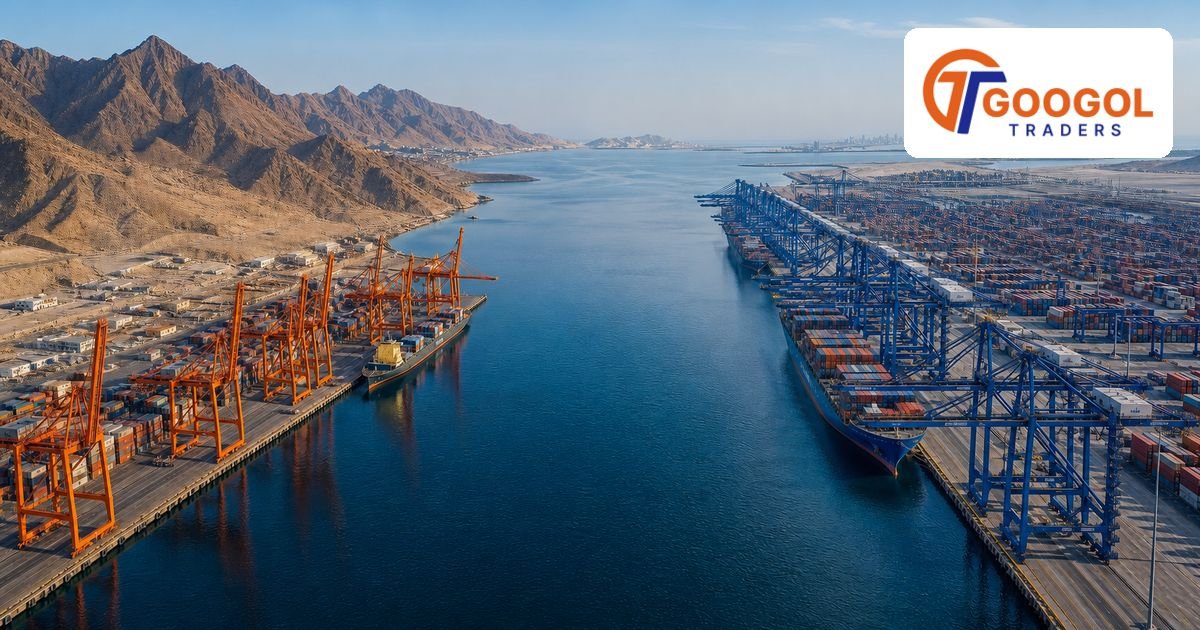
Jeddah vs Dammam vs Riyadh: Which Gateway Should Saudi Importers Use? (2026)
Jeddah, Dammam or King Abdullah Port? Compare transit, inland trucking and landed cost for China→Saudi cargo — including the Riyadh gateway decision framework.
Read More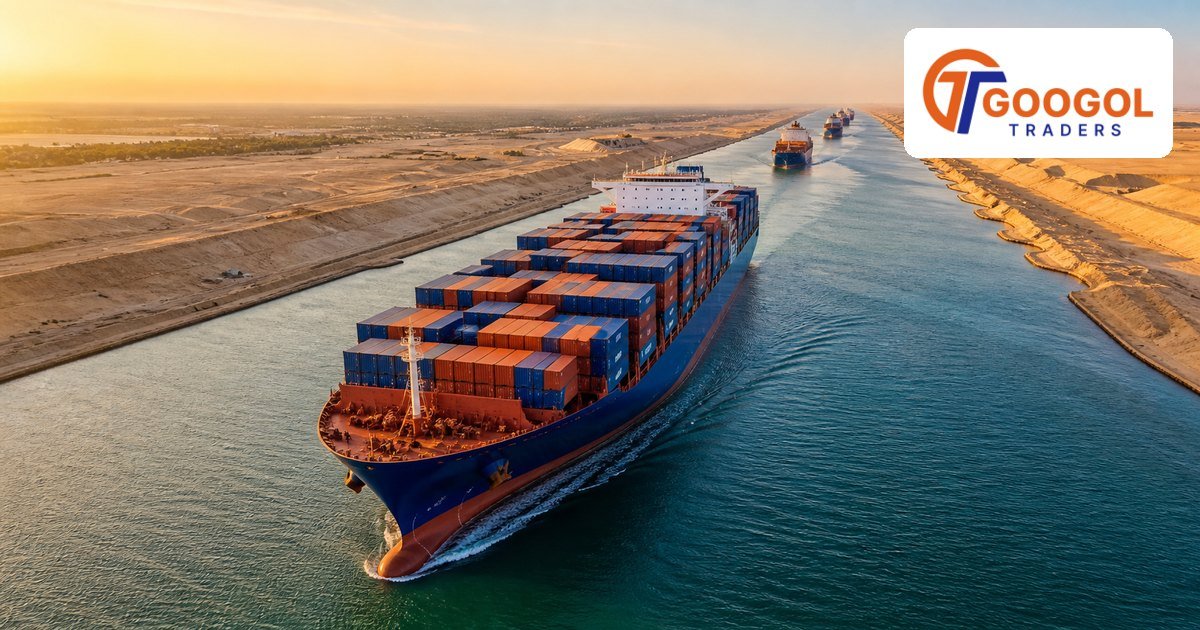
Suez Is Reopening — So Why Aren’t Freight Rates Falling? (2026)
Suez traffic hit a 2.5-year high in August 2026, yet container rates stay elevated. What the MSC/Maersk Suez return really means for China→Saudi and global freight.
Read More
Demand Is Falling. So Why Are Container Rates Rising? Blank Sailings Explained
49 blank sailings in 5 weeks (Drewry, Aug 2026). How carriers cancel voyages to keep rates high in a weak market — and how importers avoid rolls and quote shocks.
Read MoreReady to Import from China?
Get a free, all-inclusive freight quote from our team within 4 business hours.