
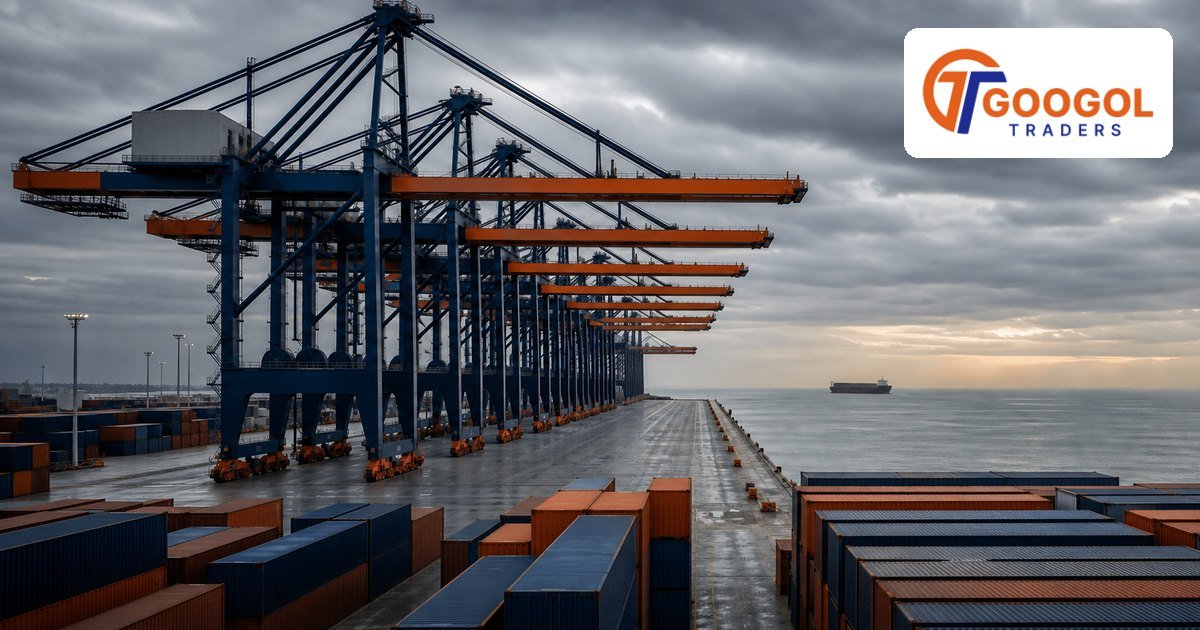
Demand Is Falling. So Why Are Container Rates Rising? Blank Sailings Explained
August 24, 2026
Container demand indicators are softening on several major lanes — yet your freight quote keeps climbing. That’s not a mistake. Shipping lines are cancelling sailings on purpose, and once you understand blank sailings, every “weird” quote you’ve received this year starts making sense.
TL;DR
- A blank sailing is a scheduled voyage a carrier cancels — your vessel didn’t disappear; the sailing did.
- Drewry counted 49 blank sailings across major East–West trades in just five weeks of August–September 2026, a 7% cancellation rate concentrated on the transpacific (59%).
- Carriers blank sailings to remove capacity so rates don’t fall with demand — it works, and it’s why prices can rise in a weak market.
- Protect yourself: book 2–3 weeks ahead, ask about blank-sailing risk on your lane, and keep a backup routing option.
Blank sailings announced across major East–West trades, weeks 34–38 of 2026 (Drewry, 14 Aug 2026)
What Is a Blank Sailing?
A blank sailing (also called a void sailing) is a voyage that appears in a carrier’s published schedule but gets cancelled before it sails. The vessel isn’t lost — it’s usually redeployed to a better-paying route, delayed by congestion, or simply tied up at anchor to remove its capacity from the market. Cargo already booked gets rolled to the next available sailing, which can add 7–14 days to transit.
- Blank sailing
- A cancelled voyage on a published service loop. Capacity is deliberately removed from the market.
- Rolling (rollover)
- When your container misses its intended vessel and moves on a later one — the direct consequence of booking near a blanked voyage.
- GRI (General Rate Increase)
- A carrier-imposed across-the-board rate hike, typically announced monthly. Blank sailings make GRIs stick.
Demand Falls, Capacity Falls Faster — That’s the Whole Trick
Here’s the mechanism in four steps, and it’s the single most important thing an importer can understand about 2026 freight pricing:
- Demand softens — fewer containers need moving.
- Carriers cancel sailings — Drewry tracked 49 blanked voyages in five weeks across the major East–West trades in Aug–Sep 2026, with 59% of cancellations on the transpacific trade.
- Available space drops faster than demand — a 7% cancellation rate removes far more capacity than a 7% demand dip when it’s concentrated on your lane.
- Rates hold or rise — scarcity pricing on a thinner schedule. FreightWaves and market monitors reported Asia–US West Coast spot rates around $7,400/FEU and East Coast around $9,400/FEU in this environment — elevated even as demand indicators weakened.
Your freight rate isn’t set by how much cargo exists. It’s set by how much space is left after the carriers finish canceling sailings.
Why Carriers Do This (And Why It’s Legal)
Container shipping is an oligopoly: a handful of alliances control the major East–West trades. When demand drops, every carrier faces a choice — cut rates to fill ships, or cut sailings to protect rates. Since the pandemic era, they’ve overwhelmingly chosen the second. Coordinated capacity management within alliances is legal; rate-fixing is not. Blank sailings sit firmly on the legal side, which is why they’re a permanent feature of the market you buy in.
For you as a shipper, the practical consequence is that freight rates have a floor built from schedule discipline, not demand. Waiting for “the market” to crash rates often means waiting for carriers to blink — and they have demonstrated for three years that they won’t.
How Blank Sailings Hit Your Shipment in Practice
| Effect | What you see | How to manage it |
|---|---|---|
| Rolled cargo | Booking confirmed, then moved to a vessel 7–14 days later | Book 2–3 weeks before cargo-ready date; ask the forwarder which sailings have blank risk |
| Quote expiry | A rate valid Monday is gone by Thursday after a GRI announcement | Ask for validity in writing; decide fast on quotes — see our quote-expiry explainer |
| Fewer departure options | “Next available sailing is in 10 days” on lanes that used to sail twice weekly | Keep a second routing (different port pair or carrier group) qualified in advance |
| Peak surcharges on thin schedules | PSS and GRI stacking on top of already-reduced capacity | Lock contract or NAC rates for recurring volumes instead of riding spot |
Pro Tip
Before booking, ask one question: “Has this service loop had blank sailings in the past 60 days?” Carriers publish schedule changes 2–4 weeks out, and a good forwarder knows which loops are being cut. That single question prevents most rolls.
What This Means for China → Saudi Arabia and Gulf Lanes
Blank sailings aren’t only a transpacific story. Gulf and Red Sea services have seen capacity swings driven by both demand management and chokepoint disruption — when Hormuz or Bab el-Mandeb tension reroutes vessels, effective capacity on Jeddah and Dammam services tightens even without formal blank announcements. The same playbook applies: book early, confirm the named vessel and ETD, and treat “space available” quotes with suspicion.
Common Mistake
Assuming the cheapest quote will hold until you’re ready to ship. In a blank-sailing environment, low quotes often reflect capacity the carrier intends to withdraw. If your cargo-ready date slips past the quote validity, expect the requote to be higher — not because the forwarder is gouging, but because the sailing your price was built on no longer exists.
The Bottom Line for Importers
You can’t stop carriers from blanking sailings. You can stop being surprised by them. Build 2–3 weeks of booking lead time into your sourcing calendar, demand named-vessel confirmations, keep a backup routing, and lock contract rates for the lanes you ship on regularly. That’s how our clients kept goods moving through the 2024–2026 disruption cycle while spot buyers ate every GRI.
Frequently Asked Questions
What is a blank sailing in shipping?
A blank sailing is a scheduled voyage that a shipping line cancels before departure, removing that vessel’s capacity from the route. Booked cargo is typically rolled to the next available sailing, adding days to transit. Carriers blank sailings to manage capacity and support freight rates when demand weakens.
Why do freight rates rise when demand is falling?
Because carriers cancel sailings faster than demand falls. If demand drops 7% but carriers remove 10% of capacity through blank sailings, space is scarcer than before and rates rise. Drewry tracked 49 blank sailings in five weeks of Aug–Sep 2026 across the major East–West trades, concentrated on the transpacific.
How do I know if my shipment will be rolled?
Ask your forwarder whether the booked service loop has had blank sailings in the past 60 days and whether your specific voyage is confirmed with a named vessel. Bookings 2–3 weeks ahead of cargo-ready date, on loops with stable schedules, face the lowest roll risk.
What is the difference between a blank sailing and a rolled container?
The blank sailing is the cancelled voyage; rolling is what happens to your container when the voyage it was booked on disappears — it moves on a later vessel. Rolling adds transit time and can trigger storage or rebooking charges if not managed.
How far in advance should I book sea freight from China in 2026?
In the current environment, 2–3 weeks before your cargo-ready date is the practical minimum for FCL, and 3–4 weeks for LCL consolidation. Last-minute bookings face the thinnest remaining capacity and the highest roll risk.
Blank-Sailing Decision Framework for Your Next Booking
Use this sequence before you accept a quote or promise a delivery date. It is a verification framework, not a rate forecast: schedules, space, equipment, and quote validity can change by lane and booking date.
| What you observe | What to verify next | Practical decision |
|---|---|---|
| The carrier shows a cancelled or skipped sailing | Ask whether your booking is rolled, rebooked, or awaiting a new vessel and request the latest named-vessel or service-loop status. | Keep the booking only when the revised schedule still fits your cargo-ready and delivery window; otherwise compare an alternate loop or mode. |
| The quote changes while the sailing is still listed | Separate the base ocean charge from surcharges, validity date, equipment conditions, and any change in routing or service. | Request a written line-by-line revision before comparing the new total with another quote. |
| A booking is confirmed but the vessel name is still unclear | Ask what “confirmed” means in the forwarder’s system and when a named vessel or latest schedule will be available. | Do not promise a fixed arrival date to your customer until the operating carrier and service loop are identified. |
| Your cargo is time-sensitive or tied to a launch | Confirm the cost and feasibility of a backup sailing, alternate gateway, or air/LCL option before the cargo is ready. | Choose the option that protects the business deadline after documenting its trade-offs, not simply the lowest first quote. |
Five questions to send before you book
- Has this service loop had a blank sailing or rollover recently, and what is the latest carrier notice?
- Is the booking attached to a named vessel, or is it space on a service loop awaiting final allocation?
- What part of this quote is time-sensitive, and which charges can change before departure?
- If the sailing is cancelled, what is the documented rollover and notification process?
- What is the backup plan if the revised schedule misses my cargo-ready or delivery window?
Practical note
Keep the quote, carrier notice, booking confirmation, and revised schedule together. That small audit trail makes it easier to distinguish a blank sailing from a rollover, a quote-expiry event, or a routing change.
Source and update note: The dated market reference in this article is Drewry’s cancelled-sailings tracker, checked 2026-08-24. It reported a specific five-week snapshot; it is not a permanent rate or cancellation benchmark. Recheck carrier notices and lane conditions before acting.
For the next decision, compare the China-to-Saudi shipping guide, review Saudi import gateways, see how route changes affect freight rates, or use the LCL versus FCL comparison.
Related Articles

The $800 De Minimis Exemption Is Gone: What E-commerce Sellers Must Do (2026)
De minimis is suspended for all countries — every ≤$800 shipment needs entry + duties now. Why consolidated DDP freight beats the parcel model, with the full 2026 timeline.
Read More
Jeddah vs Dammam vs Riyadh: Which Gateway Should Saudi Importers Use? (2026)
Jeddah, Dammam or King Abdullah Port? Compare transit, inland trucking and landed cost for China→Saudi cargo — including the Riyadh gateway decision framework.
Read More
Suez Is Reopening — So Why Aren’t Freight Rates Falling? (2026)
Suez traffic hit a 2.5-year high in August 2026, yet container rates stay elevated. What the MSC/Maersk Suez return really means for China→Saudi and global freight.
Read MoreReady to Import from China?
Get a free, all-inclusive freight quote from our team within 4 business hours.