
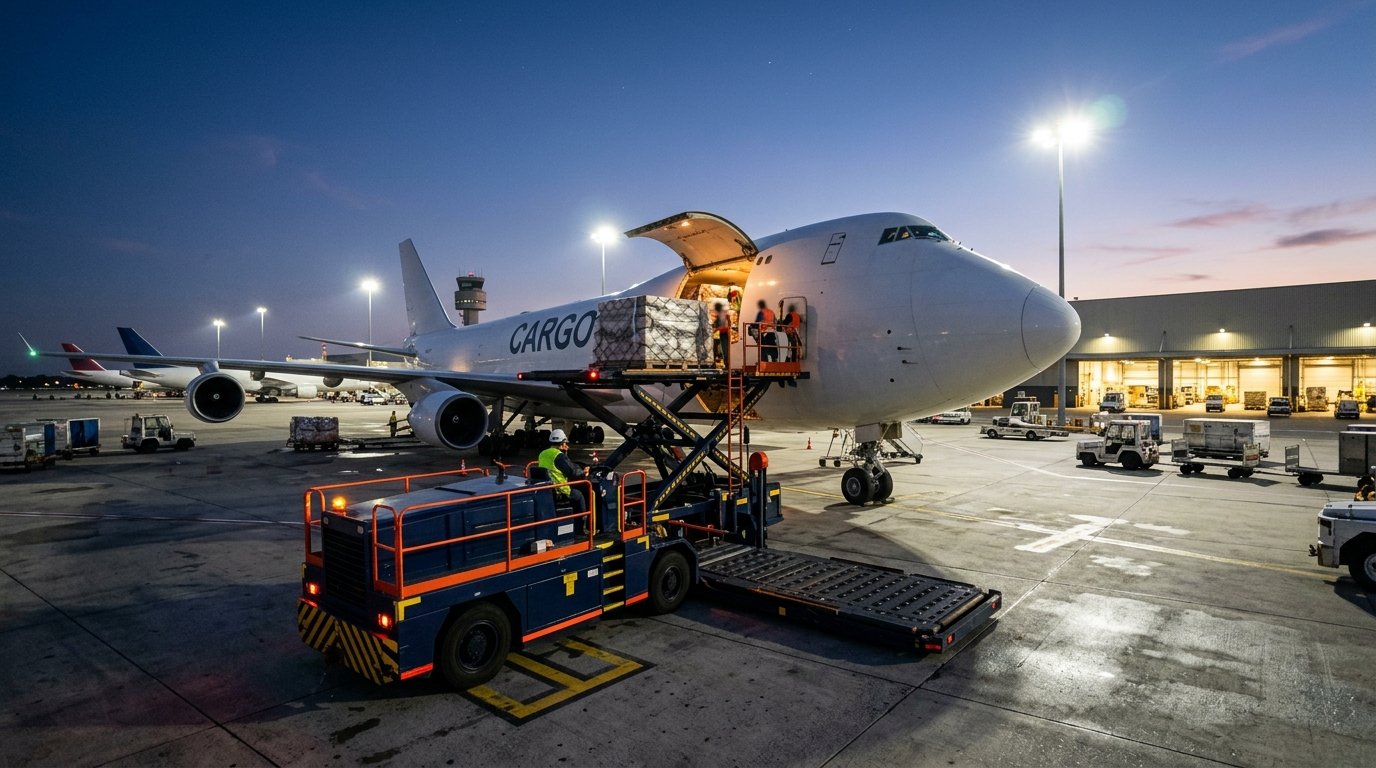
Navigating Tariff Uncertainty with Airfreight
September 6, 2019
If there’s anything to learn from the past few weeks in global freight, it’s that tariff announcements can be anything but straightforward. After initially announcing an additional 10% tariff on $300 billion worth of goods imported from China set to take effect on September 1 and December 15, the White House followed up with a flurry of rate adjustments. Tariffs taking effect October 1 will now be at 30% instead of 25%, while the September 1 tariffs rose from 10% to 15%. A little confused? You’re not the only one.
There’s one thing for certain about tariff increases and deadlines — landed costs can face increases as high as tens of thousands of dollars, and there will be a rush of companies aiming to get goods imported before more tariffs take effect. Additionally, logistics can become a jigsaw puzzle as businesses look for the fastest, most cost-effective ways to get product into the United States.
With so many ebbs and flows in response to trade uncertainty, how can you navigate pending tariffs and continuing volatility?
Make Sense of the Situation
As tariffs and market volatility become more unpredictable, it can be especially challenging to understand value of service, particularly in pricing for airfreight. Concerns over price, specifically mitigating price volatility and partner relationships to protect supply chains, can become monumental for businesses of all sizes. It’s important to note that prices for airfreight tend to be reflective of a single moment in time, making them particularly difficult to plan for. Additionally, lack of transparency into overall pricing and transit times can cause even more confusion across the supply chain.
To help mitigate this confusion, there are a few key questions to ask in regard to pricing, including:
- Is my price fixed or floating?
- Who carries price and service risk?
- What is my real transit time?
- How will additional shipments and spot pricing be supported?
Answering these questions can help ensure you’re getting a realistic estimate of air freight costs and timelines in particularly volatile market circumstances.
Reduce Your Risk
Risk mitigation strategies rely on a key tenet: trust. The first step toward reducing risk in a volatile market is working with supply chain partners who deliver transparent quotes and are willing to share price risk. In fact, in some cases, supply chain partners may share tariff-related concerns and work to develop creative solutions to mitigate tariff exposure.
Case in point: one forwarder’s airfreight team coordinated a flight landing two hours earlier on September 1 — giving clients the opportunity to save thousands of dollars on tariffs. Work with a forwarder to set requirements for your relationship and agree upon them to ensure quality of service moving forward.
“Price is the most important input when choosing an air freight strategy, but can lead to higher costs overall,” says one senior director of global bid management at a major forwarder. “Working with a forwarder that can explain processes and is willing to work as a strategic partner can help ensure short- and long-term success.”
TL;DR
- Air freight rates and air freight capacity respond to different drivers than ocean freight.
- Uncertainty in tariff treatment shows up as timing and volume decisions, not only as price.
- Compare options on total landed cost and schedule risk rather than on rate alone.
Choosing between air and other modes under cost pressure
| Factor | What to weigh |
|---|---|
| Total landed cost | Freight plus duty plus destination charges, not freight alone |
| Transit commitment | The committed window and how it is measured |
| Chargeable weight | Actual versus volumetric basis for the specific routing |
| Inventory impact | Whether faster transit reduces a carrying or stockout cost |
| Split shipments | Whether part-air and part-sea improves the overall position |
Different levers: for air freight, capacity and service level move the outcome as much as the rate. Confirm the committed transit window alongside the price.
Frequently asked questions
Should I use air freight when tariffs change?
Compare total landed cost and schedule risk. Air freight can make sense when faster transit reduces a real inventory or stockout cost, but it is rarely cheaper per kilo.
How do I compare air and sea freight fairly?
Compare on total landed cost and committed transit window, not on freight rate alone. Include duty, destination charges and the inventory effect of the transit time.
Can I split a shipment between air and sea?
Yes, and it is a common approach. Confirm the cut-off dates and how the split affects documentation and duty treatment.
Related Articles
ChatGPT Is Quietly Making Air Freight More Expensive — Here’s Why
AI data-center hardware pushed Asia–US air load factors to ~90% and rates up 38–41% YoY in 2026. What GPU/servers demand means for your China air shipments.
Read More
China to Europe Shipping Times: What to Expect for Air, Sea and Rail Freight
Realistic China-to-UK shipping timelines for sea, rail, and air freight, including factory production and customs clearance time.
Read More
China to Europe Shipping: Air, Sea & Rail Freight Compared
Compare air, sea, and rail freight from China to the UK on cost, speed, and use case, with a practical decision framework.
Read MoreReady to Import from China?
Get a free, all-inclusive freight quote from our team within 4 business hours.