
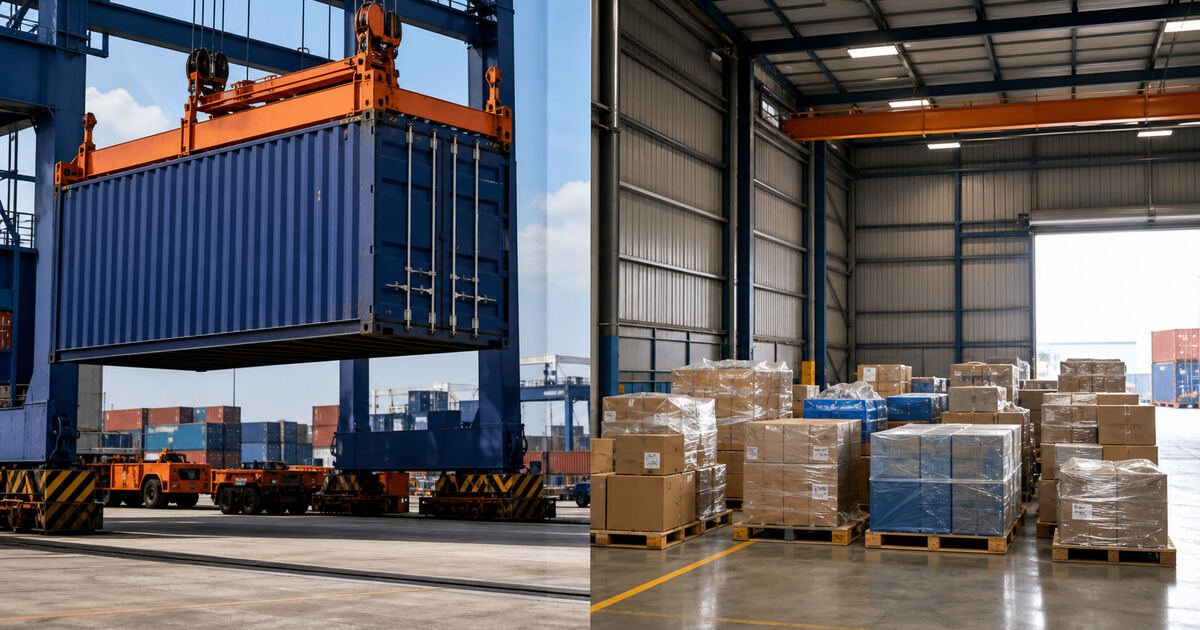
FCL vs LCL Shipping from China to Europe: A Complete Guide for Importers
July 27, 2026
FCL and LCL are the two ways to move sea freight from China to Europe, and the right choice comes down almost entirely to your shipment volume. Get it wrong in either direction and you’re either paying for empty container space or paying a per-unit premium you didn’t need to.
TL;DR
- FCL (Full Container Load) means your goods fill an entire container — priced as a flat rate regardless of how full it actually is.
- LCL (Less than Container Load) means you share container space with other importers’ cargo — priced per cubic metre (CBM).
- The crossover point is roughly 12–15 CBM — below that, LCL is usually cheaper; above it, FCL usually wins.
- LCL takes longer than FCL due to consolidation and deconsolidation at both ends — budget extra transit time.
FCL: Full Container Load
With FCL, you book an entire 20ft or 40ft container for your cargo alone. The rate is fixed regardless of whether you fill 60% or 100% of the space, which means your cost per unit improves the fuller you pack it.
| Container | Approx. capacity | Best for |
|---|---|---|
| 20ft | ~28 CBM / 21,000kg max | 10–20 CBM orders, denser/heavier cargo |
| 40ft | ~58 CBM / 26,500kg max | 25+ CBM orders, bulkier/lighter cargo |
Advantages of FCL
- No consolidation or deconsolidation step, so transit is faster and more predictable
- Your cargo is never handled alongside other shippers’ goods, reducing damage and mix-up risk
- Lower cost per unit as you approach full container capacity
LCL: Less than Container Load
With LCL, your cargo shares a container with other importers, and you pay only for the cubic metres you actually use. This makes sea freight viable for smaller orders that don’t justify booking a whole container.
Advantages of LCL
- Access to sea freight economics without needing a full container’s worth of volume
- Lower total cash outlay per shipment for smaller, more frequent orders
- Flexibility to test a new supplier or product line without committing to bulk volume
Pro Tip
LCL pricing is based on whichever is greater: actual volume (CBM) or weight-based volume (1,000kg is typically treated as 1 CBM for pricing purposes). Dense, heavy cargo can end up billed on weight rather than actual space used — ask your forwarder which calculation applies to your goods.
Finding Your Crossover Point
The break-even volume between LCL and FCL pricing typically falls around 12–15 CBM, though it shifts with current freight rates and your specific trade lane. Below that volume, LCL’s per-CBM pricing usually beats booking a container you can’t fill. Above it, a full 20ft container’s flat rate usually beats paying LCL rates for the same volume.
Common Mistake
Booking LCL out of habit for orders that have grown past the crossover point. As your order volumes increase, periodically ask your forwarder to compare current FCL vs LCL pricing for your typical shipment size — the better option can change as your business scales.
Transit Time Differences
FCL from China to Europe typically takes 30–40 days door-to-door. LCL adds several days on each end for consolidation (waiting for the container to fill with other shippers’ cargo before departure) and deconsolidation (separating your goods from others’ at destination), typically landing at 35–45 days total.
FYI
Consolidation schedules vary by forwarder — some run weekly departures regardless of how full the container is, others wait until they have enough combined cargo to fill it. Ask about departure frequency if transit time predictability matters to your restocking schedule.
Which Should You Choose?
- Under 12 CBM: LCL is almost always the more cost-effective choice
- 12–20 CBM: Get quotes for both — this is the crossover zone where the better option depends on current rates
- Over 20 CBM: FCL (starting with a 20ft container) is typically cheaper and faster
- Multiple regular orders under 12 CBM: Consider whether combining shipments into a less frequent, larger FCL booking reduces your total annual freight cost
The question isn’t “FCL or LCL” in the abstract — it’s “what does my actual CBM say this month?”
Frequently Asked Questions
What is the difference between FCL and LCL shipping?
FCL (Full Container Load) means you book an entire container at a flat rate; LCL (Less than Container Load) means you share a container with other shippers and pay per cubic metre used. FCL suits larger volumes, LCL suits smaller ones.
At what volume should I switch from LCL to FCL?
The typical crossover point is 12–15 CBM, though current freight rates on your specific trade lane can shift this. Get quotes for both options as your order volume approaches this range.
Is LCL slower than FCL?
Yes, typically by several days, due to the consolidation step at origin (waiting for enough combined cargo) and deconsolidation at destination (separating your goods from other shippers’).
Related Articles

The $800 De Minimis Exemption Is Gone: What E-commerce Sellers Must Do (2026)
De minimis is suspended for all countries — every ≤$800 shipment needs entry + duties now. Why consolidated DDP freight beats the parcel model, with the full 2026 timeline.
Read More
Jeddah vs Dammam vs Riyadh: Which Gateway Should Saudi Importers Use? (2026)
Jeddah, Dammam or King Abdullah Port? Compare transit, inland trucking and landed cost for China→Saudi cargo — including the Riyadh gateway decision framework.
Read More
Suez Is Reopening — So Why Aren’t Freight Rates Falling? (2026)
Suez traffic hit a 2.5-year high in August 2026, yet container rates stay elevated. What the MSC/Maersk Suez return really means for China→Saudi and global freight.
Read MoreReady to Import from China?
Get a free, all-inclusive freight quote from our team within 4 business hours.