
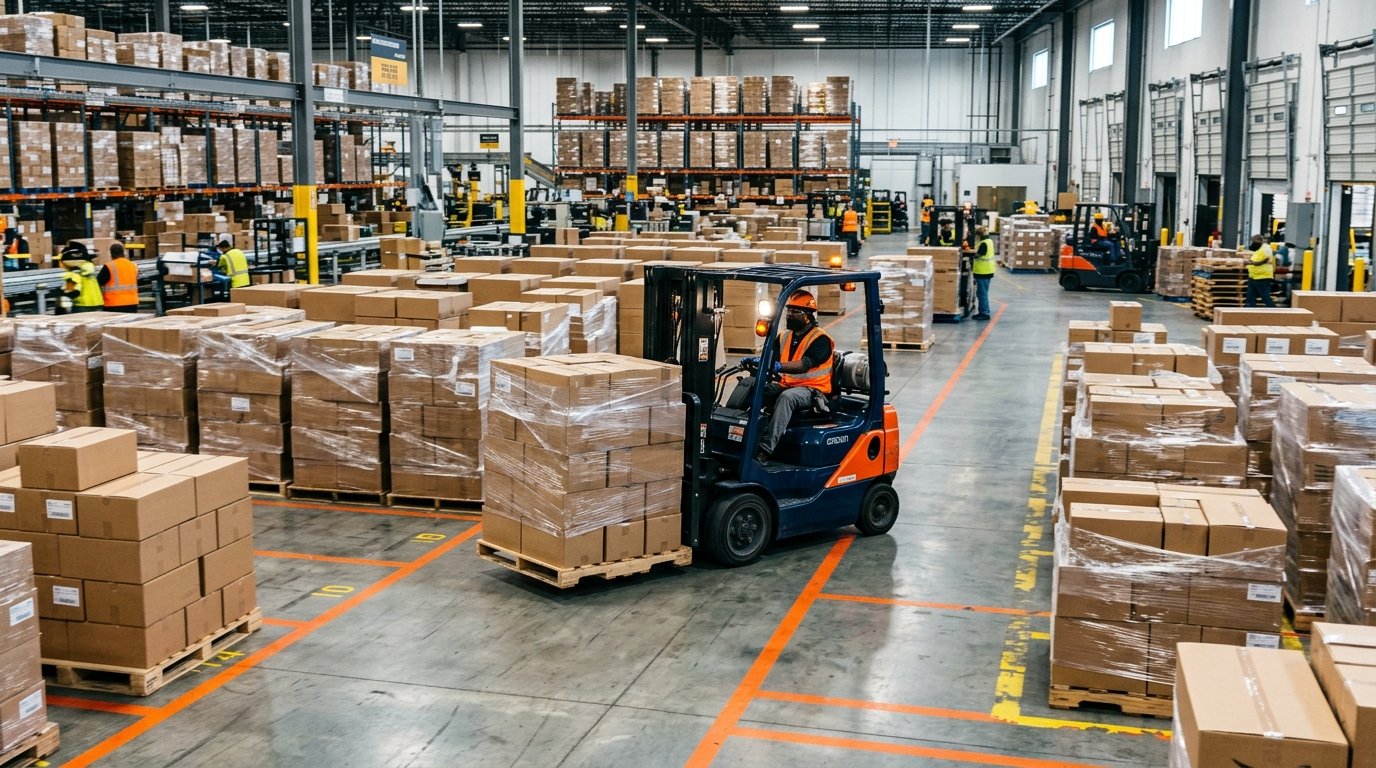
How to Ship from China to Amazon FBA
February 5, 2026
Shipping inventory from China to Amazon FBA is a chain of handoffs: the seller creates the current Amazon shipment workflow, the supplier or China warehouse prepares the cartons, the quality gate checks the goods, and the forwarder moves the cargo through export, import, and delivery. The safest plan assigns each handoff in writing and uses the current Amazon instructions for the destination store.
Quick answer
- Start with the current Amazon Send to Amazon workflow for the eligible SKUs, not an old supplier carton list.
- Confirm unit counts, carton contents, packed dimensions, weights, prep, labels, and destination before pickup.
- For the US store, Amazon’s current Seller Central notice says its own prep and item-labeling service ended for shipments created from January 1, 2026; inventory must be prepared and labeled before arrival.
- Choose air, sea, LCL, FCL, consolidation, DDP, or another route from the actual cargo and written customs scope—not from a generic rate.
Start in Amazon, not with the supplier’s carton list
Open or review the current Send to Amazon workflow for the SKUs you plan to ship. Confirm the destination shown in the seller account, unit quantities, carton contents, prep requirements, label requirements, and any product-specific instructions. Amazon’s requirements can change by store, product type, and workflow, so a saved screenshot or previous shipment plan is not a reliable substitute for the current Seller Central help pages.
Download or record the labels and shipment information that the current workflow generates. Keep the seller account owner responsible for approving the final shipment plan; the supplier, warehouse, and forwarder should work from that approved version.
Understand the 2026 US FBA prep change
Amazon’s official US FBA Prep Service guidance states that, starting January 1, 2026, Amazon no longer offers prep and item-labeling services for US FBA shipments created after that date. Products need to be prepped and labeled before they are sent to Amazon. This makes the China-side handoff more important: the seller, supplier, warehouse, or third-party prep operator must own the required work before export.
Do not turn that notice into a universal rule for every Amazon store or product. Check the current help page for the specific store and product, and confirm whether the shipment needs FNSKU or other labels, bagging, bundling, boxing, expiry handling, or additional documentation.
Do not promise Amazon acceptance from a freight quote
Freight delivery and Amazon receiving are separate controls. A forwarder can manage transport and agreed prep tasks, but the seller remains responsible for the accuracy of the Amazon shipment workflow, product compliance, and the instructions shown in the seller account.
Build the China-side handoff
| Stage | Confirm | Owner to name |
|---|---|---|
| Seller Central | SKU, unit count, shipment workflow, destination, prep, and labels | FBA seller/account owner |
| Supplier or warehouse | Unit prep, carton packing, carton contents, dimensions, weights, and label application | Supplier or China-side operator |
| Quality gate | Specification, quantity, packaging, labels, and inspection evidence | Buyer and inspector |
| Freight handoff | Mode, pickup, export documents, customs role, delivery point, and tracking | Forwarder and importer |
| Amazon delivery | Tracking, carrier details, final labels, and seller-account workflow completion | Carrier/forwarder and seller |
For mixed-supplier orders, reconcile every SKU, unit count, carton, label, and packing list before loading. If the warehouse repacks or consolidates goods, save the final carton data after that work—not the supplier’s earlier estimate.
Add inspection and prep before export
Use a defined inspection scope when the product, order value, marketplace risk, or packaging makes a quality gate worthwhile. Check the approved sample or specification, quantity, workmanship, packaging, carton marks, product labels, and any function or document checks included in the brief. A label or carton mismatch is easier to correct in China than after the cargo reaches the destination network.
Keep prep evidence with the shipment file: final SKU/carton list, label files, photographs, inspection report, packing list, commercial invoice, and the person who approved release. If a product needs compliance documents or special handling, add that requirement before booking rather than assuming the carrier will discover it.
Choose the freight and customs path
Compare air, sea LCL, sea FCL, consolidation, and other available services against the packed volume, weight, delivery requirement, risk tolerance, and quote scope. For a small or urgent shipment, air may fit the delivery requirement; for larger cargo, sea or consolidation may fit better. The decision depends on the shipment data and current carrier options.
DDP is not automatically the right choice. Confirm who is responsible for import formalities, duties and taxes, importer-of-record requirements, product compliance, destination delivery, and exceptions. Googol’s quote should state inclusions, exclusions, assumptions, validity, and any documents still required; duties and taxes must be verified for the specific product and destination.
Close the delivery loop
- Send the final shipment brief and approved Amazon workflow to the supplier or warehouse.
- Verify packed cartons, labels, weights, dimensions, and documents after prep.
- Complete inspection or release checks before export handoff.
- Book the selected service with the agreed customs and delivery responsibilities.
- Send tracking and shipment documents to the seller account owner.
- Monitor delivery and reconcile any Amazon receiving or shipment-plan exception against the saved records.
Related planning: FBA prep requirements, AQL 2.5 FBA inspection, FBA shipping cost factors, and DDP to an FBA warehouse.
Frequently asked questions
Who should apply FBA prep and labels before shipping from China?
The responsible party depends on the written plan: the supplier, China warehouse, third-party prep operator, or another agreed operator may do the work. The seller must approve the current Amazon requirements and confirm the final evidence before export.
Is DDP automatically the best way to ship to Amazon FBA?
No. DDP changes who handles import formalities and costs under the sale arrangement. Confirm destination, importer requirements, product compliance, and the exact quote scope before selecting it.
What information does a forwarder need for a China-to-FBA quote?
Provide the SKU and unit plan, carton count, packed dimensions and gross weights, pickup address, destination shown in the shipment workflow, prep and label requirements, cargo description, timing, and any customs or compliance information already available.
Sources checked
- Amazon Seller Central: FBA Prep Service — official US-store prep and labeling notice; checked 2026-09-13.
- Amazon Seller Central: Shipping and routing requirements — current shipment and box guidance; checked 2026-09-13.
- Amazon Seller Central: Product packaging requirements — current prep guidance; checked 2026-09-13.
Related Articles
The $800 De Minimis Exemption Is Gone: What E-commerce Sellers Must Do (2026)
De minimis is suspended for all countries — every ≤$800 shipment needs entry + duties now. Why consolidated DDP freight beats the parcel model, with the full 2026 timeline.
Read More
Jeddah vs Dammam vs Riyadh: Which Gateway Should Saudi Importers Use? (2026)
Jeddah, Dammam or King Abdullah Port? Compare transit, inland trucking and landed cost for China→Saudi cargo — including the Riyadh gateway decision framework.
Read More
Suez Is Reopening — So Why Aren’t Freight Rates Falling? (2026)
Suez traffic hit a 2.5-year high in August 2026, yet container rates stay elevated. What the MSC/Maersk Suez return really means for China→Saudi and global freight.
Read MoreReady to Import from China?
Get a free, all-inclusive freight quote from our team within 4 business hours.